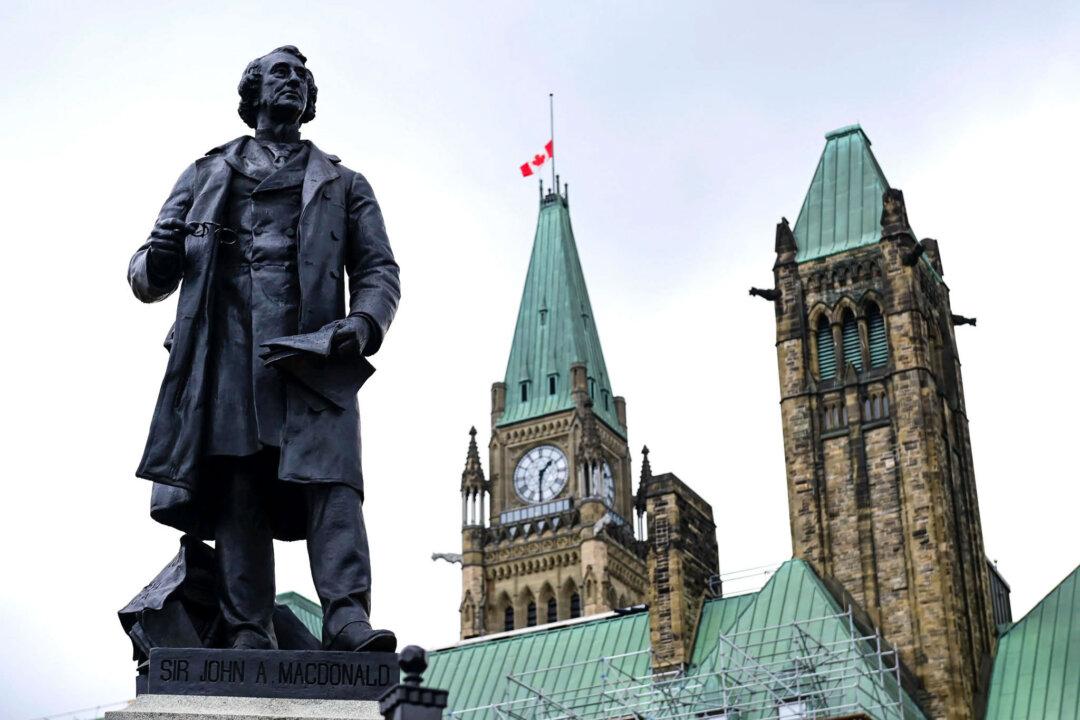
For generations, Canada offered something remarkable. It wasn’t guaranteed wealth, instant success, or a perfect life. Instead, it offered something more enduring: the belief that ordinary people, through hard work and personal responsibility, could build a better life than the one they inherited.
That belief became the Canadian dream.
For millions of families, home ownership stood at the centre of that dream. It meant putting down roots, building financial security, raising children in stable communities, and believing tomorrow could be better than today.
Across much of Canada today, however, young adults are asking a question that would have seemed almost unthinkable a generation ago: Will I ever own a home? Many have done everything they were told would lead to success. They pursued an education, built careers, managed their finances responsibly, and saved for the future. Yet for a growing number, home ownership remains out of reach.
That should concern every Canadian, not simply because housing has become expensive, but because home ownership has long represented one of the principal ways Canadians have turned hard work into opportunity. When that pathway begins to disappear, Canadians inevitably begin asking whether the promise that helped build this country is disappearing with it.
It is tempting to view Canada’s housing crisis as the inevitable result of population growth, immigration, global investment, and higher interest rates. Those factors matter but do not explain why some Canadian cities remain comparatively affordable while others have become among the least affordable in the world.
The report’s broader conclusion is equally important. Vancouver and Toronto are now less affordable than comparable markets in the United States and the United Kingdom. The findings suggest there is little reason to expect affordability to improve unless governments make more land available for housing.
Vancouver, Toronto, and Edmonton operate under the same national economy, the same monetary policy, and many of the same financial pressures. What differs most is public policy. If policy choices helped create today’s affordability gap, different policy choices can begin to close it.
Over several decades, governments at every level have steadily restricted the supply of developable land while adding planning requirements, environmental reviews, development charges, permitting delays, and increasingly complex regulations. Individually, many of these measures were introduced for understandable reasons. Collectively, they have made it slower, more difficult, and more expensive to build new homes.
The economics are straightforward. Restrict the supply of land and its value rises. Extend development approvals from months into years and costs rise again. Add tens of thousands of dollars in regulatory costs to every new home and those costs inevitably reach the buyer.
Canada is the second-largest country on Earth. We are not running out of land. We are running short of land made available for housing under planning systems that recognize affordability as an essential public objective. This is not an argument against environmental stewardship or thoughtful planning. Good planning protects the environment while ensuring families can still build a future of their own.
Edmonton demonstrates that better policy can produce better outcomes. The city has worked to shorten approval times, increase housing supply, and remove barriers that unnecessarily delay construction. No city has solved every housing challenge, but Edmonton shows that better policy can improve affordability.
Housing affordability reflects thousands of policy decisions made over many years. Those decisions can be revisited. Regulations can be modernized, approval processes streamlined, and more land brought into development where appropriate. Governments cannot control every market force, but they can remove many of the obstacles they have created.
When a young family loses the opportunity to buy its first home, Canada loses more than just another prospective homeowner. It loses confidence in the future. The consequences are already visible. Young adults postpone marriage and children. Skilled workers look elsewhere. Employers struggle to attract talent. Communities lose the optimism that comes from young families putting down roots and planning for the future.
No country can flourish if an entire generation concludes that hard work no longer leads to opportunity. Confidence weakens, trust in institutions erodes, and the optimism that has defined Canada for generations gradually gives way to resignation.
Canada has faced difficult policy challenges before, and history suggests we solve them best when we confront them honestly rather than accepting them as inevitable. Housing should be no different.
What is required now is the political courage to remove unnecessary barriers to new housing, challenge assumptions that no longer serve the public interest, and restore affordability as a central objective of housing policy.
The Canadian dream has never been about guaranteeing success. It has always been about preserving the opportunity to succeed. That opportunity depends on strong families, good education, rewarding work, and responsible government. But it also depends on something tangible: the ability of ordinary Canadians to own a home.
Restoring home ownership as a realistic goal must once again become a national priority. Housing policy is not simply about building more homes. It is about preserving one of the foundations on which Canadians have built their lives for generations.
For generations, Canada offered ordinary people the chance to build a better life than the one they inherited. Preserving that promise may be the most important housing policy of all.