Last week my brother called me excited.
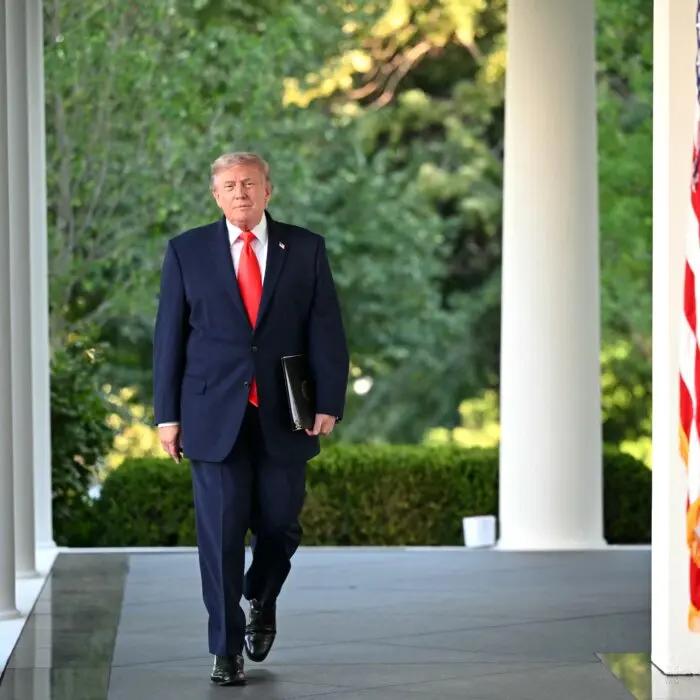
“[President Donald] Trump is going to sign a big executive order,” he said. “Several of our friends and mentors are going to be in the room. It’s a big day for regenerative agriculture.”
His passion has never been electing Republicans or Democrats.
His passion is soil.
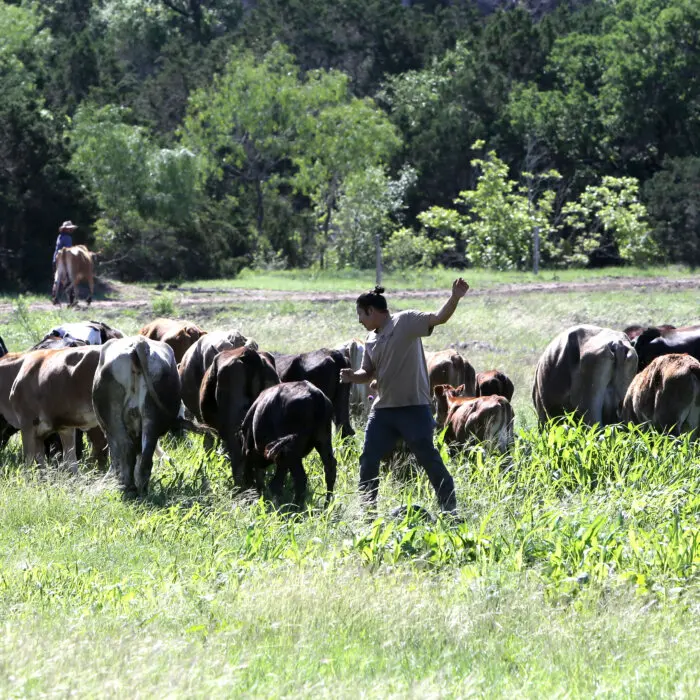
As excited as he was, I found myself with a very different emotion.
I was grateful.
I was also worried.
Not because of anything in the executive order itself, but because I have watched too many good ideas become political identities.
Regenerative agriculture has spent decades bringing together organic farmers, conventional ranchers, environmentalists, hunters, nutritionists, Republicans, Democrats, and independents. My fear is that this executive order could unintentionally change that.
Just last week, a left-leaning publication wrote about my family. Rather than seeing my journey from vegan restaurateur to regenerative rancher as the product of years of experience, observation, and changing my mind, it framed my views primarily through the lens of Trump era politics. If that can happen to one family’s story, I worry it can happen to an entire movement.
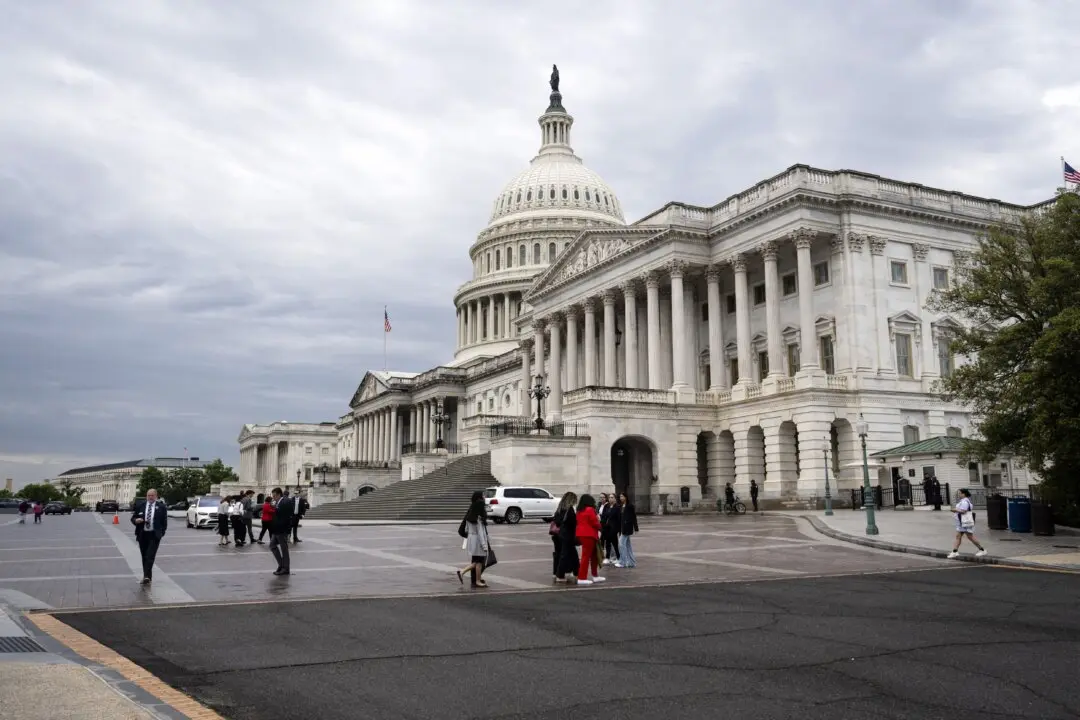
When Trump signed the executive order, the room included Robert F. Kennedy Jr., Brooke Rollins, Calley Means, Brandon Bock, Jonathan Lundgren, Rick Clark, Will Harris, Stefanie Spear, and American Farm Bureau President Zippy Duvall.
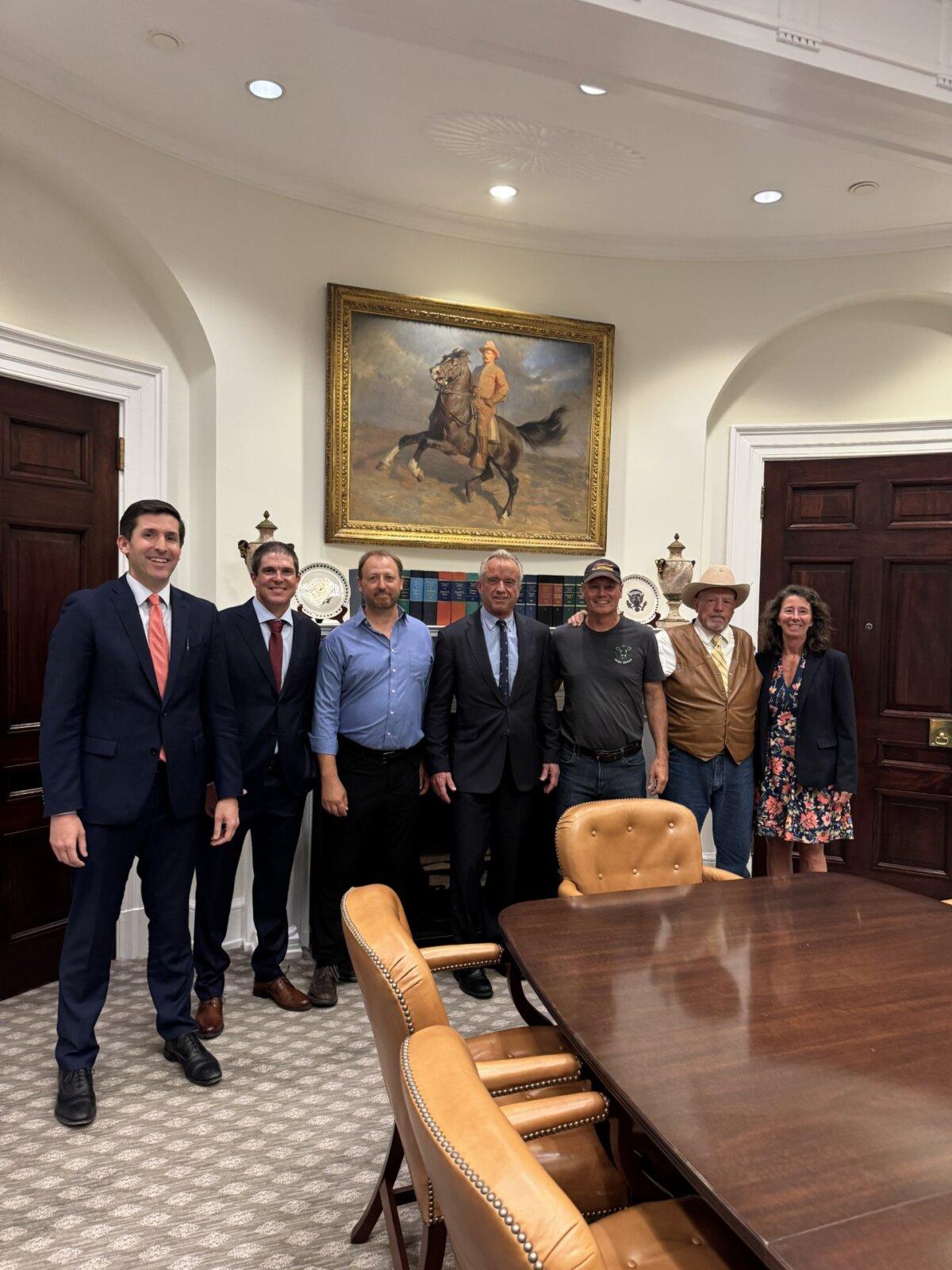
When I looked at the people standing behind President Trump, I didn’t first see politics.
I saw decades of work.
Just a few weeks ago, Robert F. Kennedy Jr. spent the day at Sovereignty Ranch for our American Regeneration Summit. Years before that, part of one of his presidential campaign advertisements was filmed on the ranch, featuring my husband on horseback holding the yellow “We the People” flag that now hangs in our restaurant. After his visit to the summit, RFK later told my brother that our kimchi was the best he’d ever had.
I’ve shared thoughtful conversations with Calley Means, beginning over a late night farm to table dinner in Washington, D.C., and continuing at speaking engagements since then. Our conversations almost always return to the relationship between agriculture, nutrition, and chronic disease.
Some of my favorite conversations with Rick Clark have happened in hotel lobbies and taxi rides after speaking engagements, when the microphones were off and the conversation turned to the practical realities of scaling regenerative agriculture across thousands of acres. Rick has spent years proving that regenerative agriculture can succeed at commercial scale.
Some of my favorite memories of Will Harris are from evenings on the patio of my restaurant, where I poured wine for Will, my brother, and other guests as we spoke late into the night about cattle, stewardship, and the long view of farming. I learned as much in those conversations as I have from any conference stage or lecture. Those conversations weren’t about politics. They were about the land, the animals, and how to leave both better than we found them.
Will isn’t just someone I admire professionally. He’s a friend. Whenever I text him a question, he almost always calls instead. He usually begins by saying, “I’m not sure I have the answer, but I’m always looking for an excuse to chat with Mollie.” That humility is one of the reasons I’ve written about him so often.
It’s also worth remembering that long before this executive order, both Rick Clark and Will Harris testified before Congress under Democratic leadership. They weren’t invited because they belonged to one political party. They were invited because they had earned respect across the political spectrum through the quality of their work.
The executive order itself is significant. It directs the USDA, the EPA, and the Department of Health and Human Services to coordinate efforts around soil health, regenerative farming, farm resilience, healthier food, and research. It builds upon existing federal investments in regenerative agriculture and signals that this administration intends to make soil health a national priority.
Whether every part of it succeeds remains to be seen, but it is undeniably one of the strongest endorsements regenerative agriculture has ever received from the federal government.
My concern has very little to do with the executive order itself.
My concern is us.
We’ve watched conversations about seed oils, acetaminophen during pregnancy, raw milk, exercise, eating whole foods, eating red meat, food dyes, ultra processed foods, vaccines, and metabolic health become political identities. The MAHA movement accelerated many of these conversations, but most of them didn’t begin there. Long before MAHA existed, nutritionists, farmers, physicians, and health advocates from across the political spectrum were debating these very issues.
Some have continued making the same arguments regardless of who occupies the White House.
Others have seemed to distance themselves from ideas they once embraced after those same ideas became associated with Donald Trump.
I hope we don’t do the same thing to regenerative agriculture.
Healthy soil isn’t Republican.
Healthy soil isn’t Democrat.
It is either alive or it isn’t.
Cover crops don’t vote. Earthworms don’t wear red hats or blue shirts. Children who deserve nutrient dense food certainly don’t care about our politics.
Over the years I have spoken on some of the most progressive college campuses in America. I’ve participated in roundtables at the Heritage Foundation. I’ve appeared on podcasts hosted by people with whom I strongly agree and people with whom I strongly disagree. Recently I learned I was no longer welcome at one event where I had previously spoken because I had become “too conservative.”
I’ll continue accepting invitations from anyone who genuinely wants to have a conversation about rebuilding soil and producing healthier food because those conversations are bigger than politics.
I’m grateful that President Trump chose to elevate regenerative agriculture. Not because I believe government alone changes agriculture. Farmers, consumers, culture, and markets will always matter more than Washington.
But presidential attention can amplify ideas that farmers have spent decades proving in their fields.
My hope is simple.
Let’s judge regenerative agriculture by the health of the soil, the quality of the food, and the resilience of the farms.
Not by who happened to sign the executive order.
The soil doesn’t care who occupies the White House.
Neither should the science.