It was a brutal winter in New England. Many mornings, I got out of bed to fire up our snowblower and tackle the latest round of snow. When the wind was blowing, I often got snow blasted right back in my face.
While snowblowing, I don’t have to wait too long for positive opportunities to crop up. As I settle into a rhythm, my mind stills, and ideas often arise for the essay I’m writing. Morning exercise takes the form of snow removal. If you enjoy skiing, or, as my wife and I do, getting out in the woods on snowshoes, the cold, snowy winter offered other advantages, too.
The qualifier “perhaps” is important because the “everything happens for a reason” rendition of the “burnt toast” theory can seem hollow in the face of inevitable human tragedy. The Taoist farmer is wise enough to know that he doesn’t know what may be right around the corner.
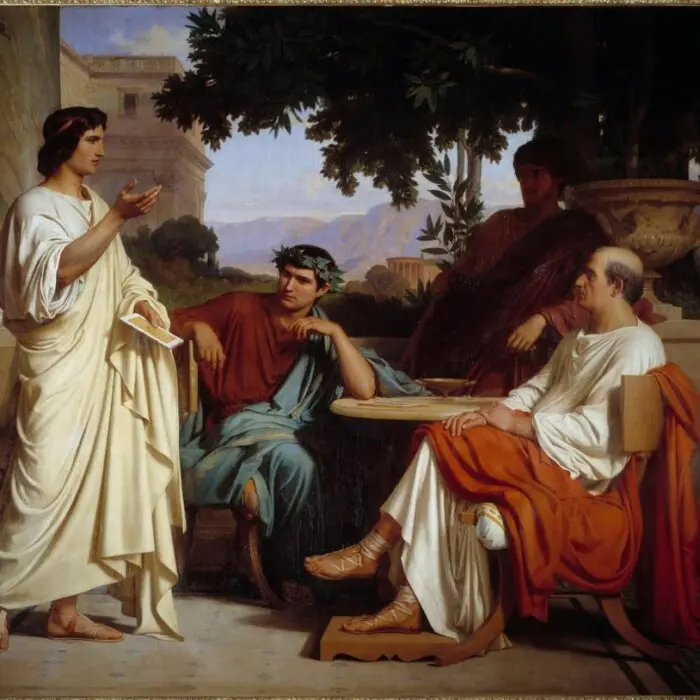

The Stoics
You may have thought the Stoics were above being affected by burnt toast. On the contrary, they practiced their philosophy on small events so they would be better equipped to handle major life events.The philosopher king was not complaining. This was another chance to put his philosophy into practice. He reminded himself that his daily work was to change his mindset about the “wrongdoers”: “I know that these wrongdoers are by nature my brothers, not by blood or breeding, but by being similarly endowed with reason and sharing in the divine.” Marcus didn’t avoid taking necessary action in the world, even while he recognized his common humanity with “wrongdoers.”
He continually admonished himself to be a better practitioner: “Strive to be the man your training in philosophy prepared you to be. ... Stop all this theorizing about what a good man should be. Be it!”
Do you think it would be easier if life didn’t serve up burnt toast? You are not alone. Marcus wrote: “Everyone dreams of the perfect vacation—in the country, by the sea, or in the mountains. You, too, long to get away and find that idyllic spot.”
“How foolish you are,” Marcus observed.
“At any time you are capable of finding that perfect vacation in yourself.”
This is what Stoic philosophy trains us to do. It teaches us to live by our values and purpose, and to furnish our minds so that even “the briefest inward glance brings peace and ease.”
‘A Veritable Fortress’
In essence, the burnt toast theory serves as a modern proxy for the Stoic recognition that our distress stems not from the event itself, but from our judgment of the event.“Free from passions, the mind is a veritable fortress,” Marcus reminded himself.
Born into slavery, Epictetus became one of the most celebrated Stoic philosophers.
He chided himself, asking: “Are you still waiting for more theory before you practice what you preach? What kind of teacher, then, are you still waiting for, that you should delay any effort to reform yourself until he appears?”
Epictetus makes it clear that our delay is a failure to realize our potential.
“If you come up against anything that requires an effort, or is pleasant, or is glorious or inglorious, remember that this is the time of the contest, that the Olympic Games have now arrived, and that there is no possibility of further delay, and that it depends on a single day and single action whether progress is to be lost or secured.”
The Stoics constantly urged us to build robust habits by putting our values into practice every single day. Their advice is timeless because they didn’t tell us to think only positive thoughts, which is impossible. Instead, we are to focus on training for our personal Olympics as we respond to our burnt toast.
In letter No. 37, he wrote, “There is no better way of binding yourself to excellence of mind than the promise you have given, the oath of enlistment you have sworn: to be an excellent man.”
Seneca added, “Only as a joke will anyone tell you that this is a soft and easy branch of service.”
It should be obvious: “If you want to be a good reader, read; if a good writer, write.”
On the other hand, “if you lie in bed for ten days, and then get up and try to walk a fair distance, you’ll see how weak your legs are.”
Here is the lesson: We become what we do.
He instructed, “When you lose your temper, you should recognize not only that something bad has happened at present, but also that you’ve reinforced the habit, and you have, so to speak, added fresh fuel to the fire.”
The lesson: “If it would be good for you to pay attention tomorrow, how much better it would be to do so today, so that you may be able to achieve the same tomorrow also, and not put it off once again until the following day.”
Today—not tomorrow—is your Olympic event.
When you let your emotional horses out of the barn, you won’t easily call them back.
Watch your mind and notice that a twinge of annoyance can escalate into full-blown fury if left unchecked. Learn for yourself how timeless Epictetus’s advice remains.