Commentary
The existence and normalization of forced organ harvesting from living donors is a hard thing for anyone raised on Judeo-Christian ethics to confront, let alone those trained in the medical bioethics developed since the Nuremberg trials.
In “Killed to Order: China’s Organ Harvesting Industry and the True Nature of America’s Biggest Adversary,” author and Epoch Times Washington Bureau chief Jan Jekielek, famous for the “American Thought Leader” interview series, slowly and carefully walks the reader down a path paved with specific examples, making it impossible to look away and avoid the truth of the crimes against humanity that have been normalized by the Chinese Communist Party (CCP).
But that is really just the prelude, a point of entry to the central journey that forms the backbone of this book. By examining this specific set of crimes—and the creeping complicity of the Western transplant community and the academic and pharmaceutical industry that has enabled them—Jekielek reveals the intentional weaponization of corrupt practices by the CCP as one key component of its policy of unrestricted warfare against the United States, the ultimate consequences of utilitarian ethics applied to public health, and the hidden hand of the CCP in advancing the globalist policies of the World Health Organization (WHO).
The work starts out by focusing on the horrors of organ harvesting, but the real reason this is a must-read is the moral, logical, and political clarity of its critique of the naïve, corrupt bargain at the heart of Henry Kissinger’s China doctrine.
“Killed to Order,” set for publication by Skyhorse and currently available for pre-order, exposes the CCP’s forced organ harvesting industry. The book draws on survivor testimonies, evidence, and analysis to argue that the CCP systematically murders prisoners of conscience—primarily Falun Gong practitioners, but also Uyghurs, Tibetans, and Christians—for organs on demand, serving both as persecution and a profit-driven tool for elite longevity.
Structured in two parts, the book first details the history, mechanisms, and evidence of this “new form of evil” under communism, including how the CCP instrumentalizes society and makes complicity widespread. The second part explores global implications, such as unrestricted warfare, transnational corruption, and why the United States must confront China as its greatest adversary.
The prologue illustrates the issue through the fictionalized story of a Western patient unwittingly benefiting from a “China option” transplant, only later realizing its horrific source.
Initial reviews include praise from human rights experts, historians, and China analysts, emphasizing the book’s role in highlighting ongoing atrocities and calling for action.
The book opens with Jekielek’s personal journey into the issue, sparked by a 2006 rumor of a secret concentration camp in Sujiatun, China, where Falun Gong practitioners were allegedly held for organ extraction. He interviews “Annie,” ex-wife of a neurosurgeon involved in the operations, who describes an underground facility holding thousands for live harvesting. Corneas, kidneys, livers, and skin are removed from living victims, with bodies incinerated to erase evidence. A veteran military doctor corroborates this, revealing 36 similar camps across China, treating detainees as “economic assets.” The prologue sets the tone: This is an industrial-scale “kill-to-order” system enabled by the CCP’s persecution of Falun Gong since 1999, when Chinese leader Jiang Zemin labeled it an “evil cult” and vowed its elimination.
Jekielek highlights the psychological barrier to believing such horrors, drawing parallels to Holocaust denial, and introduces the “China option” as a euphemism for sourcing organs from prisoners of conscience.
The prologue to “Killed to Order” frames the horror of forced organ harvesting from the living by placing the reader in the lived reality of thousands of Western patients who face the grim reality of modern organ matching lotteries. With empathy, the author walks us through the logic of medical tourism-based transplantation.
He then introduces readers to a horrific epiphany: The seemingly miraculous abilities of Chinese transplantation centers to acquire recipient-matched organs depends on maintaining a population of captive living human beings to be organ harvested on demand. It then reveals an even darker underlying reality; having developed this capability and infrastructure, China’s ruling party is now exploiting prisoner organs to advance the lifespan of aged oligarchs.
The author’s overall assessment is both starkly blunt and deeply humanitarian and sets up the body of the work:
“There are still many unanswered questions about China’s forced organ harvesting industry. Questions with grave implications for the future of medicine, the future of morality, and the future of the free world. But thanks to the tireless work of investigators, reporters, and unbelievably courageous Chinese whistleblowers, we know far more than we did two decades ago. We know for certain that Falun Gong, Uyghurs, and other groups are still being targeted. We know that the Chinese Communist Party will stop at nothing to ensure its own survival. And we know that Western elites and Western media are being steadily co-opted—made complicit in the CCP’s crimes against humanity.
“At the end of the day, that is what this is: a crime against humanity, and we must not allow ourselves to forget the human element.”
The body of the text is divided into two sections: “Part I: A New Form of Evil” and “Part II: The Global Implications of China’s Forced Organ Harvesting Industry.”
Part I: A New Form of Evil
Part I of “Killed to Order,” titled “A New Form of Evil,” exposes the CCP’s systematic forced organ harvesting as an industrialized form of genocide rooted in totalitarian control. Beginning with whistleblower accounts such as “Annie’s” revelations of secret camps where Falun Gong practitioners are held for live organ extraction, it traces the CCP’s long history of mass killings under Mao and beyond, illustrating how the regime instrumentalizes health care, law enforcement, and society to dehumanize and exploit targeted groups such as Falun Gong adherents, Uyghurs, Tibetans, and Christians. Through survivor testimonies, such as Cheng Pei Ming’s harrowing escape after partial organ removals, and a timeline of mounting evidence from reports such as the Kilgour–Matas report and the China Tribunal, the section analyzes why communist systems—especially the CCP’s “regionally administered totalitarianism”—foster such horrors by prioritizing party supremacy, incentivizing complicity, and viewing human lives as resources for profit and elite longevity.
Chapter 1: A Rumor Is So Extreme It’s Hard to Believe
This chapter delves into the initial investigations following the Sujiatun allegations. Jekielek recounts early reports from The Epoch Times, including Annie’s testimony about her husband’s role in removing corneas from living Falun Gong practitioners. The facility reportedly held up to 6,000 detainees at its peak, with medical teams conducting compatibility tests and providing minimal sustenance to keep organs viable. Bodies were incinerated on-site. A second whistleblower, a military doctor from Shenyang, described a network of camps where executions are botched to allow live extractions, and families receive fake ashes. The chapter explores the psychological denial of such atrocities, comparing it to initial skepticism about the Holocaust, and introduces key investigators such as David Kilgour and David Matas, who later confirm the rumors through their 2006 report.
Chapter 2: A Long History of Killing
Jekielek traces the CCP’s history of mass killing, from Mao’s Great Leap Forward (1958–1962), which caused 45 million deaths through famine and executions, to the Cultural Revolution (1966–1976), during which ideological purges killed millions. The chapter argues that forced organ harvesting is a continuation of this pattern, evolving from political campaigns to industrialized murder for profit. It highlights how the CCP’s utilitarian ethic—in which individual lives are subordinate to collective goals—enabled such systems, with early organ extractions from executed prisoners dating back to the 1980s.
Chapter 3: The CCP Instrumentalizes Everything
Here, the focus is on the CCP’s total control over society, where every institution serves Party ends. The chapter discusses the “610 Office,” created in 1999 to eradicate Falun Gong, coordinating arrests, torture, and organ harvesting. It explains how the regime instrumentalizes health care, turning hospitals into extensions of state repression. Blood tests and medical exams in detention centers are not for health but for organ matching, creating a “living organ bank.” The system profits hospitals, doctors, and officials, with transplants generating billions.
Chapter 4: What Targeting Falun Gong Reveals about the Nature of the CCP
Falun Gong, a spiritual practice blending qigong exercises with moral teachings of truthfulness, compassion, and forbearance, grew to 100 million practitioners by 1999, alarming the CCP. Jiang saw it as a threat to Party supremacy, labeling it an “evil cult” and launching a genocide. The chapter reveals how the persecution provided a “supply” for organ harvesting: Practitioners’ healthy lifestyles (no smoking or drinking) made them ideal donors. It details torture methods to force renunciation and how refusals led to organ extraction. Experts such as Ethan Gutmann estimate 65,000 to 100,000 deaths annually.
Chapter 5: The Evidence and the Road to Get There
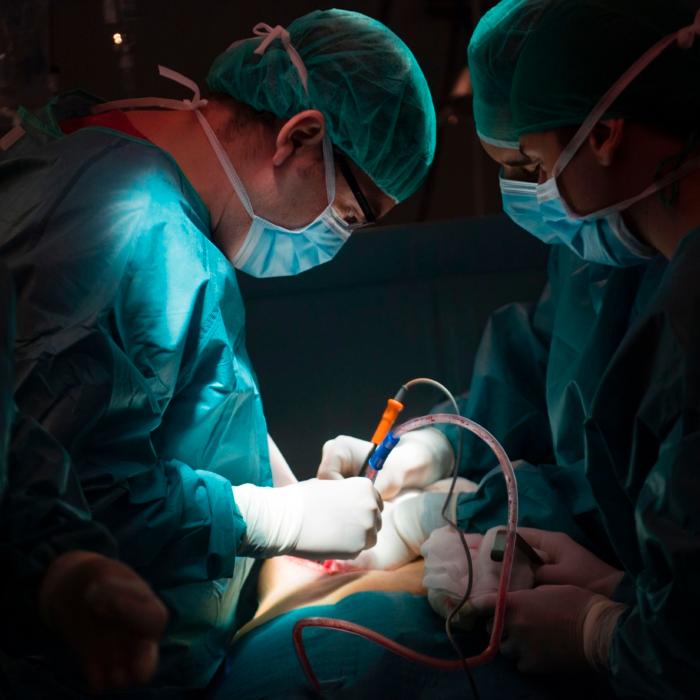
This is the evidentiary core, chronicling two decades of proof. It opens with Cheng’s story. The first known survivor of forced organ harvesting, he was arrested for practicing Falun Gong, tortured, blood-tested, and operated on without consent in 2004 and 2006, losing part of his liver and lung. He escaped and confirmed the removals in the United States in 2020.
The chapter lists a timeline of evidence:
1984: Regulations allowing prisoner organ use. 1994: Uyghur extractions.
2005: Short wait times for hearts. 2006: Sujiatun revelations and Kilgour–Matas report. 2009: “Bloody Harvest” book by Kilgour and Matas, estimating 40,000-plus transplants.
2012: “State Organs” essays. 2014: “The Slaughter” by Ethan Gutmann estimates 65,000 deaths by forced organ harvesting. 2016: Update projecting 60,000 to 100,000 annual transplants. 2017: Korean hidden camera exposé. 2018: China Organ Harvest Research Center report on hidden volumes.
2020: China Tribunal judgment of crimes against humanity. 2021: United Nations experts alarmed. 2022: Global Rights Compliance advisory. 2024: Doctors Against Forced Organ Harvesting report. 2025: Matthew Robertson’s thesis on “extractive repression.”
There’s more. The timeline emphasizes falsified data, short waits, and whistleblowers.
Chapter 6: Why Communist Systems—and the CCP in Particular—Enable Forced Organ Harvesting
Communist systems, especially the CCP’s “regionally administered totalitarianism” (RADT), incentivize atrocities through top-down directives and local competition. The chapter draws on experts such as Chenggang Xu (RADT model), Harrison Koehli (pathocracy and “ponerization,” where psychopaths rise), and John Lenczowski (operational communism over belief).
The CCP dehumanizes groups like Falun Gong, enabling mass incarceration, database building, and kill-to-order harvesting. It discusses how the system expanded to infants via surrogacy and state seizures and how Western media shifted a post-2001 Jiang interview to echo “cult” rhetoric.
Chapter 7: Make Everyone Complicit—Including Your Adversaries
The CCP’s “rob, replicate, replace” model exploits Western greed, capturing elites through economic entanglement. The chapter critiques the Kissinger Doctrine for enabling China’s rise, detailing how U.S. financial elites listed state-owned enterprises with minimal oversight, leading to $7 trillion to $12 trillion in transfers. It argues that the CCP wages “people’s war” via fentanyl, elite co-option, and moral compromise, making adversaries complicit in its crimes.
Part II: The Global Implications of China’s Forced Organ Harvesting Industry
Part II examines how the CCP’s organ harvesting atrocities reveal its broader strategy for global dominance. That strategy views the United States as a zero-sum adversary in an era of “unrestricted warfare” that weaponizes economics, psychology, law, technology, and tactics such as the “Three Warfares” and the United Front Work Department as a “magic weapon” for co-opting elites, suppressing dissent transnationally, and corrupting institutions such as the WHO.
It critiques America’s “fatal attraction” to the CCP through misguided policies such as the Kissinger Doctrine, which enabled economic entanglement and moral compromise while exploring opportunities for internal change in China via movements such as Tuidang. It urges legislative actions, such as U.S. bans on organ tourism and international tribunals, to combat these evils and prevent the erosion of Western values.
Chapter 8: Zero Sum—How the CCP Perceives America
The CCP views the United States as its primary adversary in a zero-sum world, pursuing dominance via “Unrestricted Warfare” and “Gross National Power.” Drawing on Michael Pillsbury’s book “The Hundred-Year Marathon,” it details covert strategies to weaken America through trade, technology theft, and ideological subversion.
Chapter 9: Unrestricted Warfare (and the Three Warfares)
The CCP’s “Unrestricted Warfare” doctrine weaponizes everything: cyber, economic, legal, and psychological. The “Three Warfares” (public opinion, psychological, and legal) are detailed in this chapter, with examples such as TikTok as psychological warfare and World Trade Organization manipulation as legal warfare. Military-civil fusion ensures that civilian tech serves military ends, e.g., Wuhan lab research.
Chapter 10: The Magic Weapon
The United Front Work Department co-opts elites, diaspora, and institutions. This chapter details “Chinese police stations,” transnational repression against Falun Gong media such as The Epoch Times and Shen Yun, and smear tactics against survivors such as Cheng.
Chapter 11: Transnational Cooperation, Corruption, and Coercion
The CCP influences global bodies such as the WHO, exploiting shared technocratic views. The book details Huang Jiefu’s partnerships with The Transplantation Society and Vatican endorsement, enabling abuses. Western complicity in transplants normalizes CCP ethics.
Chapter 12: Fatal Attraction—How the US Perceives the CCP
The United States misperceived the CCP as reformable and financed its rise through the Kissinger Doctrine. Theories such as Lee Smith’s “Thirty Tyrants” argue that elites were captured. Decoupling trade from human rights empowered the regime, leading to dependencies in rare earths, medicine, and more.
Chapter 13: Opportunity for People in China?
Change from within is hard due to totalitarianism. The Tuidang movement, with more than 456 million renunciations, offers quiet dissent. China’s middle class is eroding amid a property collapse and rising inequality, weakening the regime’s “prosperity for compliance” pact.
Chapter 14: Legislating Against Evil
Six U.S. states have banned reimbursing China transplants; federal bills such as the Falun Gong Protection Act and Stop Forced Organ Harvesting Act advance. Institutional reforms (e.g., penalties imposed by the Health and Human Services department) and legal theories (e.g., prosecuting organ tourism) offer paths forward. Grassroots action is key.
Epilogue: It’s Not Too Late
Jekielek distinguishes the CCP from Chinese people and culture, arguing that the Party’s crimes are anti-China. He warns that CCP ethics erode Western morals via medically assisted death and loosened donor rules. The book’s epilogue calls for recovering moral clarity to counter communism’s advance, emphasizing that it’s not too late to act.
In Summary
In “Killed to Order,” Jekielek delivers a searing, meticulously documented indictment of one of the most horrifying crimes of our era: the CCP’s systematic, state-sponsored forced organ harvesting from prisoners of conscience, primarily Falun Gong practitioners but extending to Uyghurs, Tibetans, Christians, and others.
Through survivor testimonies such as that of Cheng, the first confirmed survivor of partial live organ removal, plus whistleblower accounts, a comprehensive timeline of evidence spanning two decades (from the 2006 Sujiatun revelations to the 2020 China Tribunal judgment and beyond), and incisive analysis of CCP ideology and global strategy, Jekielek transforms what many once dismissed as an “unbelievable rumor” into an undeniable reality.
What elevates this book beyond mere exposé is its bold framing: Forced organ harvesting is not an isolated atrocity but the ultimate lens through which to understand the CCP’s true nature: Its dehumanizing utilitarianism, total instrumentalization of society, and zero-sum worldview that treats human lives as disposable commodities for elite profit, longevity, and power.
In Part I, Jekielek unflinchingly traces the historical precedents of communist mass killing and explains why such systems enable industrialized murder on demand. Part II expands the scope masterfully, revealing how the regime’s “unrestricted warfare,” United Front co-option, and transnational corruption have entangled the West, making adversaries complicit while eroding moral clarity.
Compelling, urgent, and unflinching, “Killed to Order” stands as a vital wake-up call, blending rigorous journalism with moral urgency. It challenges readers, especially in the free world, to confront uncomfortable truths, reject the normalization of the CCP, and support legislative and ethical countermeasures before these horrors further metastasize.
In an age of moral relativism and geopolitical complacency, Jekielek’s work is essential reading: a beacon of truth that reminds us that it is not too late to act, but the window is closing. Highly recommended for anyone concerned with human rights, global security, and the defense of fundamental human dignity.
This review was originally published on the author’s Substack, Malone.News.