The celebration of Christmas has just passed, and the New Year has begun—a time for reflection and renewal.
A few weeks ago, shocking images at Sydney’s Bondi Beach were seen around the world. Defenseless Jewish people were gunned down while celebrating Hanukkah.
Many atrocities are happening in the world. Why do good people remain silent?
What we do not read or see on our screens we may not know or be moved by—and thus we remain silent. Or it could be because of self-interest.

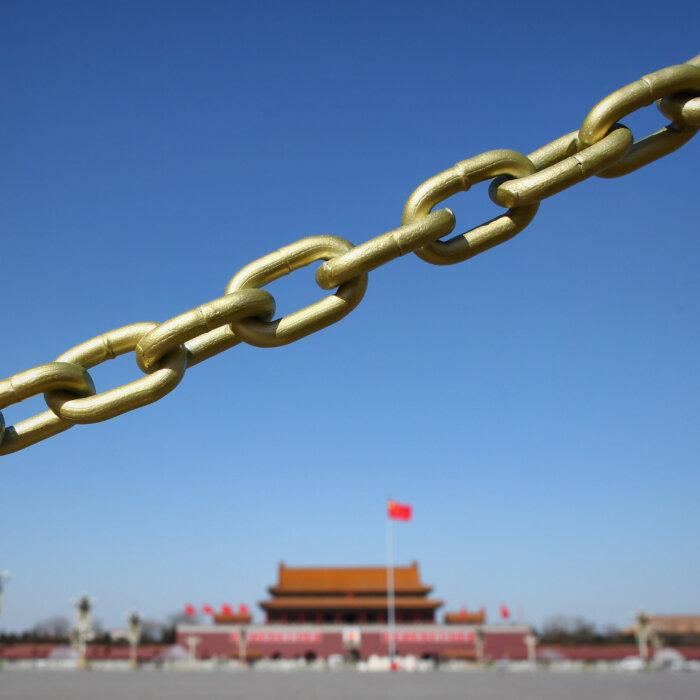
People may know but choose to avoid or downplay an issue. It could be the loss of connection between the individual and the whole, the sense of separation between one human being and another, the focus on self or on those with whom we immediately connect. Or it can be because people don’t understand how evil something is—or that evil and goodness really do exist and are not just cliché archetypes in secular society.
Complex World
Globalization has made human society more complex. Many countries are interconnected with different political structures and histories. Cultures developed over centuries include wisdom and religious traditions that guide people to live in harmony. Yet they can also include hate that divides people.An ideology of hate and killing people because of their beliefs does not manifest in a vacuum. When a child is born, he or she has an innocence, like a fresh edition of consciousness. The capacity to hate can be imprinted on a child.
Ancient hatreds can be passed to the next generation. New hatreds can be implanted through indoctrination. In a democracy, government action can mitigate how such hatreds may fester and spread, whereas under an authoritarian regime, the government may promote them.
Reticence to offend can also lead to a government’s silence when trading partners commit human rights atrocities. Protecting religious freedom is secondary in realpolitik, where assessment of power and interests takes precedence over morals or ethics.
This so-called pragmatic approach to international relations has a flaw. It presupposes a materialist view of the world as a singular reality. It ignores the totality of a human being: body, mind, and spirit. Individual human beings make up human societies and nations.
Human rights exist from birth; are endowed by the Creator, not by governments; are universal; and exist for individuals, not groups. In democracies, human rights should be integral to government policy—at home and abroad.
Religion and Politics
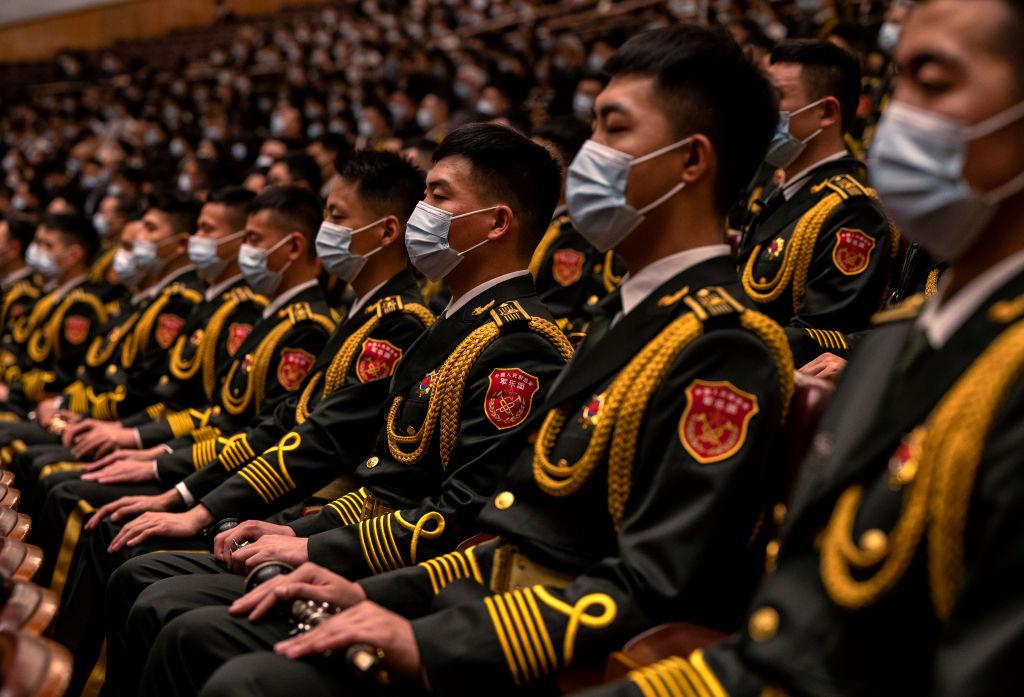
State-atheist authoritarian systems, such as communist China, dictate control over all religious belief, either by co-option or by suppression. Religious authoritarian systems control all theological expression and community behavior.The separation of church and state in Western nations seeks to prevent religious institutions from exerting influence on political and legal decisions that may lead to discrimination for those of no faith or different faiths.
Unfortunately, it may also have the effect of canceling the voices of elected representatives who openly express their religious beliefs—even if those beliefs are based on reason and shared human values.
The Golden Rule is the principle of treating others as one would want to be treated. It is also known as the ethics of reciprocity.
Values and Virtue
The phrase “Western values” implies a moral tradition of classical origins—yet its use in English is relatively recent, beginning after World War II. Values, while useful, are learned as external rules or guides for action. They signify the modern quantification and commodification of morality and thus can be overlooked or deprioritized. “Virtues” are personal qualities that are developed and practiced.A brief look at what may be called Western and Eastern traditions reveals a historic similarity in the understanding of virtue and its importance.
Through the Western traditions of St. Thomas Aquinas in the 13th century and Aristotle in the fourth century B.C., we know of temperance (reservation and restraint in one’s conduct) and virtue. For Aquinas, “virtue” is a habitual and stable disposition to do good, acting with reason and moral excellence, as part of God’s design.
In Eastern traditions, Taoist and Confucian teachings, spanning thousands of years, refer to the Tao (Way of the universe). In the sixth century B.C., Confucius emphasized the importance of cultivating virtue before the pursuit of profit and not deviating from the moral path (Tao) to maintain one’s integrity. In the fourth century B.C., Mencius held that true virtue is not focused on material success but on ethical conduct and the well-being of society.
Since 1992 in China, this tradition of inner cultivation continues in the practice of Falun Dafa, also known as Falun Gong. Da Fa in Chinese means “Great Law,” and its practice comprises meditation, gentle exercises, and the tenets of truth, compassion, and forbearance, taken as the underlying characteristics of the universe. It has renewed people’s traditional connection to heaven—to find the divine essence within and align one’s life with the principles of the Way.
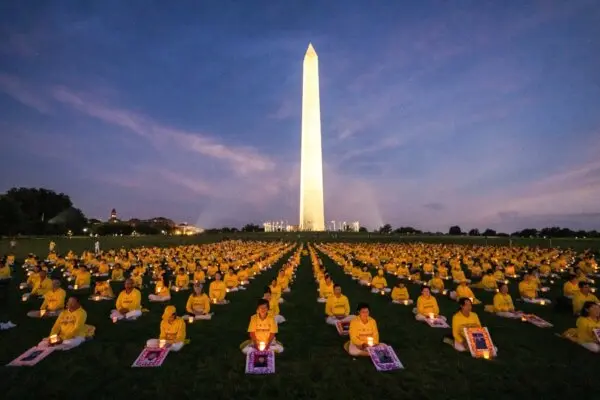
The Chinese communist regime’s ongoing persecution and killing of Falun Dafa practitioners is a challenge to Western democracies. Why do most remain silent?
The godless materialist world of communism has attached itself to the pragmatic world of trade (profit). Most good people do not see or hear about it, so the torture and deaths continue.
Elected representatives should be able to express their virtue founded in faith to help guide a community or nation.
Serve your constituents well, and national interest/profit will follow. Act with virtue, protect the people’s rights, and reflect the virtues they cherish in dealing with other states.
Governments should not avoid confronting evil because of political considerations. Doing so undermines the virtue and goodwill of the people, as well as the integrity and future of a nation.
Treating others kindly, as we would like to be treated, and speaking up to protect others’ lives are also ways of protecting ourselves.