From President Abraham Lincoln to President John F. Kennedy and from Malcolm X to Martin Luther King Jr., the U.S. story has too often been marred by the silencing of visionary voices through violence. Each loss forces us to confront the question of what kind of nation we want to be.
Soon after the assassination of Martin Luther King Jr. in April 1968, then-Sen. Robert F. Kennedy (D-N.Y.) gave a speech in which he quoted the poet Aeschylus.
“Even in our sleep, pain which cannot forget, falls drop by drop upon the heart, until, in our own despair, against our will, comes wisdom through the awful grace of God,” he said.
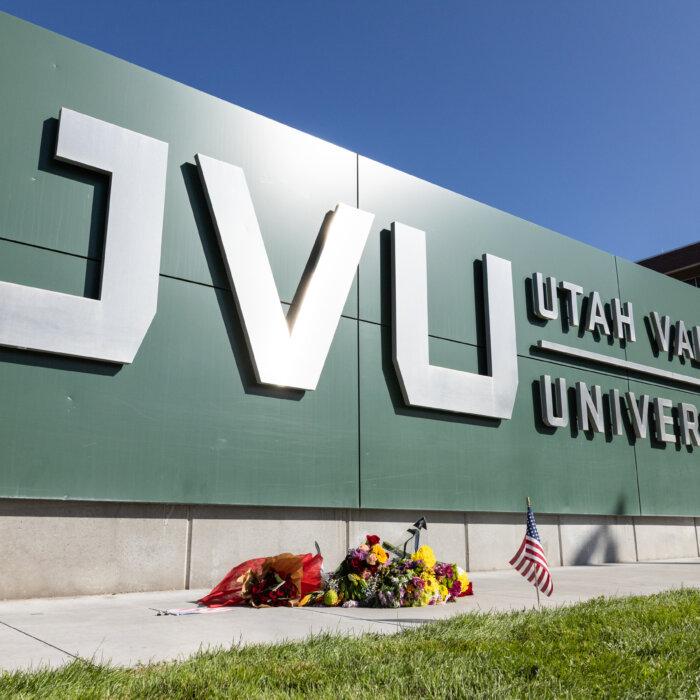
Those words, born in an age of tragedy, echo across the centuries with a piercing relevance today. The United States and the entire conservative movement lost a great champion in Charlie Kirk.
When violence takes the life of a voice in our national debate, we are left with shock, anger, and grief. Yet into that despair drops the hard truth: Wisdom, if we allow it, comes not through vengeance but through God’s terrible, transforming grace.

Political violence is not new to the United States. We have lost presidents, ministers, senators, civil rights leaders, and everyday citizens. Each assassination is a tear in our national fabric. And every time, we stand at a crossroads.
Will we allow hatred to harden us? Or will we, through God’s help, find a higher road?
As people of faith and as citizens, we must stand in reverent fear of the Almighty and remember that every life is sacred, even when we disagree with one another passionately. The bullets that silence one voice threaten to silence us all, for they destroy the trust that undergirds self-government.
As such, we must view this moment as not one for partisanship but one for patriotism. No matter our political affiliation or personal creed, we are bound together by a common commitment to God, liberty, and justice.
When countless figures from across the political spectrum—including former President Bill Clinton, former President Barack Obama, former President George W. Bush, former President Joe Biden, and President Donald Trump, as well as Democratic and Republican congressmen, senators, and governors—and even those who vehemently disagreed with Kirk condemn this abhorrent act of violence, it is evident that those possessing wisdom and authority agree that bullets should never obstruct debate and that violence makes us worse off, not better.
Many people online are expressing hatred, asserting that Kirk’s murder was warranted. However, they represent the minority. They are youthful, perpetually online kids lacking the experience of accountability and the comprehension of morality. They are unaware of the weight they impose on their own souls. Pity these people and shame them.
We must guarantee that the voices of individuals such as Kirk are amplified and endure perpetually. Bullets kill men but not ideas.
We are better than this. We can be better than this. We must be better than this. Not simply because our laws demand it but because our souls do. To rise above the violence is to testify that the United States is more than its divisions; it is to testify that we are still capable of being one nation under God.
The United States is in a dark place now. An excessive number of assassinations, both attempted and successful ones, have transpired. Despite any personal aversions to one’s beliefs, we are united as Americans with a singular objective: the betterment of the United States and the global community.
Taking another life won’t change the situation; it did not following the assassinations of Martin Luther King Jr., John F. Kennedy, Malcolm X, and others, nor will it after the assassination of Kirk. Their presence improved the world. Undoubtedly, their ideas have and will persist and make the world a better place, as their teachings, mobilizations, and ethical principles have been integrated into the lives of millions of people, crossing national boundaries.
And let us not forget: Those who dedicate themselves to public service, whether in politics, ministry, or activism, often do so with the hope that their countrymen might live more freely, more virtuously, and more peacefully. Kirk would be the first to remind us of this truth.
So let us pray for wisdom that comes through pain, for the awful grace that Robert Kennedy appealed to, and for a renewed commitment to peace. May we choose love over hate and life over death. For the sake of our children and for the sake of our republic, we must.