Last night, almost 50 people gathered at Sovereignty Ranch for a Brownstone Supper Club. We shared a farm tour, a seven-course meal, cocktails, and a lively Q&A following a talk from Nate Sheets, who recently defeated Sid Miller in the Republican primary for Texas Agriculture Commissioner.
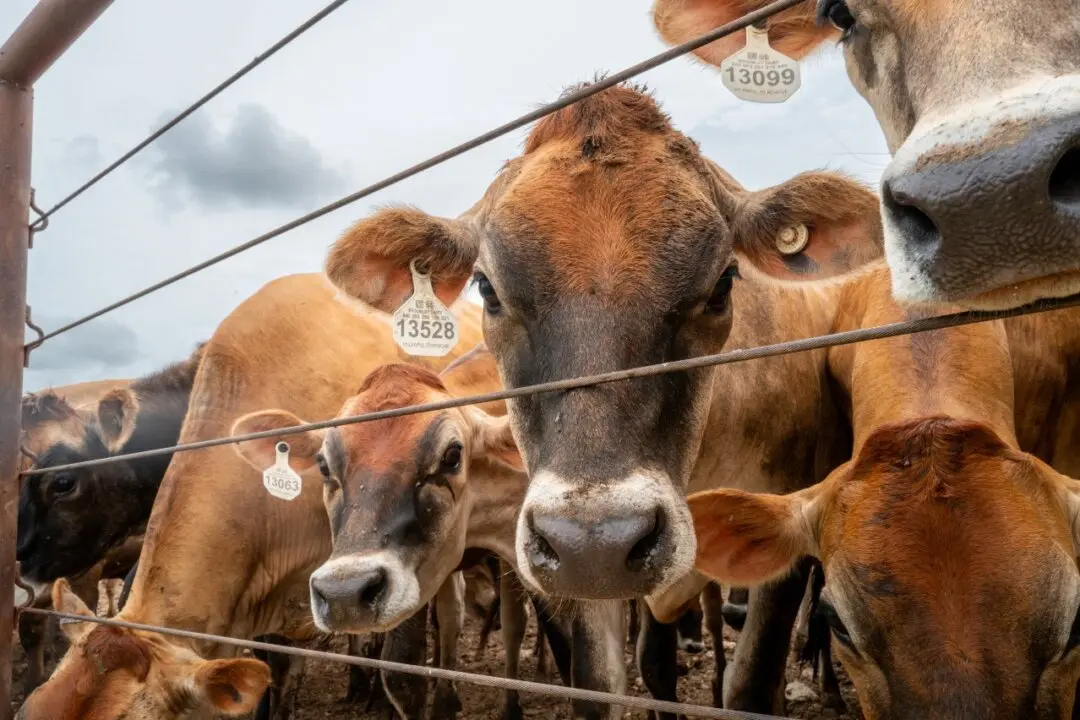
Of major concern in the room was water, and a lot was said about that, which I will write about in another article. But in a room full of ranchers, the conversation quickly turned to beef. Questions moved toward processing, bottlenecks, and the deeper issue of how farmers can survive in the current system.
Sheets returned again and again to a simple but powerful question: How do we make farmers pricemakers instead of price takers? It is the right question, and for many in the room, the assumed answer was more infrastructure. More U.S. Agriculture Department-inspected processing facilities, more capital investment, and more expansion of the current system.
But I raised my hand because I believe that we are overlooking something much simpler. We do not necessarily need more infrastructure. In many cases, the infrastructure already exists.
Across Texas and much of the country, small-town custom slaughterhouses are common. These facilities are already inspected at the state level and are regularly used by families processing their own animals, by hunters bringing in deer, and by 4-H students completing livestock projects. They are not unsafe or unregulated; they are part of the fabric of rural communities, quietly serving people every day.


The contradiction becomes clear when you compare them to the grocery store. The meat counter at your local store is inspected by the local health department, yet these same types of locally inspected facilities cannot legally process meat for public sale if they fall under custom slaughter designation. Facilities that could use the business and that already exist across rural America are effectively sidelined by a rule that no longer reflects how people actually buy food.
Under current federal law, meat processed at custom facilities cannot be sold. It must go back to the individual who owned the animal before slaughter. This is why farmers rely on the workaround of selling one-quarter, one-half, or the whole animal before processing, so the buyer technically owns it. The system functions, but it does not function well, and it excludes most consumers. Someone living in an apartment who simply wants a few steaks is not going to purchase one-quarter of a cow.
What we are left with is a system in which the infrastructure exists, the demand exists, and the farmers exist, but the law prevents them from connecting in a straightforward way.
Not Infrastructure, but Access
The bill has been introduced multiple times but has never been signed into law. Lawmakers have not had the will to push it forward. On the Senate side, Sen. Rand Paul (R-Ky.) has also advocated for similar reforms, signaling that interest in decentralizing meat processing is not limited to one chamber. More recently, Massie has indicated that language from the PRIME Act has been included in the base text of the current farm bill in the House. There has been no clear indication that similar language is included in the Senate version. Whether it will remain through the full legislative process is uncertain, but the idea is gaining traction because it addresses a real bottleneck with an existing solution.The issue is not a lack of capacity; it is a lack of access. Today, the meat industry is highly consolidated, with four major packers controlling the majority of beef processing in the United States. Decades ago, farmers received about 70 percent of the consumer dollar while packers took roughly 30 percent. That balance has now reversed, leaving farmers with shrinking margins and fewer options.
At the same time, the number of farms continues to decline, and that includes ranches. Cattle operations are disappearing alongside row crop farms, even as demand for beef remains strong. The United States has lost more than 100,000 farms in the past several years alone, with the steepest losses coming from small, family-scale operations. In Texas, the trend is even more immediate, with an estimated 64 farms and ranches disappearing every week.
Sheets shared the story of a Texas rice farmer whose family has worked the same land for five generations. The farm was once passed down debt-free, but over time debt accumulated as costs rose and margins tightened. In the past two years, that farmer sold his rice for 40 percent of what it cost to produce it, and none of his children are interested in taking over after watching that struggle.
Farmer–Consumer Relations
Processing is one of those barriers. Allowing farmers to process and sell meat within their own states using existing, state-inspected facilities would remove a significant bottleneck, shorten supply chains, and reduce reliance on centralized processors. It would also create more direct relationships between farmers and consumers, which is where real resilience begins.This is not even about deregulating food safety systems, although that conversation is worth having. These facilities are already inspected and operating, and the system already trusts them for personal consumption. The shift being proposed is simply to allow that same infrastructure to serve the broader public.
Lawmakers, lobbyists, ranchers, and consumers sat at the same tables, sharing a meal and exchanging ideas. At one point, I listened as leaders from very different advocacy spaces came to the same conclusion: We need people to rally around food.
Not everyone agrees on politics, and not everyone aligns on social issues, but everyone depends on food. Despite that, there is no broad, unified movement advocating for a decentralized food system that supports farmers. Part of the challenge is that most people do not see how the system works or where it breaks down, but once they do, the path forward becomes surprisingly clear.
If we want to restore our food system, we have to remember that. We have to bring back the simple logic of allowing farmers to feed their own communities. Allowing meat processed at state-inspected custom facilities to be sold within the state is one step in that direction. It is practical, immediate, and rooted in a system that already exists.
In a time when many people feel disconnected from political power, food remains one of the few areas in which individual choices still matter. Where we spend our money shapes the system, and the policies we support determine whether that system becomes more centralized or more local. If we want farmers to succeed, we have to remove the barriers standing between them and the people they are trying to feed. Supporting local farms is not just about what we eat today, but about whether those farms still exist for the next generation. If this matters to your community, it’s worth paying attention to where your representatives stand and making your voice heard as these decisions take shape.