The yield on the 30-year Treasury bond has climbed back to where it stood in 2007, north of 5 percent, and it pushed a little higher again this week after the Federal Reserve left its own rates alone. On its face, that sounds almost reassuring, a return to some pre-crisis normal. It is nothing of the sort. The same number today carries a very different, and far heavier, meaning than it did 19 years ago.
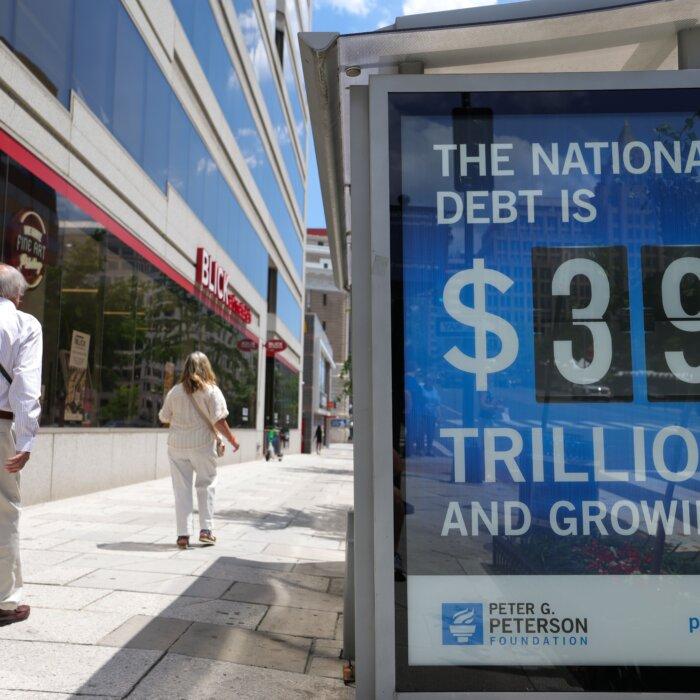
In 2007, the federal debt held by the public was roughly nine trillion dollars. Today it is about four times that. A yield is simply the price of borrowing, and paying the 2007 price on four times the loan produces an interest bill this country has never seen before. Interest on the national debt has grown into one of the largest items in the entire federal budget, rivaling what we spend on defense and closing in on our biggest social programs. Every uptick in the rate, multiplied across a debt this size and across the trillions that must be rolled over each year, pushes that figure higher and squeezes everything else the government tries to do.
There is a quieter cost, and it may be the most important one to understand. Every dollar that flows into a Treasury bond is a dollar that does not flow into the private economy. When investors, banks, pension funds, and foreign governments park their capital in government paper, they are choosing the safety of Washington over a loan to a factory, a startup, a homebuilder, or the corner business hoping to expand. The higher the government is willing to pay, the more capital it pulls toward itself and away from everyone else.
As that capital drains out of private hands, the effect ripples outward. Businesses that would have borrowed to grow find money scarcer and more expensive. Expansion plans shrink. Hiring slows. The companies that loaded up on cheap debt five years ago now refinance at rates that eat into their margins. What begins as a government financing question quietly becomes a private-sector slowdown, a spreading stagnation and decline that reaches well beyond the bond market.
The public sector cannot fund itself. Every road, every benefit check, every soldier’s paycheck is ultimately paid for by taxes drawn from a working, growing private economy. When we starve that economy of capital in order to finance the government, we weaken the very thing the government leans on. We are eating the seed corn. A stalled private sector produces less, earns less, and pays less in taxes, which forces the government to borrow still more, which pulls still more capital away from the private sector. It is a loop that feeds on itself, and we need that private economy vibrant precisely because it is what keeps the public one afloat.
Consider, too, why the rate is high, because that has flipped since 2007. Back then, the economy was running hot, and the Federal Reserve had been raising rates to cool it down. Today, the picture is inverted. The 30-year is rising even as the Fed holds its own rates steady, which means the pressure is coming from investors themselves, not from the central bank. They are demanding more to lend for thirty years because they worry about stubborn inflation, about the sheer volume of new bonds being issued, and about whether Washington’s fiscal path is sustainable at all. Foreign buyers who once absorbed our debt without complaint are stepping back. When the market insists on being paid more to hold the government’s IOUs, it is telling us something about its confidence, and the message is not a good one.
The consequences reach every kitchen table.
None of this means catastrophe waits around the corner. Some argue we are simply returning to the ordinary interest rates that prevailed before a decade of unusually cheap money, and that view deserves a hearing. But the sober reading of that number should trouble anyone paying attention. The same rate we could shoulder in 2007 now rests on a mountain of debt, springs from anxiety rather than strength, and quietly drains the private economy we will need if we ever hope to dig ourselves out.