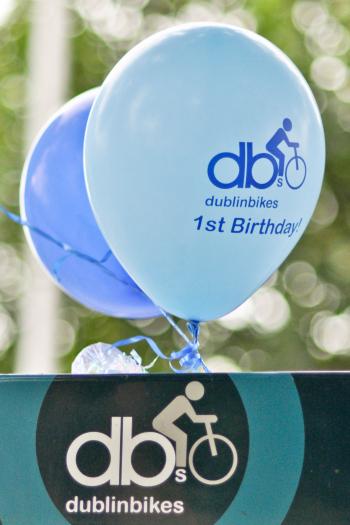
Dublin’s remarkably successful shared bike scheme, dublinbikes, celebrated it’s first birthday on September 13th, and city streets are now bustling with cyclist of all ages, shapes and sizes on their dublinbikes.
Currently there are 450 bikes (soon to be extended to 550) at 40 stations in Dublin city centre, and construction work is already underway to extend 20 of the existing 40 stations and to add 4 new stations. The scheme has over 40,000 members who have made over 1 million trips so far this year.
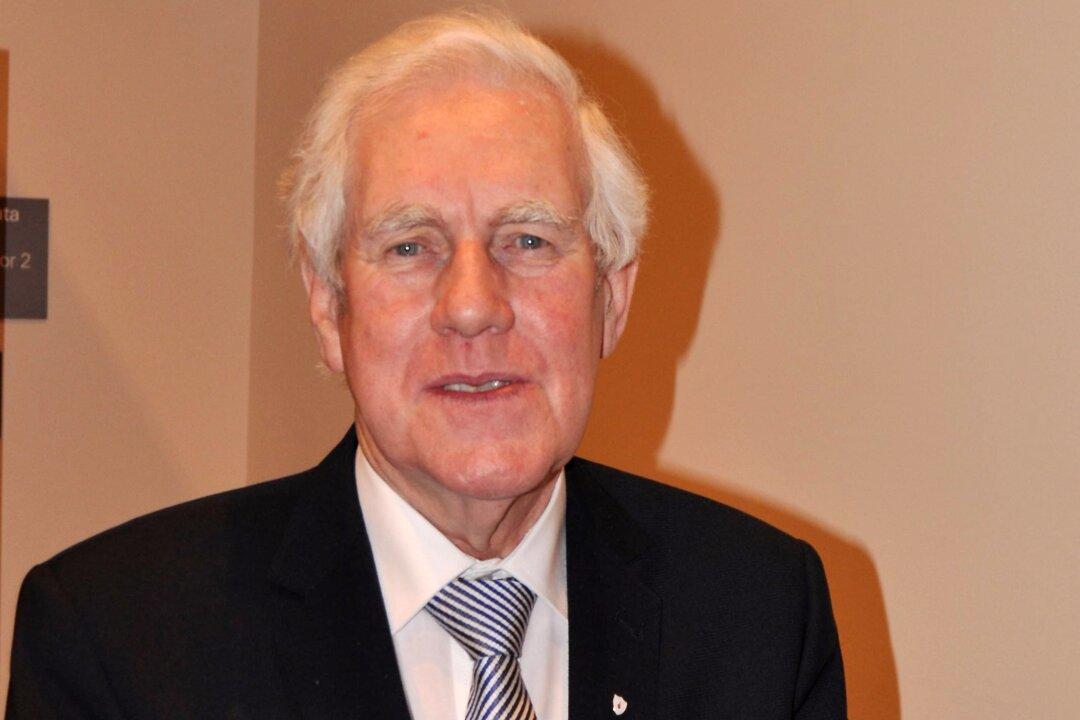
Dublin’s Lord Mayor Gerry Breen congratulated Dublin City Council, JCDecaux and dublinbikes on their success to-date, and said it shows that there is a huge demand for public transport options in the city when over one million journeys have already been made.
The one-millionth journey was made in August by 25 year old Joe Murray from Clondalkin in west Dublin, and for his troubles he was presented with a free trip to France.
Paul Heffernan from dublinbikes spoke to The Epoch Times about the progress made to date, and the future plans for the remarkably successful initiative.
“People who haven’t cycled in years have gotten back on a bike as a result of it,” said Mr Heffernan.
The beauty of the scheme is that you can take a bike, use it, put it back, and not have to worry about the bike getting stolen. “It’s just convenient for getting around the city centre.”
Mr Heffernan said that because you don’t have to state your age when you join up, there is no exact way to determine the age profile of cyclists using the scheme. You need to be over 15 to sign up, but there seems to be a good spread of all age groups using the scheme.
Although the scheme organisers don’t analyse how often particular users avail of the scheme, statistics do show that each bike is used on average 10 times a day. Which according to Mr Heffernan is “absolutely terrific usage.”
“I think most people who joined the scheme are staying with it and using it a lot.”
The only issues to date have centred around being able to get a bike at certain times of the day, such as morning and evening rush hours and lunch time; however, the expansion plans over the next month should ease this, said Mr Heffernan.
There are 26 maintenance personnel and three redistribution vans that help alleviate demand around the different stations.
Will Andrews, Chairman of the Dublin Cycling Campaign thinks the scheme is a “fantastic success.”
“It has had a huge positive impact on the city in terms of the safety-in-numbers effect for cyclists ... there are so many people using the dublinbikes that car drivers and other motorists are taking more care around Dublin ... so it’s safer for the cyclists that are out there all the time,” said Mr Andrews.
Mr Andrews described this as the “critical mass effect.” He explained that if there are more cyclists on the road, then motorists will automatically be more careful, because they learn to expect cyclists on the roads.
He also reckons that the scheme needs to be expanded “exponentially.”
“There are around 500 bikes, and we feel that there should be around 2,000 so it should be bumped up hugely.” Mr Andrews would also like to see the scheme spreading to other cities around Ireland.
Mr Andrews suggested to introduce counterflow lanes in the city for cyclists to make journeys more quickly and safely.
Mr Andrews also made the point that better law enforcement is needed for all motorists, cyclists, and pedestrians, because he believes that cyclists are getting worse in terms of breaking lights and cycling on footpaths.
“We need enforcement of speed limits for cars and we also need enforcement for bikes too ... the Gardai need to up their game in terms of making cyclists follow the rules of the road.”
Currently there are 450 bikes (soon to be extended to 550) at 40 stations in Dublin city centre, and construction work is already underway to extend 20 of the existing 40 stations and to add 4 new stations. The scheme has over 40,000 members who have made over 1 million trips so far this year.
Dublin’s Lord Mayor Gerry Breen congratulated Dublin City Council, JCDecaux and dublinbikes on their success to-date, and said it shows that there is a huge demand for public transport options in the city when over one million journeys have already been made.
The one-millionth journey was made in August by 25 year old Joe Murray from Clondalkin in west Dublin, and for his troubles he was presented with a free trip to France.
Paul Heffernan from dublinbikes spoke to The Epoch Times about the progress made to date, and the future plans for the remarkably successful initiative.
“People who haven’t cycled in years have gotten back on a bike as a result of it,” said Mr Heffernan.
The beauty of the scheme is that you can take a bike, use it, put it back, and not have to worry about the bike getting stolen. “It’s just convenient for getting around the city centre.”
Mr Heffernan said that because you don’t have to state your age when you join up, there is no exact way to determine the age profile of cyclists using the scheme. You need to be over 15 to sign up, but there seems to be a good spread of all age groups using the scheme.
Although the scheme organisers don’t analyse how often particular users avail of the scheme, statistics do show that each bike is used on average 10 times a day. Which according to Mr Heffernan is “absolutely terrific usage.”
“I think most people who joined the scheme are staying with it and using it a lot.”
The only issues to date have centred around being able to get a bike at certain times of the day, such as morning and evening rush hours and lunch time; however, the expansion plans over the next month should ease this, said Mr Heffernan.
There are 26 maintenance personnel and three redistribution vans that help alleviate demand around the different stations.
Will Andrews, Chairman of the Dublin Cycling Campaign thinks the scheme is a “fantastic success.”
“It has had a huge positive impact on the city in terms of the safety-in-numbers effect for cyclists ... there are so many people using the dublinbikes that car drivers and other motorists are taking more care around Dublin ... so it’s safer for the cyclists that are out there all the time,” said Mr Andrews.
Mr Andrews described this as the “critical mass effect.” He explained that if there are more cyclists on the road, then motorists will automatically be more careful, because they learn to expect cyclists on the roads.
He also reckons that the scheme needs to be expanded “exponentially.”
“There are around 500 bikes, and we feel that there should be around 2,000 so it should be bumped up hugely.” Mr Andrews would also like to see the scheme spreading to other cities around Ireland.
Mr Andrews suggested to introduce counterflow lanes in the city for cyclists to make journeys more quickly and safely.
Mr Andrews also made the point that better law enforcement is needed for all motorists, cyclists, and pedestrians, because he believes that cyclists are getting worse in terms of breaking lights and cycling on footpaths.
“We need enforcement of speed limits for cars and we also need enforcement for bikes too ... the Gardai need to up their game in terms of making cyclists follow the rules of the road.”