TransCanada’s controversial pipeline to pump heavy oil from Alberta’s oil sands to the Gulf coast has moved one step closer to reality.
The U.S. State Department recently concluded the $7 billion Keystone XL pipeline—which will pump oil from Hardisty, Alberta, to Nederland, Texas—will have minimal environmental effects.
U.S. President Barack Obama’s administration is expected to approve the project by the end of the year.
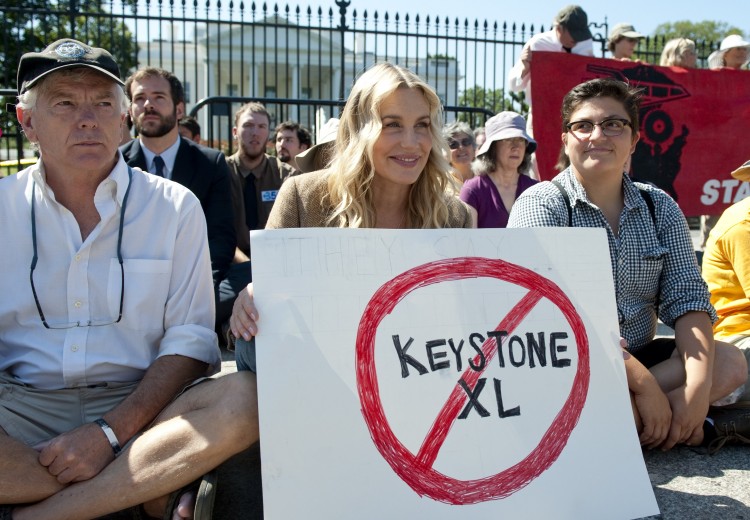
Environmental activists have gathered outside the White House to protest the impacts of the project, which include greater greenhouse gas emissions and the potential for spillage. According to a website set up for the protest, over 700 demonstrators have been arrested so far, including actress Daryl Hannah.
Alberta saw some 28,000 barrels of crude spilled from a Plains Midstream Canada-owned pipeline in May, the largest spill since 1975. An existing TransCanada pipeline that crosses into the U.S. has leaked several times, usually under 40 litres, though one spill in North Dakota equated to 400 barrels or over 63,000 litres.
Terry Cunha, a spokesperson for TransCanada, says those leaks were not from the pipeline but from complex pumping stations above ground with thousands of moving parts.
“The integrity of the pipeline is still intact,” he said, adding the company’s state-of-the-art leak detection system ensured leaks were stopped and quickly contained within the pump station facilities.
He also notes that while Canada is regulated to reduce greenhouse gas emission, other countries the U.S. imports its oil from are not.
On Wednesday, representatives from the Council of Canadians, Indigenous Environmental Network, and Greenpeace Canada delivered a letter to the Canadian embassy in Washington, D.C., demanding that Ambassador Gary Doer stop lobbying in favour of the pipeline.
Doer has argued the pipeline will create 20,000 construction jobs and 100,000 additional indirect jobs.
Supporters of the pipeline say oil from Canada lessens dependence on oil from Middle East where oil revenues fund oppressive regimes.
Natural Resources Minister Joe Oliver said in statement that he was pleased with the State Department’s final Environmental Impact Statement for the pipeline.
“Canada is the United States’ largest and most reliable energy supplier. We trade oil, natural gas, and electricity across our shared border every day. The Keystone XL pipeline will help to ensure that North America’s future energy needs are met in a safe and environmentally responsible manner for decades to come.”
The U.S. State Department recently concluded the $7 billion Keystone XL pipeline—which will pump oil from Hardisty, Alberta, to Nederland, Texas—will have minimal environmental effects.
U.S. President Barack Obama’s administration is expected to approve the project by the end of the year.
Environmental activists have gathered outside the White House to protest the impacts of the project, which include greater greenhouse gas emissions and the potential for spillage. According to a website set up for the protest, over 700 demonstrators have been arrested so far, including actress Daryl Hannah.
Alberta saw some 28,000 barrels of crude spilled from a Plains Midstream Canada-owned pipeline in May, the largest spill since 1975. An existing TransCanada pipeline that crosses into the U.S. has leaked several times, usually under 40 litres, though one spill in North Dakota equated to 400 barrels or over 63,000 litres.
Terry Cunha, a spokesperson for TransCanada, says those leaks were not from the pipeline but from complex pumping stations above ground with thousands of moving parts.
“The integrity of the pipeline is still intact,” he said, adding the company’s state-of-the-art leak detection system ensured leaks were stopped and quickly contained within the pump station facilities.
He also notes that while Canada is regulated to reduce greenhouse gas emission, other countries the U.S. imports its oil from are not.
On Wednesday, representatives from the Council of Canadians, Indigenous Environmental Network, and Greenpeace Canada delivered a letter to the Canadian embassy in Washington, D.C., demanding that Ambassador Gary Doer stop lobbying in favour of the pipeline.
Doer has argued the pipeline will create 20,000 construction jobs and 100,000 additional indirect jobs.
Supporters of the pipeline say oil from Canada lessens dependence on oil from Middle East where oil revenues fund oppressive regimes.
Natural Resources Minister Joe Oliver said in statement that he was pleased with the State Department’s final Environmental Impact Statement for the pipeline.
“Canada is the United States’ largest and most reliable energy supplier. We trade oil, natural gas, and electricity across our shared border every day. The Keystone XL pipeline will help to ensure that North America’s future energy needs are met in a safe and environmentally responsible manner for decades to come.”