

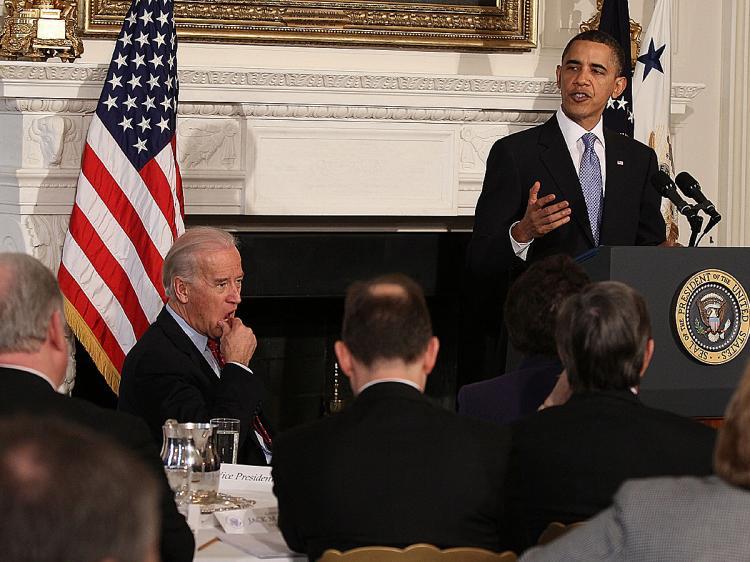
Just three days ahead of President Obama’s Health Care Summit on Feb. 25, the White House unveiled the president’s revised health care proposal. The revised proposal, which was posted in full on the White House Web site, focuses on affordability, accountability, and anti-discrimination. It also makes provisions for a competitive health insurance market and fiscal stability in the national budget.
The proposal is a measure that is attached to a budget bill, and requires only 51 votes to pass, but without bipartisan support, there could be serious political problems.
One of the most controversial parts of the proposal is a measure for Health and Human Services to get new authority to block premium increases.
Prior to the report’s release, Minority Leader Sen. Mitch McConnell (R-Ky.) said in an interview with FOX news on Sunday, “It strikes me as rather arrogant to say, ‘We’re gonna give it to you anyway.’ And we’ll use whatever device is available to achieve that end.”
The proposal would make insurance more affordable by providing the largest middle class tax cut for health care ever. It would reduce premium costs for tens of millions of families and small business owners who can’t currently afford coverage—according to the White House these Americans number in the neighborhood of 31 million people.
The proposal is a measure that is attached to a budget bill, and requires only 51 votes to pass, but without bipartisan support, there could be serious political problems.
One of the most controversial parts of the proposal is a measure for Health and Human Services to get new authority to block premium increases.
Prior to the report’s release, Minority Leader Sen. Mitch McConnell (R-Ky.) said in an interview with FOX news on Sunday, “It strikes me as rather arrogant to say, ‘We’re gonna give it to you anyway.’ And we’ll use whatever device is available to achieve that end.”
The proposal would make insurance more affordable by providing the largest middle class tax cut for health care ever. It would reduce premium costs for tens of millions of families and small business owners who can’t currently afford coverage—according to the White House these Americans number in the neighborhood of 31 million people.


