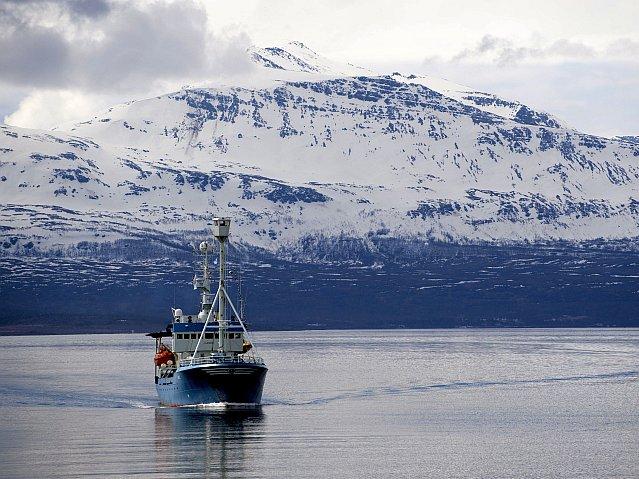
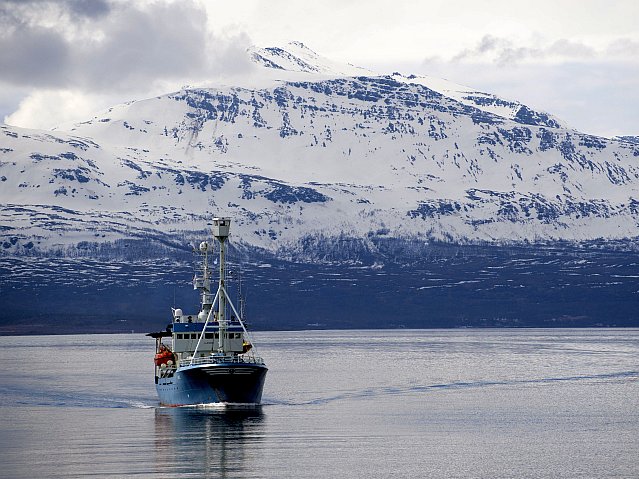
In a matter of decades, the Arctic will be entirely ice-free every summer. Scientists are projecting that day to be sometime in the late summer by the end of the 2030s, according to a recent U.S. congressional report.
It is a combination of climate change and new sea technology that’s making the Arctic increasingly accessible, experts say. The fabled Northwest Passage opened for shipping for the first time in the summer of 2008. Every year since, it has been open for a period of about six weeks during summer.
Commercial traffic, pleasure cruises, and adventurers are already taking advantage of the new northern route.
The Northern Sea route, also called the Northeast Passage, on the Russian’s side of the Arctic is also becoming available as the Arctic ice melts.
“The Arctic Ocean is becoming an ocean like any other,” says Rob Huebert, an associate professor at the University of Calgary in Canada, who has written extensively on Arctic sovereignty. “The question then becomes, who has a right to go fishing there?”
The issue isn’t only fishing rights. The Arctic accounts for around 22 percent of the world’s oil, gas, and other resources, according to a 2008 U.S. Geological Survey report, making it very attractive to the major world powers.
As access increases, the geopolitics of who owns the Arctic is starting to play out, says Vincent Gallucci, professor at the School of Aquatic and Fishery Sciences at the University of Washington.