


University of Alberta researchers are leading the world in developing a new cancer treatment, thanks to a $6 million donation announced recently.
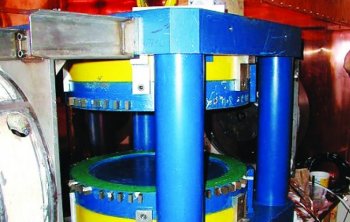
The new technology, called Magnetic Resonance Real-time Guided Radiation Therapy, is the first of its kind to combine the imaging capabilities of a Magnetic Resonance Imaging (MRI) system with the radiation treatment capabilities of a Linear Accelerator (linac).
“We were the first in the world to build a machine that does this function,” says Dr. Gino Fallone, a researcher with Alberta Cancer Board of Alberta Health Services.
“One machine that does all this—to do that is not a simple feat and has not been done before, because these machines are typically allergic to each other.”
Surgeons are able to target “solid cancers”—tumours and cancerous soft tissue—with the device more accurately, because they are able to see the disease in detail through 3D real-time imaging.
“Without this type of technology, you have to decrease the dose of the radiation because some radiation will hit healthy tissue,” says Fallone.
“Because this new system will allow us to precisely place the radiation beam on the patient’s tumour, the side effects will be reduced and we don’t have to worry about decreasing the dose. In other words, we can cure the cancer much better and without side effects.”
As well as improving the accuracy of radiation treatments for solid tumours, the device will allow certain types of tumours that are not normally treated by radiation—liver, stomach and pancreatic cancers—to include radiation as a treatment option.
The project will receive funding from the federal and provincial governments, the University of Alberta, Alberta Cancer Foundation and industry.
Fallone expects the treatment to be ready in two years, after extensive clinical trials. He says other countries such as Holland and the United States are also scrambling to develop similar technologies.
“We were the first to make this work and now other people are trying it. They say, ‘Oh wow, this thing is going to work.’ So we’re trying to develop it now, we have the funding now.”
“We think it will revolutionize the use of radiation for cancer treatments.”
The new technology, called Magnetic Resonance Real-time Guided Radiation Therapy, is the first of its kind to combine the imaging capabilities of a Magnetic Resonance Imaging (MRI) system with the radiation treatment capabilities of a Linear Accelerator (linac).
“We were the first in the world to build a machine that does this function,” says Dr. Gino Fallone, a researcher with Alberta Cancer Board of Alberta Health Services.
“One machine that does all this—to do that is not a simple feat and has not been done before, because these machines are typically allergic to each other.”
Surgeons are able to target “solid cancers”—tumours and cancerous soft tissue—with the device more accurately, because they are able to see the disease in detail through 3D real-time imaging.
“Without this type of technology, you have to decrease the dose of the radiation because some radiation will hit healthy tissue,” says Fallone.
“Because this new system will allow us to precisely place the radiation beam on the patient’s tumour, the side effects will be reduced and we don’t have to worry about decreasing the dose. In other words, we can cure the cancer much better and without side effects.”
As well as improving the accuracy of radiation treatments for solid tumours, the device will allow certain types of tumours that are not normally treated by radiation—liver, stomach and pancreatic cancers—to include radiation as a treatment option.
The project will receive funding from the federal and provincial governments, the University of Alberta, Alberta Cancer Foundation and industry.
Fallone expects the treatment to be ready in two years, after extensive clinical trials. He says other countries such as Holland and the United States are also scrambling to develop similar technologies.
“We were the first to make this work and now other people are trying it. They say, ‘Oh wow, this thing is going to work.’ So we’re trying to develop it now, we have the funding now.”
“We think it will revolutionize the use of radiation for cancer treatments.”


