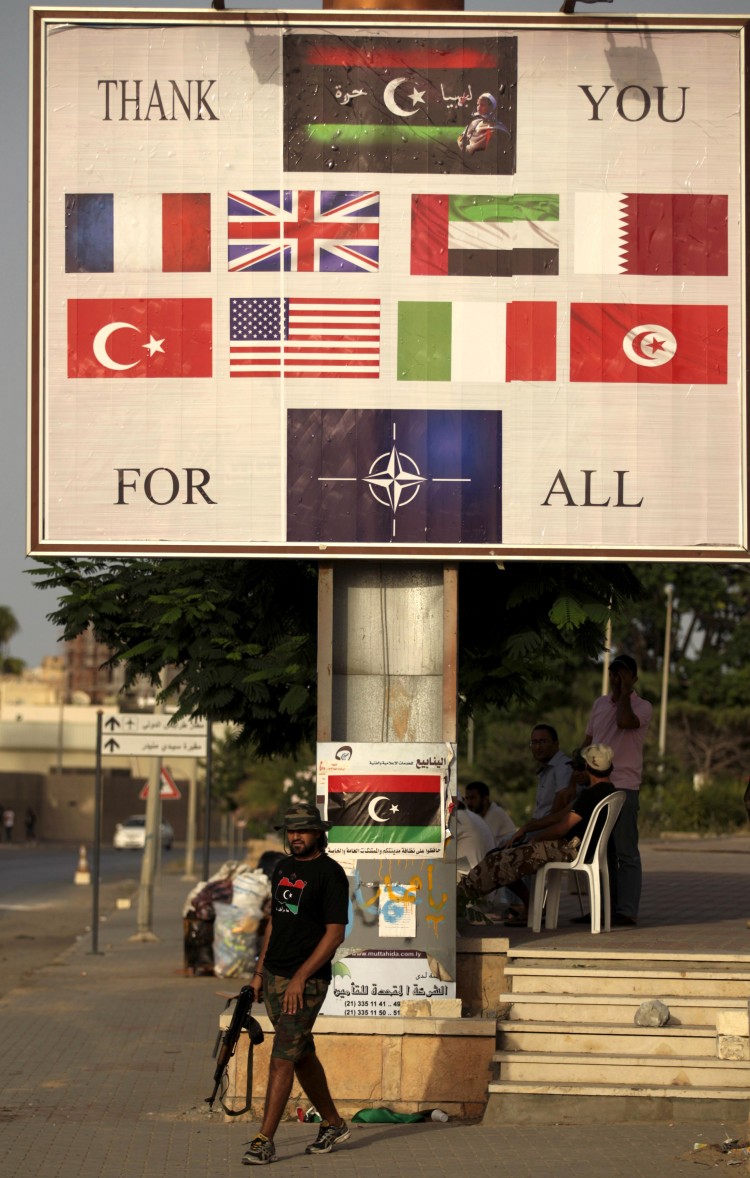
“We are determined to continue our mission for as long as attacks and threats continue, but not a day longer than necessary,” NATO Secretary-General Anders Fogh Rasmussen said in a statement.
Officials were corralled in Paris for the International Conference on Libya on Sept. 1, laying out the plan of action to finish up the job, and discussing how to help the Libyan people build a stable democracy once the conflict ends. As the country moves from repression to rule of law, NATO is “ready to play a supporting role, if and when so requested,” according to the NATO website.
The meeting was the fifth of its kind, building on the Libya Contact Group, held just a week prior on Aug. 25. According to U.S. State Department spokesperson Victoria Nuland, the latest meeting aimed to “provide the international community with an opportunity to further coordinate our financial and political support” for the Transitional National Council of Libya (TNC), the country’s interim governing body.
“The days and weeks ahead will be critical for the Libyan people,” said Nuland, adding that the country’s “transition to democracy is and should be Libyan-led, with close coordination and support between the TNC and its international partners,” and like NATO, the United States will stand by the “Libyan people as they continue their journey toward genuine democracy.”
While the United States led the initial air strikes against Gadhafi’s forces, NATO took full control of international military operations in Libya on March 31. The NATO mission in Libya, dubbed Operation Unified Protector, aimed to “protect civilians and civilian-populated areas under attack or threat of attack,” according to a NATO operation update.
The international community was wary, and still is wary, of sending ground troops into Libya, so support has mainly consisted of giving air support to the rebels—taking out Gadhafi’s tanks and airfields.
A stalemate between the rebels and pro-Gadhafi forces was shattered on Aug. 20, and rebels took Tripoli in the week that followed.
“The Gadhafi regime is collapsing and rapidly losing control on multiple fronts. A few days ago we witnessed the people of Tripoli freeing their city,” said Col. Roland Lavoie, Operation Unified Protector military spokesperson, during an Aug. 30 press briefing on Libya, according to a transcript.
Mixed statements are coming from the last remnants of the former regime. The whereabouts of former Libyan leader Moammar Gadhafi are unknown, but his two sons have given conflicting statements on the war.
One son, Saif al-Islam, vowed to fight to the last man, while another son, Saadi, claimed he contacted Libya’s National Transitional Council trying to end the war at the request of his father, reported Radio Free Europe.
Lavoie stated that “despite the fall of the Gadhafi regime and the gradual return of security for many Libyans, NATO’s mission is not finished yet,” adding that NATO will continue its “pressure on the remnants of the Gadhafi regime until we can confidently say that the civilian population of Libya is no longer threatened.”