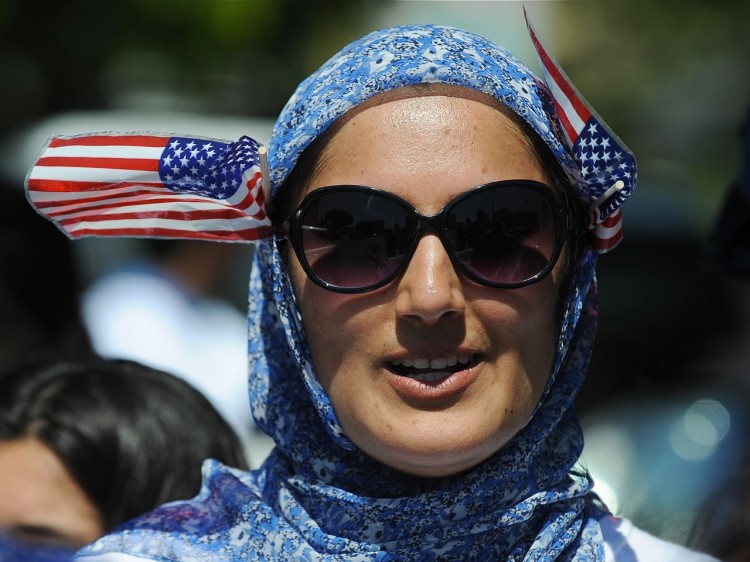
For Muslims living in Western countries, the events of 9/11 struck with particular impact. Suddenly, in communities where many had lived for years or a lifetime, people connected them with the actions of a small group of violent extremists.
The Epoch Times spoke with Muslim community leaders in three Western countries to hear their perspectives on 9/11 and its impact, 10 years later.
Ashfaq Parkar, who lives in New Jersey, is one of the three coordinators for the Why Islam project, which has a website and a toll free hotline for anyone who wants to know more about Islam.
“For us, the anniversary first of all means a time to remember all the people who died in the attacks,” Parkar told The Epoch Times in a telephone interview, pointing out that many Muslims also died in the attacks on 9/11. One of them was a founder of the Why Islam project, Tariq Amanullah, who worked in WTC at the time.
But the anniversary is also a reminder of the profound impact of 9/11 has had on American Muslims. They face an ongoing challenge to both counteract misrepresentation of their faith and try to build bridges between the Muslim community and society at large, he said.
The Muslim community in the United States is relatively small, making up only about 2 percent of the population. Most Americans knew little about Islam before 9/11 and really didn’t care, says Parkar. This lack of knowledge led to a lot of misunderstandings and hatred after the attacks.
This problem is exacerbated by the fact that a small group of fundamentalist, violent extremists, whose interpretation of Islam and methods are completely alien to the vast majority of Muslims, get all the limelight.
In Europe, which has a relatively large Muslim immigrant and refugee population given its proximity to the Middle East and North Africa, the increased tensions between the Muslim and non-Muslim communities has manifested at a more political level, in a way that Parkar says has not been the case in the United States because of its strong tradition of religious freedom and diversity.
In Europe, many political parties with populist and xenophobic agendas appeared or gained popularity, capitalizing on the post-9/11 tensions, according to prominent Swedish Imam Abd al-Haqq Kielan.
“They are quite aggressive and they blame Islam for everything that’s gone wrong in society. They have used these events to cause division, which they have then exploited in order to win more followers,” said Kielan via telephone from Sweden.
This has in turn led to resentment among many Muslims, who feel that their faith is constantly under attack and slandered. Because of this political atmosphere, the whole topic of Islam has become so sensitive in Europe in the last decade that even the slightest spark can set off an explosion.
Caricatures depicting the prophet Mohammed that appeared in the Danish newspaper Jyllands-posten in 2005 led to boycotts of Danish products, attacks against Danish embassies in the Middle East, huge demonstrations, and Libya, Saudi Arabia, and Iran withdrew their ambassadors from Denmark.
Also, some European countries have sought to curtail expressions of Islam, such as Switzerland’s prohibition of building minarets and the ban on burqas and other face veils worn by some Muslim women in France and pending elsewhere.
But while the high-level backlash has been more of an issue in Europe, Kielan says at the community level 9/11 had less of an impact in Sweden.
“Certainly, xenophobic tendencies have increased and become more legitimate in society since the attacks, but Muslims as a group in Sweden has not been that much affected,” he said, adding however that the many wars in the Muslim world since 2001 has been troubling and painful for many Swedish Muslims.
The U.K., with a Muslim population made up largely of Bengalis and Pakistanis, has struggled with racism and xenophobia longer than many other European countries.
According to some Muslims interviewed on a recent BBC 4 documentary called “British Muslims-In the Shadow of 9/11,” the “old” racism that was rampant in the 1970s and 1980s was actually ebbing out when 9/11 and the later terrorist attacks on London in 2005 gave it new life.
Building Bridges
Sheikh Fawzi of the interfaith department of the Islamic Cultural Centre in London, didn’t want to single out the impact of 9/11 on the Muslim community, he says in an increasingly globalized world everyone is interconnected.
“It affects everyone, not only the Muslim community. Everything affects everyone, we are all in the same boat,” he said via telephone.
Both Fawzi and Parkar point out some positive developments since 9/11, such as events to increased bridge building between Muslims and people of other faiths.
Another positive trend noted all three agreed on is that extremists that preach violence and recruit Western Muslims to their “jihad” seem to be fewer. Propagation of extremist views in Western mosques has also become less common.
Kielan believes their foreign funding may have dried up. He saw something of a peak in extremist activity in the years following 9/11, but now there are very few, at least in Sweden. There are also other reasons for their decline as well.
“They have really failed. People all over the world have seen that they have nothing to offer anyone. Their promises of a more just society turned out to be empty,” Kielan said.
Parkar also emphasized the work carried out in mosques to promote peaceful coexistence and participation in community activities.
"Often Muslim leadership is accused of not doing enough to speak up against terrorism, but from my own experience they have gone out of their way to speak up against terrorism,” he said.
Fawzi expressed how most muslims view terrorism:
“Islam teaches that if you kill one person, that is like killing all of mankind. We don’t consider these terrorists as Muslims. All good Muslims are against these acts,” he said.