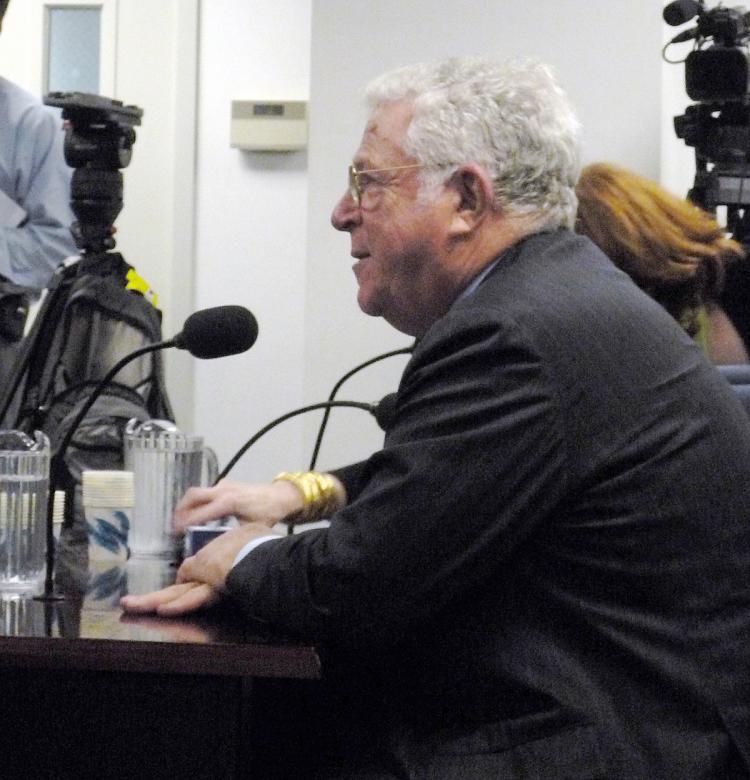
Last week, Ravitch issued his recommendations to resolve the MTA’s current financial woes. None of his solutions would be easy to swallow, but the money needed to fill MTA’s $1.2 billion deficit has to come from somewhere.
Committee chair Assemblyman Richard Brodsky acknowledged that solving MTA’s problems will be challenging. “These are very difficult, very unpopular choices to make,” Brodsky said. “Nothing is the only unacceptable outcome.”
At the request of Governor David Paterson, Ravitch and his commission, consisting of experts from various sectors, have been working since the spring to develop solutions for the MTA. Some aspects of the plan have drawn criticism from various government officials and policy groups.
His proposal for requiring a one-way off-peak toll on East River and Harlem River bridges is one idea that has come under fire. Ravitch estimates that the tolls would generate $600 million in revenue annually, which he would dedicate to improving bus service, especially on cross-borough routes.
However, Council member Bill De Blasio feels it unfairly burdens non-Manhattan residents. “It is just bad public policy to ask people who live and work in the outer boroughs to fill our budget gaps, regardless of their financial ability to do so,” he said in a statement. Instead, De Blasio urged the Ravitch Commission to consider City Comptroller William Thompson’s proposal.
A week before Ravitch presented his recommendations, Thompson proposed raising money by enacting an additional weight-based vehicle registration fee in all counties served by the MTA—the heavier the car, the more expensive it would cost to own it. The problem with that, Ravitch said, is that more car owners live outside of the city. “The incidence of the burden would not necessarily fall on those who are benefiting most from the system,” Ravitch said.
Ravitch is not blind to the fact that a strong public transit system benefits automobile drivers. “Just think about what would happen to congestion in this town...if we didn’t have three to four million people a day using public transit,” he said.
On raising transit fares, Ravitch recommended that the MTA limit fare increases to once every two years and at a rate not exceeding that of inflation. Though not quick to propose fare hikes, he emphasized that the MTA’s current funding problems are a result of decisions to not raise fares “when the arithmetic compelled that to happen,” Ravitch said. A 10-cent fare increase has already been scheduled for next year.
After reviewing a number of tax options, the Ravitch Commission concluded that “the tax that would have the least onerous impact on the economy of this region was a payroll tax to be paid by everybody, because everybody benefits from this transportation system,” Ravitch said. He has suggested the rate of 33 cents for each $100 earned.
To ensure that the MTA does not dig its hole deeper moving forward, Ravitch recommended that a lock-key fund be set up in 2010 for its capital projects, which include the Second Avenue Subway line and the East Side Access project.