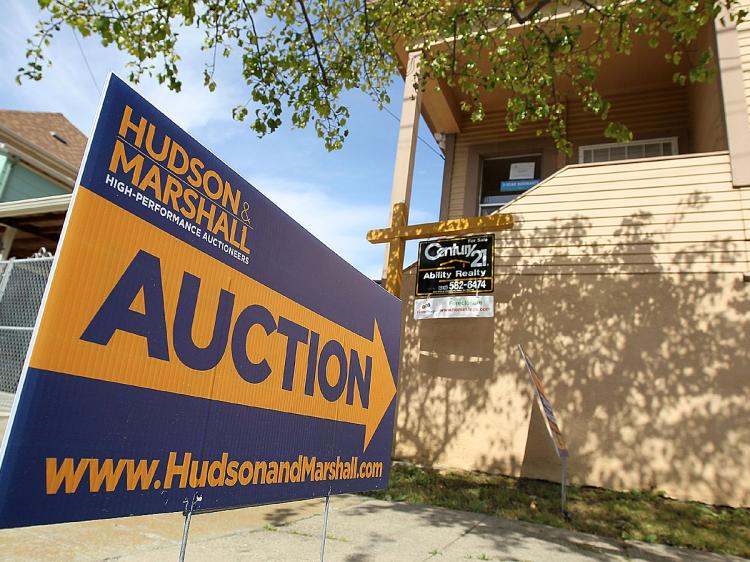
Loan delinquencies among U.S. homeowners continue to rise, and a recent survey from the Mortgage Bankers Association (MBA) suggests that the default rate is the highest since the 1970s.
Homeowners with adjustable-rate mortgages are by far more likely to default than those who hold a fixed-rate mortgage. More than 40 percent of those with an adjustable-rate mortgage are 90 days or more past due. This rate is roughly eight times higher than delinquent loans from those with fixed-rate loans.
According to the survey, close to three-fifths of homeowners have defaulted because they lost their jobs, while about 16 percent had spent more than they earned and could not keep up with paying their bills.
What has been whispered about for quite some time has been statistically confirmed: According to a recent Harris Poll, roughly 70 percent of homeowners—27 million people—have mortgages exceeding the value of their homes.
More than a fourth of such people who are “underwater” are having problems making ends meet, which includes making mortgage payments. Many are reportedly strategically defaulting so they can walk away from their debts.
But the Harris figures may not tell the entire story. According to a recent Knowledge@Wharton (KW) article, there are 11 million people whose homes have declined in value.
That number of people, “roughly one-fifth of those who pay mortgages—is big enough to make even the most cavalier consumer think twice before buying a home, especially when key pricing indexes are showing continuing weakness in markets across the country,” suggests the KW article.
The S&P (Standard & Poor’s)/Case-Shiller Home Price Index indicates that housing prices have moved very little over the past months, after having declined by 31 percent in the three years up to 2008.
In the second quarter of 2006, the index spiked at 189.93 and then began its steady decline to 136.09 by the end of December 2009, with the lowest point at 111.11 in mid-2009. The index can be traced back to 1987 when it was at an all-time low of 62.03, moving up through the years with marked increases since 2002.
“As measured by prices, the housing market is definitely in better shape than it was this time last year, as the pace of deterioration has stabilized for now. However, the rate of improvement seen during the summer of 2009 has not been sustained,” announced David M. Blitzer, chairman of the Index Committee at S&P, in a February statement
S&P predicted that the index would trend up in 2010, however not to the level it experienced in 2006.
President Barack Obama addressed a stopgap goal to help distressed homeowners last month. Amendments to the Home Affordable Modification Program (HAMP), a program that was initiated by the Obama administration to stabilize the American housing market, address the plight of those who saw the value of their house, but not their loan payments, decline.
The changes “expand flexibility for mortgage servicers and originators to assist more unemployed homeowners and to help more people who owe more on their mortgage than their home is worth because their local markets saw large declines in home values,” according to a March press release on the HAMP website.
The lenders are asked to write off 15 percent of the loan principal on loans where the loans are 115 percent of the market price. The taxpayers will also pay part of the cost of the reduction in principal. However, the write-off will be spread out over three years and requires that the homeowner not default.
“This will help homeowners regain some of the equity lost due to severe home price declines in many regions of the country,” according to the federal government press release.
Homeowners who are unemployed or unable to find another job may find help under the HAMP program. This program is geared toward distressed homeowners whose loans are neither owned nor guaranteed by Fannie Mae or Freddie Mac.
Instead of foreclosure of the property, short sale or deed-in-lieu should be considered. The government will also provide up to $3,000 in relocation funds.
In a property short sale, the purchase price is less than the loan balance and is usually used when a homeowner defaults on the loan and there are no signs that a restructuring is feasible. Short sale instead of foreclosure saves large money outlays by the lender, and the borrower will not be faced with a detrimental credit report. Alas, the borrower may still be saddled with the difference between the sale proceeds and loan amount due to the bank.
Under a deed-in-lieu, the defaulted borrower signs the house over to the lender. Although it will be noted in the credit report, it will not be as detrimental as a foreclosure. The borrower must provide a signed document stating that the borrower was not pressured into the deed-in-lieu, thus protecting the lender from future lawsuits that accuse the lender of acting in bad faith.
The housing market is still in severe distress, and without the private and government sectors joining forces, recovery will be drawn out much longer, realty experts say.
“It is abundantly clear that when people owe more on their houses than they are worth, it creates severe dislocation for households, the community and the banking sector,” said Todd Sinai, real estate professor at the University of Pennsylvania, in the KW article.
Underlining the seriousness of the real estate defaults, he added, “We’re in a situation where we have to adopt some very expensive policies to compensate for the fact that there was systemic easy credit.”
“If we want to try and make housing a less risky sector, one would consider encouraging households to use less leverage. That would reduce the risk of a downturn like we have just seen and enhance the risk-management benefits of owning a house.”
Homeowners with adjustable-rate mortgages are by far more likely to default than those who hold a fixed-rate mortgage. More than 40 percent of those with an adjustable-rate mortgage are 90 days or more past due. This rate is roughly eight times higher than delinquent loans from those with fixed-rate loans.
According to the survey, close to three-fifths of homeowners have defaulted because they lost their jobs, while about 16 percent had spent more than they earned and could not keep up with paying their bills.
Home Values Decline
What has been whispered about for quite some time has been statistically confirmed: According to a recent Harris Poll, roughly 70 percent of homeowners—27 million people—have mortgages exceeding the value of their homes.
More than a fourth of such people who are “underwater” are having problems making ends meet, which includes making mortgage payments. Many are reportedly strategically defaulting so they can walk away from their debts.
But the Harris figures may not tell the entire story. According to a recent Knowledge@Wharton (KW) article, there are 11 million people whose homes have declined in value.
That number of people, “roughly one-fifth of those who pay mortgages—is big enough to make even the most cavalier consumer think twice before buying a home, especially when key pricing indexes are showing continuing weakness in markets across the country,” suggests the KW article.
The S&P (Standard & Poor’s)/Case-Shiller Home Price Index indicates that housing prices have moved very little over the past months, after having declined by 31 percent in the three years up to 2008.
In the second quarter of 2006, the index spiked at 189.93 and then began its steady decline to 136.09 by the end of December 2009, with the lowest point at 111.11 in mid-2009. The index can be traced back to 1987 when it was at an all-time low of 62.03, moving up through the years with marked increases since 2002.
“As measured by prices, the housing market is definitely in better shape than it was this time last year, as the pace of deterioration has stabilized for now. However, the rate of improvement seen during the summer of 2009 has not been sustained,” announced David M. Blitzer, chairman of the Index Committee at S&P, in a February statement
S&P predicted that the index would trend up in 2010, however not to the level it experienced in 2006.
Helping U.S. Borrowers
President Barack Obama addressed a stopgap goal to help distressed homeowners last month. Amendments to the Home Affordable Modification Program (HAMP), a program that was initiated by the Obama administration to stabilize the American housing market, address the plight of those who saw the value of their house, but not their loan payments, decline.
The changes “expand flexibility for mortgage servicers and originators to assist more unemployed homeowners and to help more people who owe more on their mortgage than their home is worth because their local markets saw large declines in home values,” according to a March press release on the HAMP website.
The lenders are asked to write off 15 percent of the loan principal on loans where the loans are 115 percent of the market price. The taxpayers will also pay part of the cost of the reduction in principal. However, the write-off will be spread out over three years and requires that the homeowner not default.
“This will help homeowners regain some of the equity lost due to severe home price declines in many regions of the country,” according to the federal government press release.
Homeowners who are unemployed or unable to find another job may find help under the HAMP program. This program is geared toward distressed homeowners whose loans are neither owned nor guaranteed by Fannie Mae or Freddie Mac.
Instead of foreclosure of the property, short sale or deed-in-lieu should be considered. The government will also provide up to $3,000 in relocation funds.
In a property short sale, the purchase price is less than the loan balance and is usually used when a homeowner defaults on the loan and there are no signs that a restructuring is feasible. Short sale instead of foreclosure saves large money outlays by the lender, and the borrower will not be faced with a detrimental credit report. Alas, the borrower may still be saddled with the difference between the sale proceeds and loan amount due to the bank.
Under a deed-in-lieu, the defaulted borrower signs the house over to the lender. Although it will be noted in the credit report, it will not be as detrimental as a foreclosure. The borrower must provide a signed document stating that the borrower was not pressured into the deed-in-lieu, thus protecting the lender from future lawsuits that accuse the lender of acting in bad faith.
The housing market is still in severe distress, and without the private and government sectors joining forces, recovery will be drawn out much longer, realty experts say.
“It is abundantly clear that when people owe more on their houses than they are worth, it creates severe dislocation for households, the community and the banking sector,” said Todd Sinai, real estate professor at the University of Pennsylvania, in the KW article.
Underlining the seriousness of the real estate defaults, he added, “We’re in a situation where we have to adopt some very expensive policies to compensate for the fact that there was systemic easy credit.”
“If we want to try and make housing a less risky sector, one would consider encouraging households to use less leverage. That would reduce the risk of a downturn like we have just seen and enhance the risk-management benefits of owning a house.”