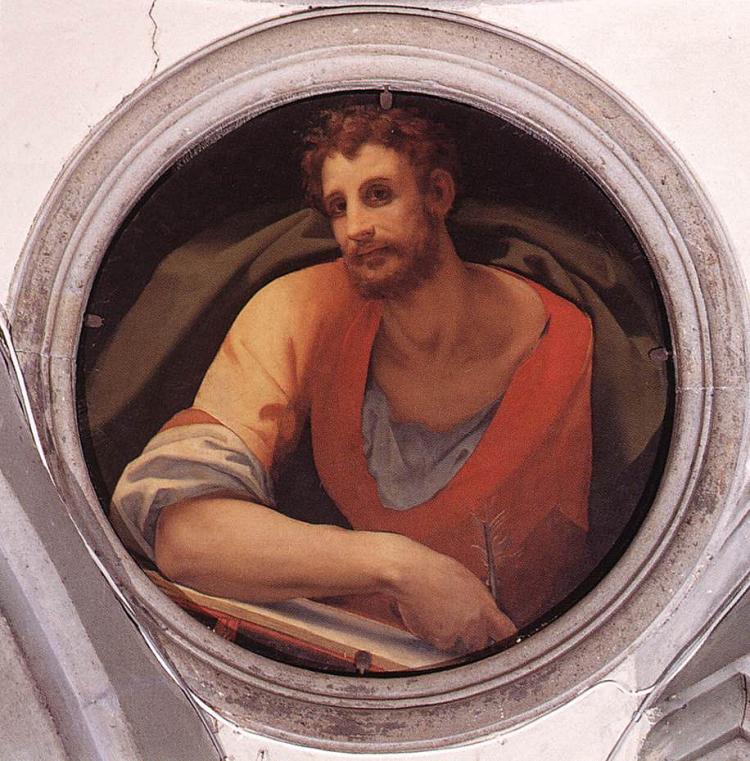
NEW YORK—The first exhibition ever devoted to painter and poet Agnolo Bronzino (1503-1572) is set to open at The Metropolitan Museum of Art on Wednesday, running through April 18.
The collection brings together almost all of the 61 known paintings by or attributed to this great Florentine court artist of Duke Cosimo I de' Medici and his beautiful wife, the Duchess Eleonora di Toledo—whom, along with her son, was the subject of one of Bronzino’s most well-known portraits.
Bronzino was the son of a butcher born in Monticelli near Florence and apprenticed at a very young age in the workshop of painter Jacopo Pontormo (1494-1557). As he grew older, he became a draftsman, poet, teacher, and painter famous for his power to capture the psychology of his sitters.
Although he was a leading figure among Mannerist painters in Florence, Bronzino has never been the subject of a comprehensive exhibition. His surviving drawings, while exquisitely beautiful, have been little studied, as they are hardly ever on public view.
The new exhibition and accompanying catalogue feature a scholarly contribution and re-examination of some of the open questions regarding his career and a more precise definition of his works’ chronology.
The drawings were borrowed from major museums and private collections within Europe and North America, including Musée du Louvre, British Museum, and Royal Library of Windsor Castle.
The collection brings together almost all of the 61 known paintings by or attributed to this great Florentine court artist of Duke Cosimo I de' Medici and his beautiful wife, the Duchess Eleonora di Toledo—whom, along with her son, was the subject of one of Bronzino’s most well-known portraits.
Bronzino was the son of a butcher born in Monticelli near Florence and apprenticed at a very young age in the workshop of painter Jacopo Pontormo (1494-1557). As he grew older, he became a draftsman, poet, teacher, and painter famous for his power to capture the psychology of his sitters.
Although he was a leading figure among Mannerist painters in Florence, Bronzino has never been the subject of a comprehensive exhibition. His surviving drawings, while exquisitely beautiful, have been little studied, as they are hardly ever on public view.
The new exhibition and accompanying catalogue feature a scholarly contribution and re-examination of some of the open questions regarding his career and a more precise definition of his works’ chronology.
The drawings were borrowed from major museums and private collections within Europe and North America, including Musée du Louvre, British Museum, and Royal Library of Windsor Castle.