“Local government has been deferring expenditure for about 15 years” – Paul Bell, Australian Local Governments Association president
The Federal Government has given a $300 million cash handout to local government, but councils need more than cash says a public policy expert.
Dr Brad Pettitt, from West Australia’s Murdoch University, says the handout could service one or two infrastructure projects, but would do little to solve fundamental problems in local level governance.
“Long-term sustainability of local governments requires structural reform,” he told The Epoch Times.
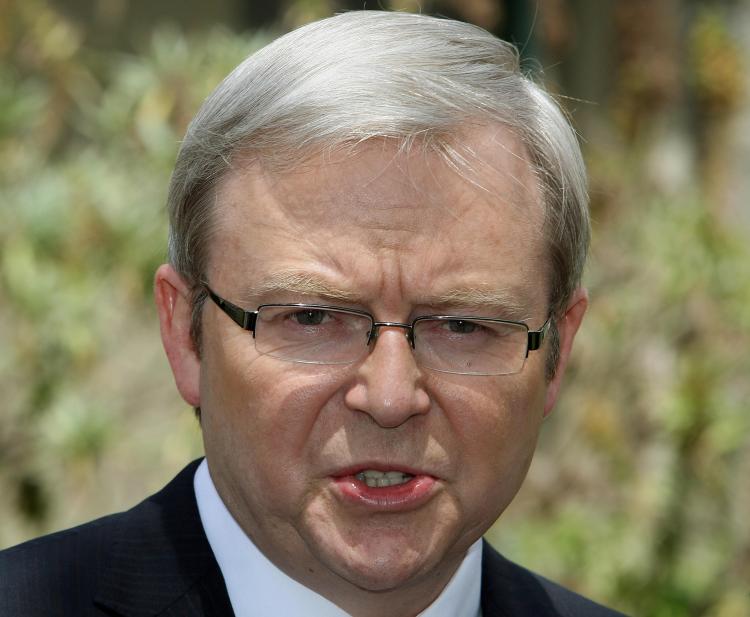
Prime Minister Kevin Rudd announced the handout at a meeting of over 500 mayors and shire councillors in Canberra this week.
The $300 million, which was originally to be spent in 2009–2010 has been implemented earlier as a way of further stimulating the economy, Mr Rudd said.
“The purpose of this action is to build local infrastructure and support local economies and jobs during the global financial crisis,” he said.
Mr Rudd said his Government expects local government to activate the spending before the end of this financial year.
“We’ll be asking local government to implement a speedy rollout of infrastructure investment to deliver both immediate economic benefits and long-term community benefits,” he said.
The Australian Local Governments Association, (ALGA), which had asked for $1 billion to be spent over four years, says local councils needed around $15 billion to bridge the gap in servicing local community infrastructure.
Paul Bell, the president of ALGA said community infrastructure required constant upkeep, and service expectations were increasing.
Facilities like swimming pools and sports arenas that were built in the 1950s and 60s; town halls, Meal on Wheels, parks and gardens were just some of the areas that needed addressing.
“Local government just has been deferring this expenditure, not for one year, but for about 15 years now,” he told ABC’s 7.30 Report: “The whole total, that’s about $15 billion worth of deferred expenditure on this sort of community infrastructure. And it’s everywhere. It’s in the metros, the high growth areas, the sea change areas and the rural and regional places – right throughout Australia.”
Dr Pettitt, who is also a councillor for Perth’s, Fremantle Council, said local governments cannot meet community needs under the present system of capital raising.
Local councils are limited by law to raising revenue through council rates only. Raising capital would require putting up rates as fast as the CPI (Consumer Price Index), he said
“We would be under a fair bit of pressure not to raise rates [in this way],” he said, “and, there would be a lot of criticism.”
Dr Pettitt said councils were presently responsible for far greater services than the traditional “rates roads and rubbish”.
Local councils, for example, maintained any number of state government facilities, but were unable to charge the state governments rates.
The states also dictated what planning fees local councils could charge and determined the wages of both mayors and councillors.
Climate change initiatives, which were largely happening at the community level, were adding additional costs, he said.
Dr Pettitt said councils needed more autonomy in the way they managed their funds and more flexibility in avenues of revenue.
“We need to be able to raise funds from a variety of sources,” he said.
Over-Government
While structural reform was vital in the local government arena, the larger context of governance in Australia was also important to address.
“There is a strong argument to suggest Australia is over-governed, that is, it has too many levels of government,” he said.
Dr Pettit said he could not see major reform happening between the three tiers of government in the near future, but believed it was important the issue be raised and open for public discussion.