TOKYO—Japanese Prime Minister Shinzo Abe will visit Pearl Harbor with U.S. President Barack Obama at the end of this month, becoming the first leader of his country to go to the site of the Japanese attack that propelled the United States into World War II.
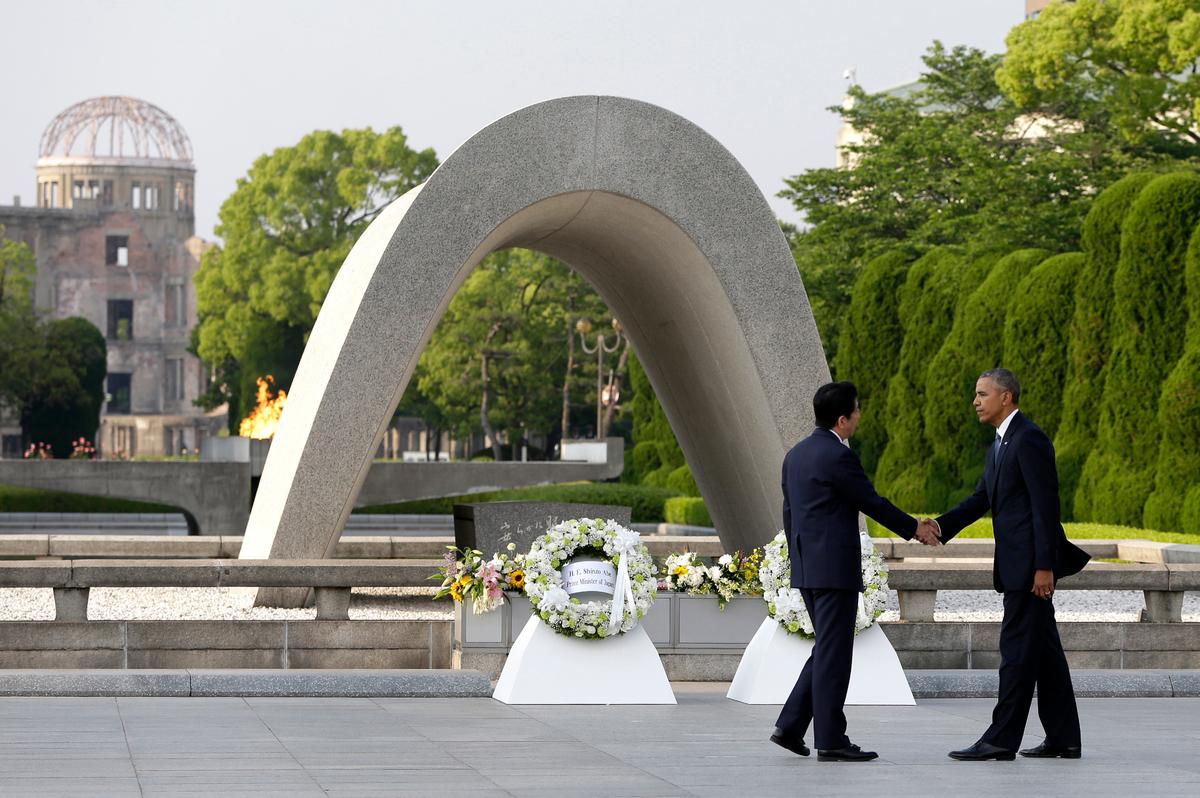
Monday’s unexpected announcement came two days before the 75th anniversary of the attack and six months after Obama became the first sitting U.S. president to visit the memorial in Hiroshima for victims of the U.S. atomic bombing of that city at the end of the same war.
Abe, in a brief statement to reporters, said he would visit Hawaii on Dec. 26 and 27 to pray for the war dead at the naval base at Pearl Harbor and to hold a final summit meeting with Obama before the latter’s presidency ends.
“We must never repeat the tragedy of the war,” he said. “I would like to send this commitment. At the same time, I would like to send a message of reconciliation between Japan and the U.S.”
The White House confirmed a meeting in Hawaii on Dec. 27, saying “the two leaders’ visit will showcase the power of reconciliation that has turned former adversaries into the closest of allies, united by common interests and shared values.”
More than 2,300 U.S. servicemen died in the aerial attack, which will be marked Wednesday by a remembrance ceremony and a moment of silence at 7:55 a.m., when the Japanese planes hit their first target.
Three and a half years later, the war came to an end after the U.S. dropped atomic bombs on Hiroshima on Aug. 6, 1945, and on the city of Nagasaki on Aug. 9, 1945. Japan surrendered six days later.
Obama’s decision to visit Hiroshima in May divided Americans and was broadly welcomed in Japan. Abe said Monday that Obama’s message aiming for a world without nuclear weapons still touches the hearts of many Japanese.