

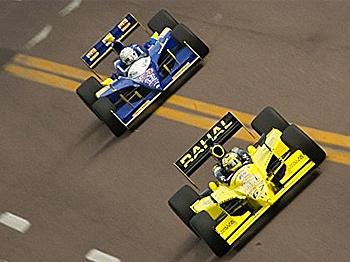
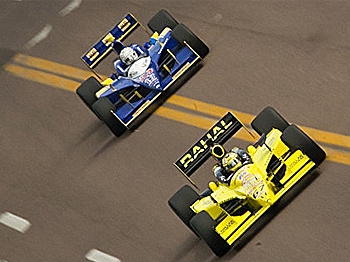
IndyCar, once the premier form of racing in North America, is now in a pitiful condition. After fifteen years of Civil War, the series barely registers on Nielsen ratings, barely attracts sponsors, and basically is barely alive.
IndyCar is making efforts to reverse its fortunes. The ruling Hulman-George family has brought in a lot of new management, with fresh ideas, and is trying its best to end the fifteen-year split that nearly killed the sport.
And now, just when it looks like there might possibly be some tiny cause for hope … some “fans” of the series are saying that what it needs is another split.
What follows is a very brief, very superficial, and somewhat biased view of the situation.
Yes, I confess to being biased. I am in that camp of IndyCar fans that wants IndyCar to survive. If my allegiance to the sport bothers you, read no further. Otherwise … here it goes.
In 1978, IndyCar left the auspices of USAC and reformed under CART, as suggested (sort of) by Dan Gurney, because under USAC, IndyCar was getting phenomenally expensive, but the rewards were shrinking, and teams could no longer afford to race.
On top of that, USAC officials were living in pre-TV days promotion-wise. They had no idea how to attract people to their series, and thus failed to attract the sponsors’ money which could keep the series alive.
CART had its strengths and weaknesses, to be sure. Some owners became too powerful and started operating the series for their own benefit, eventually. But for the first fifteen years, CART took IndyCar racing to a national and international prominence it had never seen before (and hasn’t even begun to approach since.)
IndyCar is making efforts to reverse its fortunes. The ruling Hulman-George family has brought in a lot of new management, with fresh ideas, and is trying its best to end the fifteen-year split that nearly killed the sport.
And now, just when it looks like there might possibly be some tiny cause for hope … some “fans” of the series are saying that what it needs is another split.
What follows is a very brief, very superficial, and somewhat biased view of the situation.
Yes, I confess to being biased. I am in that camp of IndyCar fans that wants IndyCar to survive. If my allegiance to the sport bothers you, read no further. Otherwise … here it goes.
CART: The Start of the Modern Age
In 1978, IndyCar left the auspices of USAC and reformed under CART, as suggested (sort of) by Dan Gurney, because under USAC, IndyCar was getting phenomenally expensive, but the rewards were shrinking, and teams could no longer afford to race.
On top of that, USAC officials were living in pre-TV days promotion-wise. They had no idea how to attract people to their series, and thus failed to attract the sponsors’ money which could keep the series alive.
CART had its strengths and weaknesses, to be sure. Some owners became too powerful and started operating the series for their own benefit, eventually. But for the first fifteen years, CART took IndyCar racing to a national and international prominence it had never seen before (and hasn’t even begun to approach since.)


