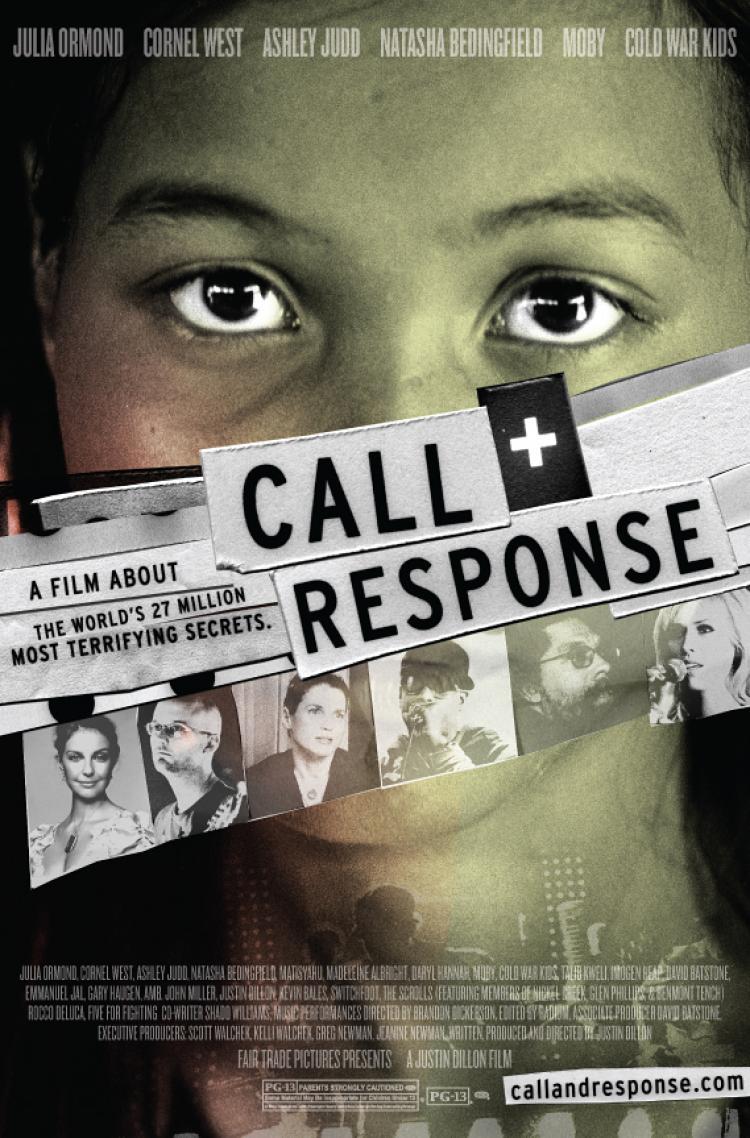
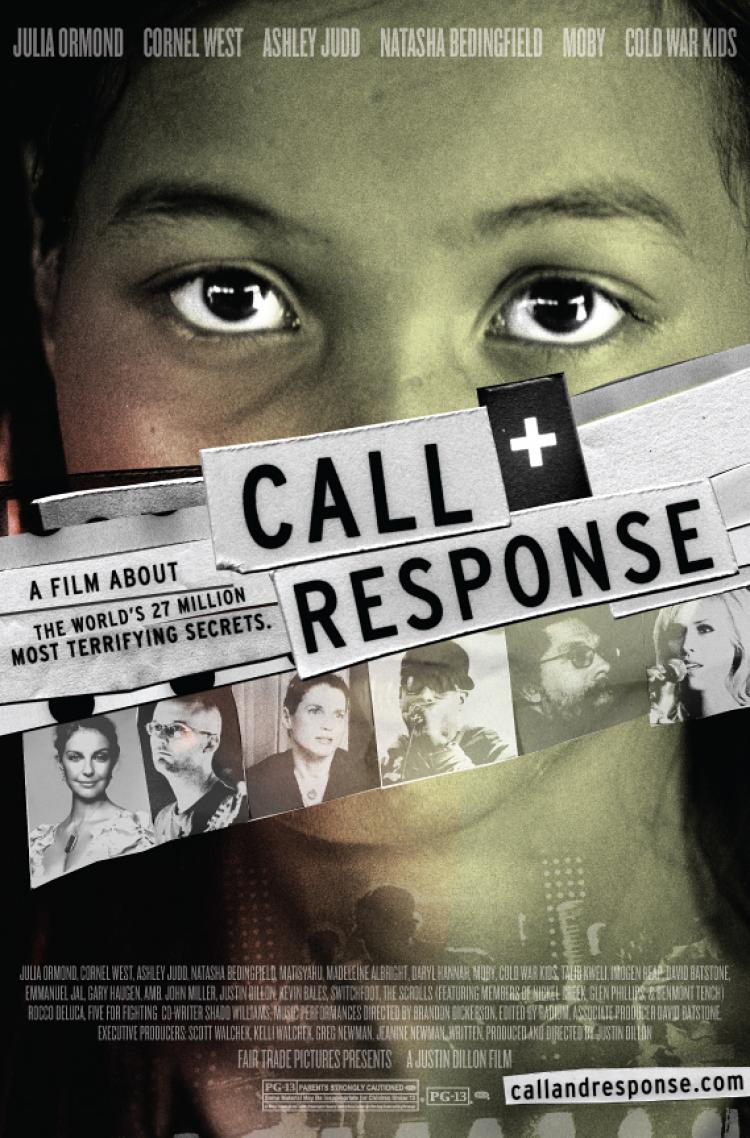
Now, Justin Dillon is using music to address our modern day form of this atrocity, to bring awareness, hope, and redemption. Dillon, a musician and activist in Northern California, launched a feature ‘rockumentary,’ gathering musical talent to lend their passion and voice to this massive international human rights catastrophe as 17,500 slaves per year are brought into the U.S. alone according to the CIA.
Among the many performers in the film are Moby, Natasha Bedingfield, Matisyahu, Imogen Heap, and Emmanuel Ja—who himself was a child soldier Ethiopia. Alongside Dr. West, many other political and cultural figures committed to this cause make appearances, like Ashley Judd, Julia Ormond, and Madeline Albrite. They detail their experience and knowledge of the modern day slave trade, which is estimated at 27 million slaves worldwide—a number larger today than ever before in human history.
The film breaks the human trafficking and slave trade into the following categories—labor slavery, child soldiers, sex slavery, and child slavery (which is can then also be sub-divided into three additional categories).
Many industries such as chocolate, cotton, and coffee are deeply affected by slavery, and it is difficult to know if the products that we eat, wear, and use have the anguish of tyranny infused within them.
The filmmakers travel undercover to expose brothels in Cambodia and rural India, where girls as young as 4-7 years old are sold or kidnapped as sex slaves, chained to the beds forced to see an average of 7 men a night, some gang raped into submission, others exposed to and later addicted to methamphetamines to ensure their loyalty.
Some girls have their hymens re-sewn every few weeks, as virgins are much more valuable and lucrative. Child soldiers and child slavery is on the rise primarily because children are more easily controlled and broken.
The most important aspect of this project however, happens when the movie is over, as Dillon’s mission is not only to inform, but to gently yet firmly nudge those of us guilty of resignation and denial out of our deeply asserted complacency coma. Call and Response has created an interactive website where viewers are encouraged to participate in this modern day abolitionist movement.
As the film points out, the evil-doers has a strong sustainable motivation—money, and lots of it. Slave traders make approximately eight times the the annual budget for the U.N. In contrast, those on the side of human dignity and freedom do not easily experience the rewards of their efforts, and easily loose focus and commitment.
How long does our indignation and outrage at the injustice last? What does the process of breaking through indifference and overwhelm look like?
Shauna Peck, a Venice Beach nanny in her mid-thirties, originally from the small town of Glouster, Mass. saw Call and Response at her Hollywood Church and was stirred by the film. I followed up with her to track her involvement as the film’s calls to action encourages.
“Shock and awe” said Peck of her initial response to the film as she wondered, “Why don’t I know about this?” Her first act of consciousness was to give up drinking coffee that is not certified as ‘fair trade.’ But she also encountered the lethargy of inaction, “Life just gets in the way—I filter out how bad it is”.
Renewing her commitment to the issue, Peck shared the movie with her new boyfriend, Michael, who works in the textile industry and is invested in promoting slave free clothing. Now, inspired by a friend’s enthusiasm, Peck with the support of the community, is planning on creating a fashion show in L.A. to raise money and awareness for the cause. In this way, the cyclical process continues, having responded to the call, she can now invite others to do the same.