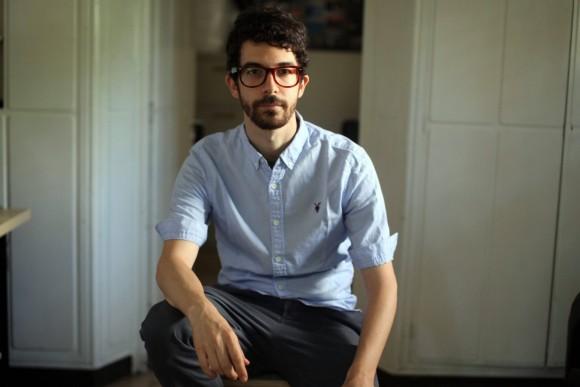
Filmmaker Ido Fluk is not religious, but he has long been fascinated with the idea of faith and observing how it coexists with the American dream.
In his first American film (his second feature, after his crowdfunded 2011 Israeli film, “Never Too Late”), Fluk tells the story of a blind man who has to come to terms with himself as he recovers his sight. “The Ticket” opens in theaters and on demand on April 7.
It is an intimately textured sensory experience that takes place in a small town where nobody is who they seem to be at first glance. There is nothing over the top about the film, despite the seemingly miraculous plot. It raises questions about human nature that have provoked discussion at early screenings, with viewers eager to share their perspectives on life.
The Ticket
James Harvey, played by Dan Stevens (who recently starred in the blockbuster “Beauty and the Beast”), is a devout man who lost his sight at a young age.
At the beginning of the film, we see the world through his eyes—unintelligible shapes and colors. He tells the story of a man who prayed to God every single day, praying to let him win the lottery. An angel asks God why he doesn’t let the man win, and God responds, “Well, I'd love to, but he’s never bought a ticket.”
It’s a story that Fluk has heard his dad tell countless times. “My dad has like 20 stock stories that he tells over and over again to everyone he meets, and ‘The Ticket’ is number 14, or something like that,” he said.
For a blind man to regain his sight—which is not unheard of but still very rare, as Fluk found in his research into the science of visual impairment—it’s a bit like winning the lottery, in that it is not necessarily as much of a windfall as one might expect. Fluk was accustomed to hearing stories of people who would win the lottery, then get divorced, buy a new apartment, and change their lives, only to go bankrupt six months later.
Soon after regaining his sight, James is reevaluating the relationships he built as a blind man, wondering if it would befit him more to trade up, as his friends and family ask whether he has become a different person and whether they all deserve this.