ICC Accuses Kenyan Politicians of Violence

September 1, 2011 Updated: October 1, 2015
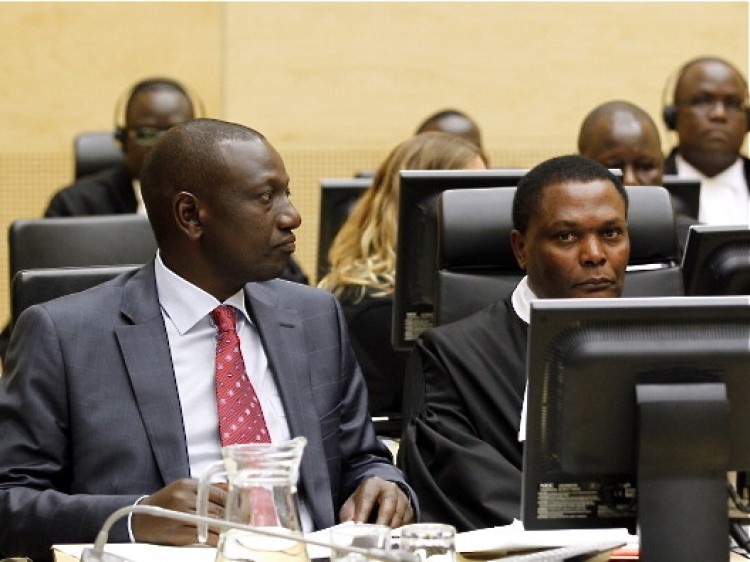
Former Kenyan Education Minister William Samoei Ruto (L) sits with his lawyer in the courtroom of the International Criminal Court (ICC) in The Hague, The Netherlands, on Sept. 1, 2011. (Bas Czerwinski/AFP/Getty Images)

Two Kenyan politicians and a radio broadcaster were accused of crimes against humanity by the International Criminal Court (ICC) on Thursday, Sept. 1.

They are part of a group of six high-profile politicians and officials to appear before the ICC’s three-judge panel over the next month. The panel will decide if the group is to be sent to trial for inciting electoral violence including murder and forcibly moving people.

Political violence erupted in Kenya and thousands of people were targeted, either for ethnicity or political stance, following the 2007 December elections. Over 1,000 people were killed, 3,500 injured, and up to 600,000 displaced as a result of the violence, the court heard.

In the first of the hearings, politicians William Ruto and Henry Kiprono Kosgey, plus radio broadcaster Joshua Arap Sang have pleaded not guilty.

David Hooper, lawyer for one of the politicians, said that the ICC’s investigation was flawed. "You have been given a slanted and wrong interpretation of events," he said.

Detailed Allegations

According to the ICC case information sheet, Kosgey allegedly promoted the mercenary network responsible for the killings, served as Ruto’s deputy, and broadcasted false news (that the Kalenjin people were being murdered) in order to increase hostilities.

Sang may have contributed by using his radio station, Kass FM, the investigation found. He allegedly sent out hate messages, made fake news, and revealed a desire to expel the Kikyu people, about 23 percent of Kenya’s population.

Ruto allegedly bought guns and crude weapons, hired mercenaries with fixed salaries, and told them who to kill and displace. The targets were party members of the Party of National Unity (PNU), Ruto’s opposition.

PNU was formed three months before the 2007 December elections. They won 43 parliamentary seats compared to Ruto’s party, the Orange Democratic Movement (ODM), which won almost 99.

But when the PNU presidential candidate Mwai Kibaki won a second term as president, Raila Odinga, ODM’s candidate, said he was robbed of the win and that the election was rigged. It was then that the violence erupted.

A coalition government was formed in 2008, when the U.N. stepped in, bringing the two parties to the negotiating table. Kibaki is now the president while Odinga is the prime minister.

The six were summoned by the ICC in December 2010.

In response to the summons, the Kenyan government requested in April that the court dismiss the case, a request the court rejected after a month of deliberation.