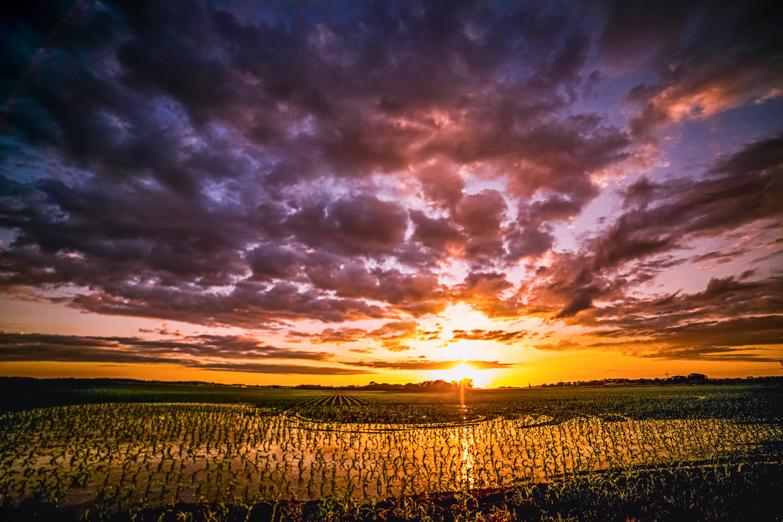
Vermont is every bit as beautiful as people say it is and it is a perfect setting for taking photos. The photos presented in my first column were taken in Vermont’s Green Mountains in mid October.
My first impulse when I find myself in a spectacular natural setting is to try to capture everything. There is so much that is beautiful or interesting. While that works at first, the best photos emerge once I have calmed down and I can focus on composition.
When composing a picture a photographer must determine the subject and frame it, consider the placement of key objects, and study the light.
Framing the Subject
The principles of composition for a landscape photo or landscape painting are the same. First, ask yourself: “What story am I trying to portray? What is the subject of that story?”
In photo examples two and three the subject matter is the maple tree’s fall foliage. Photo two was taken in my initial excitement stage while in photo three I used the tree to frame the subject.
Photos four and five are also examples how framing can give the subject context.
Not all subjects need to be framed but thoughtful framing can yield excellent photos.
Interesting placement
A well placed subject piques the interest of the viewer. Good placement is what makes a simple photo transcend into an art form.
In photo three the tree trunk and limbs not only frame the subject they draw the viewer’s eyes across the photo to the surrounding vista.
In landscapes carefully positioning a road can make or break a picture; see photo’s six and eight. Consider what corner of the photo to position the road, and where it is going. Experiment with different angles.
Don’t forget to determine whether the objects along the road and at the end point are compelling.
Light
Capturing the best light is as simple as being at the right place at the right time. When light hits the subject matter in a dramatic way the subject will stand out from its surroundings.
My favorite times are about half an hour after sunrise or before sunset. Photos one, seven and eight illustrate how light on the subject can create drama. All three of these photos were taken within a few feet of one another.
Discussions about photography are essential to improvement. Please feel free to comment at the end of the article—I promise to respond. To submit your own photo(s) of fall foliage for possible posting on this column click here.