This copy is for your personal, non-commercial use only. Distribution and use of this material are governed by our Subscriber Agreement and by copyright law. For non-personal use or to order multiple copies, please contact The Epoch Times Reprints.
A European Union flag and a German national flag fly over the Reichstag building in Berlin, Germany, on May 25, 2011. Johannes Eisele/AFP via Getty Images
Europe must demonstrate greater unity in its relations with China, a senior German official has argued, as “not a single country in Europe is capable of permanently standing up for its interests and values vis-à-vis China on its own.”
“We urgently need more European action in our dealings with China,” said Michael Roth, Germany’s minister of state for Europe, who stressed “lack of unity is our Achilles’ heel.”
China is the European Union’s “systemic rival” and is “increasingly going on the offensive,” Roth wrote in an op-ed in Der Spiegel on Sunday.
The regime’s actions in Hong Kong, Xinjiang, and the South China Sea show that it is “not afraid to violate central principles of the rules-based international order before the eyes of the world.”
“We must not be afraid to lock horns when it comes to difficult issues such as human rights, security and technology,” he wrote.
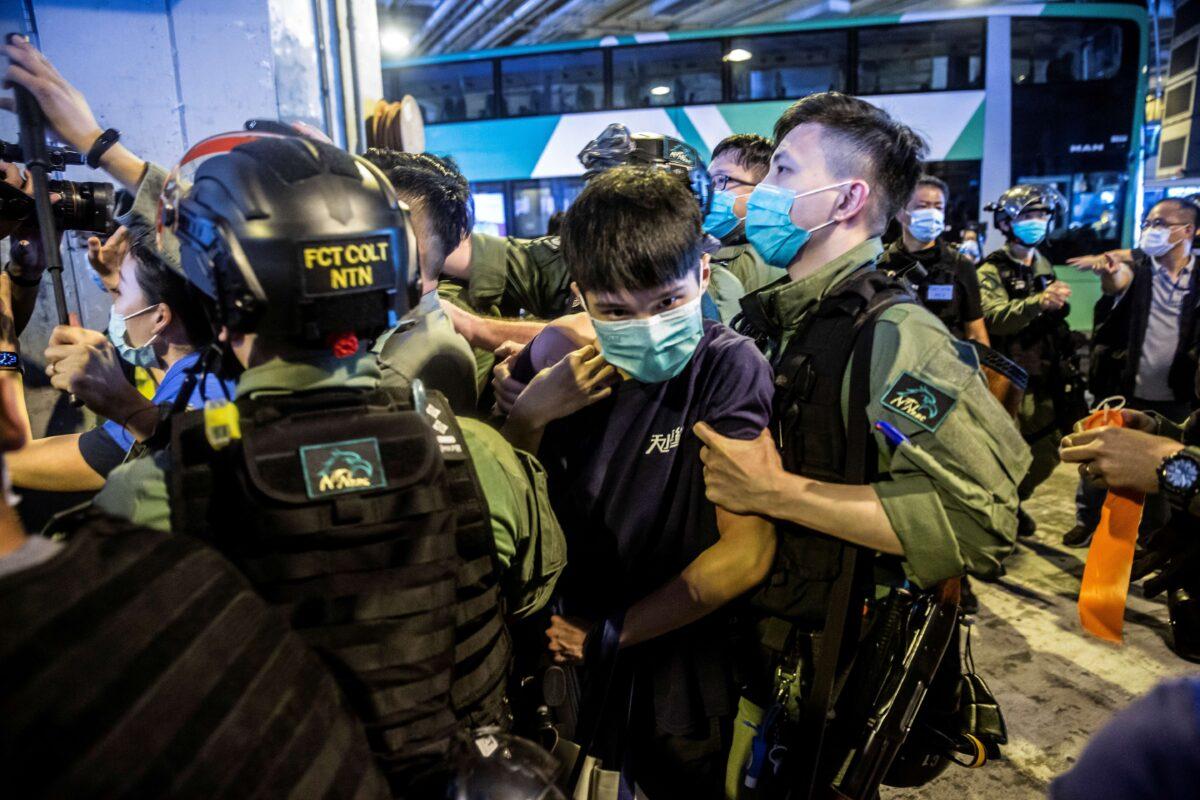
A riot police officer (R) detains a man (C) during a protest by district councillors at a mall in Yuen Long in Hong Kong on July 19, 2020, against a mob attack by suspected triad gang members inside the Yuen Long train station on July 21, 2019. Isaac Lawrence/AFP via Getty Images
Divide and Conquer
“The leadership of the authoritarian, one-party state passes up no opportunity to drive a wedge between the EU member states and weaken them,” Roth wrote.
The EU is increasingly wary of the Chinese regime’s divide-and-conquer tactics. In May, EU foreign policy chief Josep Borrell accused Beijing of “playing on” differences among EU member states.
Divisions within Europe have made it hard to adopt a unified strategy and response to challenges posed by China, according to a recent report by the Royal United Services Institute (RUSI), a London-based think tank.
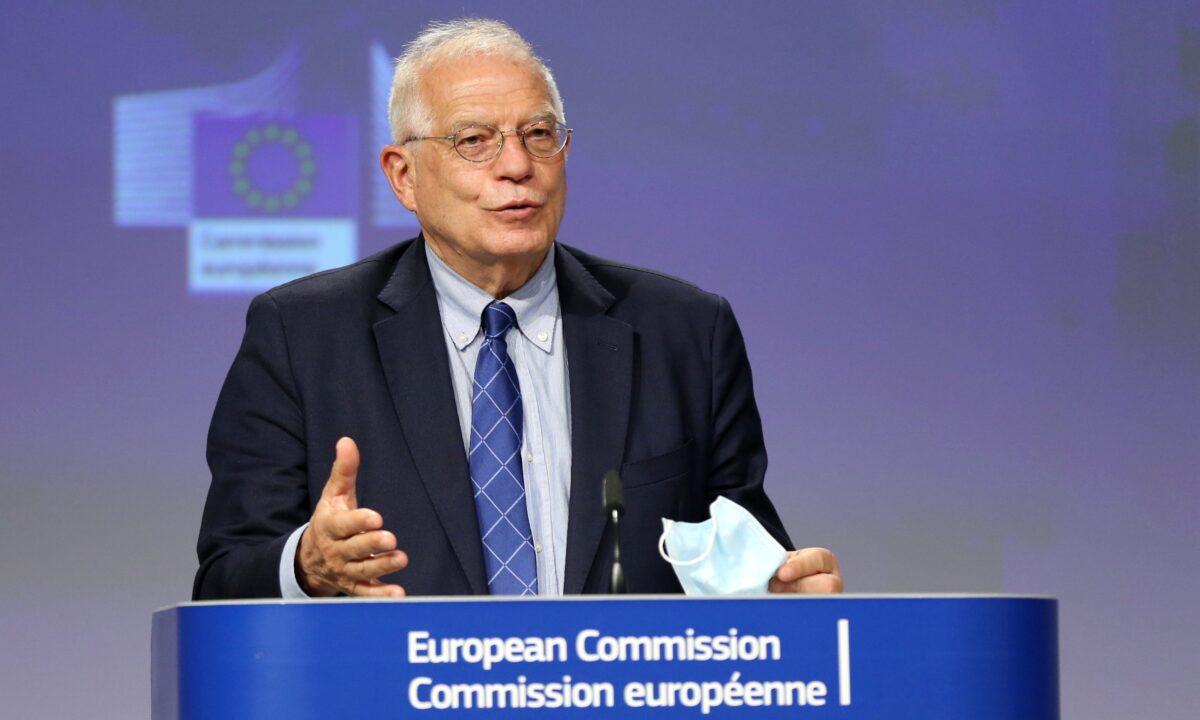
High Representative of the EU for Foreign Affairs and Security Policy, Josep Borrell holds a press conference in Brussels, Belgium, on May 26, 2020. Pool/Getty Images
The EU needs a consistent “Team Europe policy” on China, Roth said, adding that this is a priority of Germany’s six-month EU presidency, which began on July 1.
The EU must strengthen exchange at the European level and “move away from the bilateralization of relations that Beijing is deliberately pursuing.”
Under Beijing’s influence, some small EU countries, such as Greece, Hungary, and Portugal, have repeatedly blocked EU policy on China.
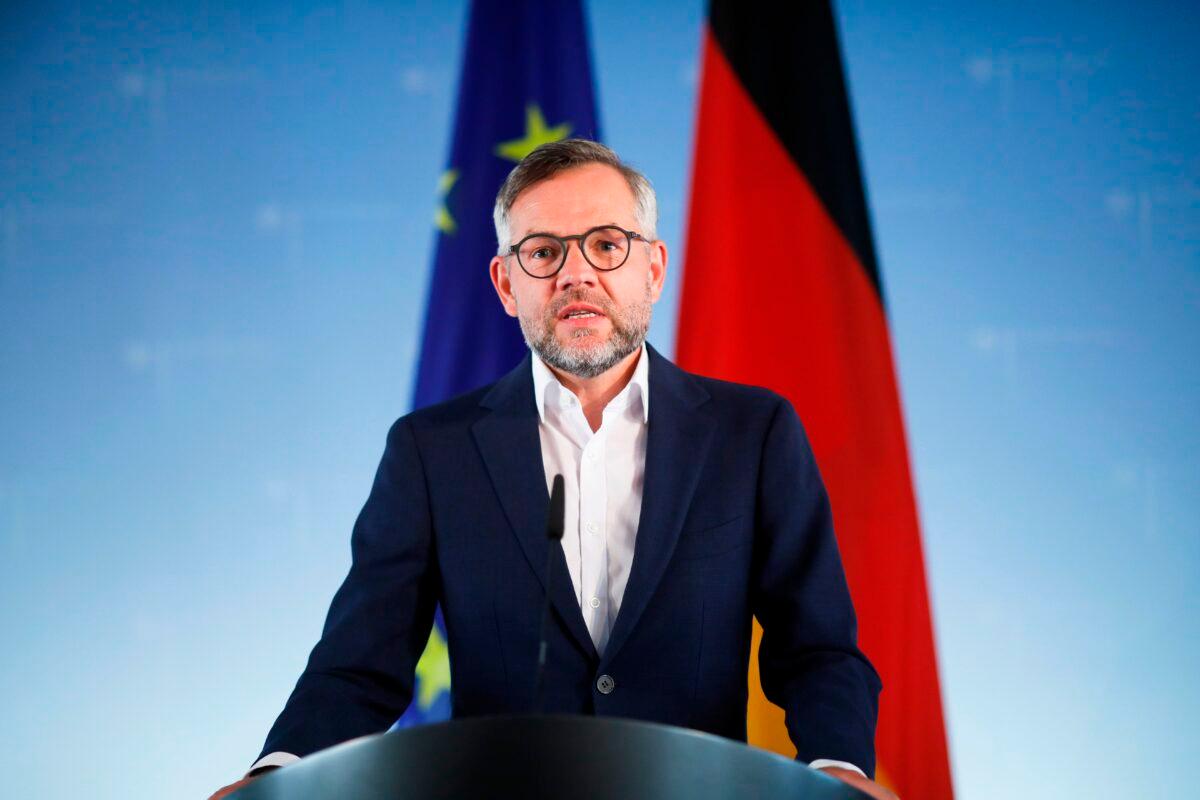
Germany’s Minister of State for Europe Michael Roth gives a press statement at the Foreign Ministry in Berlin on June 16, 2020. Markus Schreiber /Pool/AFP via Getty Images
“Unfortunately, we are also seeing that the lure of doing business with China sometimes challenges Europe’s foundation of values,” wrote Roth.
“The EU must stand for more in the world than just the lowest common denominator of its members,” he said.
Currently, the EU’s Common Foreign and Security Policy requires unanimity. But, according to Roth, Germany is committed to changing it to “qualified majority decision-making,” which will prevent a small number of member states from blocking EU foreign policy.
Security at Stake
Roth also pointed to Beijing’s tendency to use economic dependencies as leverage in power politics.
“The coronavirus crisis has been a wake-up call,” Roth said, referring to the global CCP (Chinese Communist Party) virus pandemic that broke out in Wuhan late last year, as it has been a “painful reminder to us of how dependent Europe has become in certain areas.”
A traveller receives a voluntary coronavirus disease (COVID-19) test at the new corona test centre at the Hochfelln service station on the A8 motorway near the town of Bergen, Germany, 30 July 2020. Michael Dalder/Reuters
In the early stages of the crisis, the Chinese regime sent medical supplies to many countries in an effort to repair its image and cast itself as a leader in the fight against the pandemic, rather than the party responsible for its spread.
In March, Josep Borrell, the EU foreign policy chief, warned Europeans to beware of China’s “struggle for influence through spinning and the ’politics of generosity.'”
Roth also mentioned Europe’s 5G mobile networks, where the involvement of Chinese telecom giant Huawei is under increasing scrutiny. He cited concerns about the “trustworthiness of manufacturers from third countries, including China. Nothing less than the security of our citizens is at stake here.”
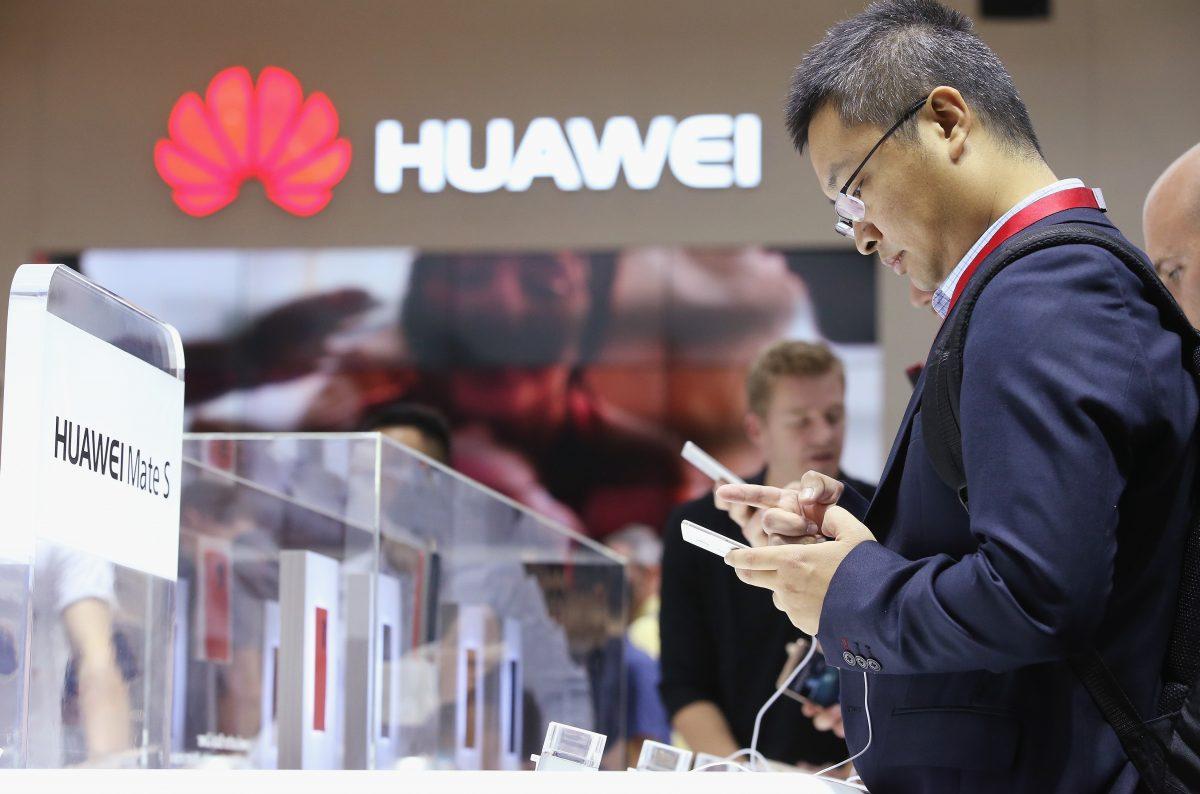
Visitors try out the Huawei Mate S smartphone at the Huawei stand at the 2015 IFA consumer electronics and appliances trade fair in Berlin, Germany, on Sept. 4, 2015 . Sean Gallup/Getty Images
The United States and Australia have both banned Huawei, citing security concerns. The UK followed suit on July 14, reversing its earlier decision to allow the firm a limited role.
Roth did not mention Huawei by name, but said the only logical solution is to “lean first and foremost on our domestic suppliers.”
The EU should use its trade policy and single market more effectively “as a lever” for defending European values and interests, he said.
Mary Clark, Cathy He, and Ella Kietlinska contributed to this report.