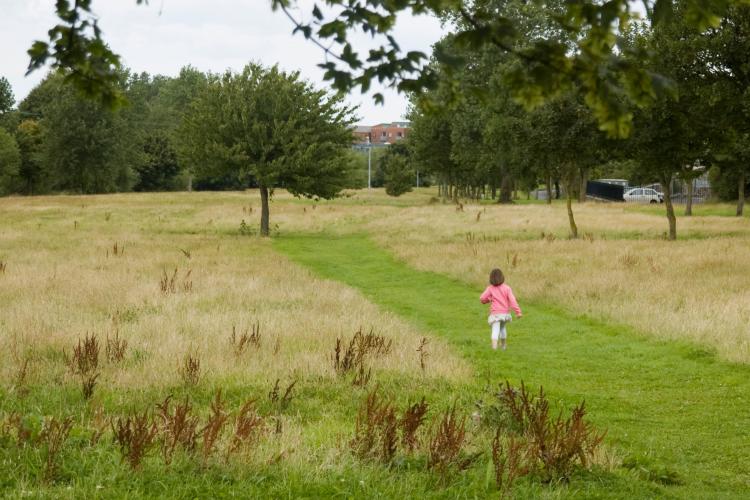
Over the past few months, Fingal County Council has implemented a new initiative called ‘Growing Places’, which was developed to “create a more diverse range of open space environments“, and to satisfy ”the need to match available resources with competing demands.”
The council say that this initiative of the Parks Division of the Council is “arising from a review of its work in 2007 which recognised the need to rebalance the use of resources between its competing priorities so as to best deal with all aspects of its remit and services.”
Fingal County Council say that grass cutting is the single biggest task for their Parks Division, whether in large parks, local open spaces or along national routes.
As a result, they have identified opportunities to release staff from “grass work”, which will enable them to better deliver on other key tasks.
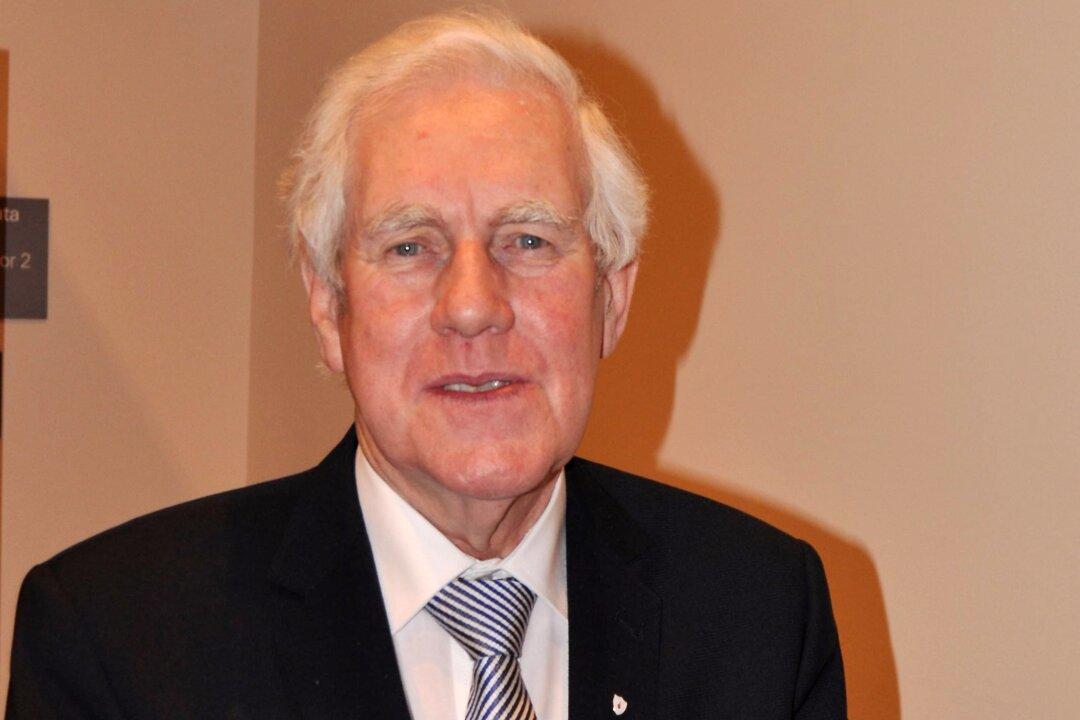
The Epoch Times contacted George L. Kelling, a Senior Fellow at the Manhattan Institute who works in the area of community crime prevention, to get his views on the impact of “growing places” on the Fingal community.
Mr Keeling believes that if neighbourhoods are not tended, disorderly conditions like graffiti or disorderly behaviour like drug dealing or youth drinking in public spaces more readily occur, leading to the creation of citizen fear and citizens starting to abandon the territory, ultimately meaning an increase in crime and urban decay.
Therefore it is very important to make sure that public areas are well kept, so as to not send out the wrong signals to those who may take advantage of the new condition. “Neighbourhoods and communities have to have a sense of space ownership and if you have housing, you want that housing arranged and maintained in ways that show that people care about it, because in my mind as soon as you start sending messages that ‘nobody owns this, nobody cares about it’, well then that’s going to attract misbehaviour and ultimately attract predators,” said Mr Keeling.
In terms of letting grass grow longer, Mr Keeling said, “It seems to me that that in itself would not necessarily send the signals that I fear, and that is that nobody cares about this space.”
“If, however, as part of letting the grass grow, refuse was not collected, graffiti was not taken care of, it would seem to me that I would then be concerned about that as a sign of nobody caring.”
“It’s important that both the government and the citizens make sure that in a variety of ways, the message remains strong that people care about this territory and that they are going to control it.”
Mr Keeling’s advice was, that if overall you need to cut back on maintenance it means two things: first, citizens have to be much more prudent in terms of how they care for their “territory” immediately adjacent to where they live. In other words, residents who live in the area themselves would have to be more careful about their own behaviour. Secondly, it might be that on a routine basis residents would have to work together in a group as a community to maintain and also organize activities in the area.
“The key is that both individuals and the community make sure that there are signs of ownership, so predators would not misinterpret it as being a sign that no-one cares.”
Fingal County Council say they have “undertaken an extensive information campaign to explain to Councillors & residents the extent to which their green areas are being transformed as part of the Growing Places project.”
The council say that this initiative of the Parks Division of the Council is “arising from a review of its work in 2007 which recognised the need to rebalance the use of resources between its competing priorities so as to best deal with all aspects of its remit and services.”
Fingal County Council say that grass cutting is the single biggest task for their Parks Division, whether in large parks, local open spaces or along national routes.
As a result, they have identified opportunities to release staff from “grass work”, which will enable them to better deliver on other key tasks.
The Epoch Times contacted George L. Kelling, a Senior Fellow at the Manhattan Institute who works in the area of community crime prevention, to get his views on the impact of “growing places” on the Fingal community.
Mr Keeling believes that if neighbourhoods are not tended, disorderly conditions like graffiti or disorderly behaviour like drug dealing or youth drinking in public spaces more readily occur, leading to the creation of citizen fear and citizens starting to abandon the territory, ultimately meaning an increase in crime and urban decay.
Therefore it is very important to make sure that public areas are well kept, so as to not send out the wrong signals to those who may take advantage of the new condition. “Neighbourhoods and communities have to have a sense of space ownership and if you have housing, you want that housing arranged and maintained in ways that show that people care about it, because in my mind as soon as you start sending messages that ‘nobody owns this, nobody cares about it’, well then that’s going to attract misbehaviour and ultimately attract predators,” said Mr Keeling.
In terms of letting grass grow longer, Mr Keeling said, “It seems to me that that in itself would not necessarily send the signals that I fear, and that is that nobody cares about this space.”
“If, however, as part of letting the grass grow, refuse was not collected, graffiti was not taken care of, it would seem to me that I would then be concerned about that as a sign of nobody caring.”
“It’s important that both the government and the citizens make sure that in a variety of ways, the message remains strong that people care about this territory and that they are going to control it.”
Mr Keeling’s advice was, that if overall you need to cut back on maintenance it means two things: first, citizens have to be much more prudent in terms of how they care for their “territory” immediately adjacent to where they live. In other words, residents who live in the area themselves would have to be more careful about their own behaviour. Secondly, it might be that on a routine basis residents would have to work together in a group as a community to maintain and also organize activities in the area.
“The key is that both individuals and the community make sure that there are signs of ownership, so predators would not misinterpret it as being a sign that no-one cares.”
Fingal County Council say they have “undertaken an extensive information campaign to explain to Councillors & residents the extent to which their green areas are being transformed as part of the Growing Places project.”