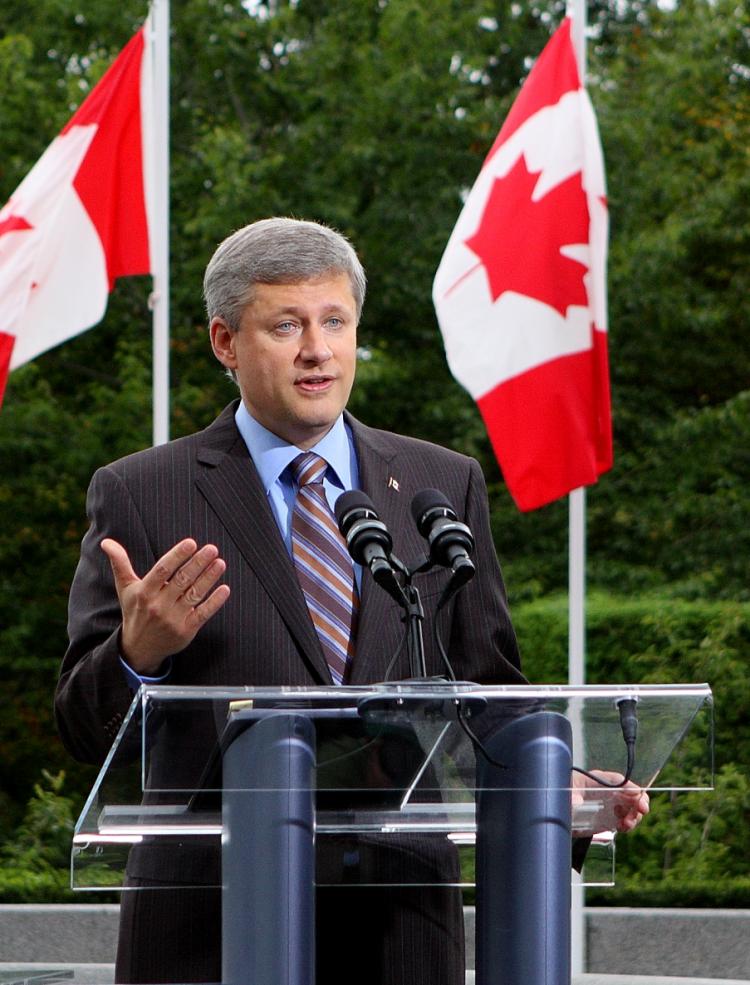
Prime Minister Stephen Harper’s Conservatives have taken a small jump in the polls as election talk ramps up but the gain is unlikely to be significant in the long run, says a senior pollster.
Nik Nanos, president and CEO of Nanos Research, said the core brand of each party and how each leader performs if an election is called will make any momentary irritation voters have about a fall election irrelevant.
“It is highly unlikely to be a deciding issue,” he said.
Speaking to the media at the Hyatt Hotel in downtown Toronto on Wednesday, Liberal leader Michael Ignatieff further committed himself to bringing down the government. He said the growth of the deficit and a rise in unemployment have left his party planning for a fall election.
“We will introduce a motion of non-confidence in the government,” he said, stating that forcing an election was a matter of principle for the Liberals.
When asked if he thought Canadians wanted an election, Ignatieff said, “I think Canadians want an alternative, and I can’t present an alternative to Canadians unless I withdraw confidence from the government.”
The move towards an election has confused some political pundits who wonder why the Liberals would topple the government when opinion polls put them at best on even footing with the Conservatives.
That footing is even in question as three polls in a row found the Conservatives maintaining a slim lead over the Liberals.
The most recent, a Harris-Decima poll conducted for the Canadian Press, found the Conservatives had secured a three percent lead over the Liberals at 34 to 31 percent.
The same poll found that 73 percent of Canadians did not think an election was needed this fall, compared to 21 percent who thought it was.
In a previous poll conducted by the Strategic Counsel for CTV and the Globe and Mail right after Ignatieff promised to bring down the government on Sept. 3 following the Liberals’ caucus meeting in Sudbury, Ontario, the Conservatives sat at 35 percent compared to the Liberals’ 30 percent
An Angus Reid poll published Sept. 4 gave the Conservatives a one percent lead over the Liberals, at 33 percent compared to 32 percent, a statistical tie given the margin of error.
Meanwhile, a Nanos Research poll released Wednesday put the Conservatives at 37.5 percent to the Liberals’ 33.4 percent.
Some political analysts have been interpreting the numbers as punishment for the Liberals’ prompting an election, but Nanos said that is an overstatement and the rise of the Conservatives has come more at the expense of the Greens and NDP than it has from the Liberals.
“Liberal support has been relatively stable,” he said.
“As Canadians focus on an election that is supposed to happen this fall, support for the Conservatives has risen.”
Nanos said that while Canadians might be displeased with the Liberals for prompting an election, it is unlikely to be a lasting issue.
The Liberals are listing a number of reasons for calling an election, including the shutdown of the Chalk River nuclear reactor and resulting shortage of medical isotopes.
But Nanos said the key message most Canadians will remember is simply that the Liberals have pledged to bring down the government. And the key message most Canadians will remember from the Conservative side is the assertion that an election is unnecessary.
“That may be why the Conservative numbers are up...because that particular message—that the election is unnecessary—resonates with voters and reflects well on the Conservatives.”
But in the end, Nanos said the election will be won or lost on the performance of the parties and their leaders, and that could be even more so in this election given the unusually high number of undecided voters.
While there are usually around 15 to 18 percent of undecided voters before an election, currently there are 24.6 percent, said Nanos.
“One out of every four Canadians say they are undecided.” Those voters will preside over any upcoming election and decide based on each party’s performance, he said.
Another key factor is likely to be each party’s branding.
“Each of the parties has core brand strengths.”
While an election fought over health care and national unity would likely favour the Liberals, Nanos said if voters enter the ballot box with taxes, job creation, and the economy on their minds, it will benefit the Conservatives.
“This will be the first election in a long time where the economy has not been robust... The economy could be one of the defining issues of the campaign. This likely will lead to an advantage for the Conservatives.”
Nik Nanos, president and CEO of Nanos Research, said the core brand of each party and how each leader performs if an election is called will make any momentary irritation voters have about a fall election irrelevant.
“It is highly unlikely to be a deciding issue,” he said.
Speaking to the media at the Hyatt Hotel in downtown Toronto on Wednesday, Liberal leader Michael Ignatieff further committed himself to bringing down the government. He said the growth of the deficit and a rise in unemployment have left his party planning for a fall election.
“We will introduce a motion of non-confidence in the government,” he said, stating that forcing an election was a matter of principle for the Liberals.
When asked if he thought Canadians wanted an election, Ignatieff said, “I think Canadians want an alternative, and I can’t present an alternative to Canadians unless I withdraw confidence from the government.”
The move towards an election has confused some political pundits who wonder why the Liberals would topple the government when opinion polls put them at best on even footing with the Conservatives.
That footing is even in question as three polls in a row found the Conservatives maintaining a slim lead over the Liberals.
The most recent, a Harris-Decima poll conducted for the Canadian Press, found the Conservatives had secured a three percent lead over the Liberals at 34 to 31 percent.
The same poll found that 73 percent of Canadians did not think an election was needed this fall, compared to 21 percent who thought it was.
In a previous poll conducted by the Strategic Counsel for CTV and the Globe and Mail right after Ignatieff promised to bring down the government on Sept. 3 following the Liberals’ caucus meeting in Sudbury, Ontario, the Conservatives sat at 35 percent compared to the Liberals’ 30 percent
An Angus Reid poll published Sept. 4 gave the Conservatives a one percent lead over the Liberals, at 33 percent compared to 32 percent, a statistical tie given the margin of error.
Meanwhile, a Nanos Research poll released Wednesday put the Conservatives at 37.5 percent to the Liberals’ 33.4 percent.
Some political analysts have been interpreting the numbers as punishment for the Liberals’ prompting an election, but Nanos said that is an overstatement and the rise of the Conservatives has come more at the expense of the Greens and NDP than it has from the Liberals.
“Liberal support has been relatively stable,” he said.
“As Canadians focus on an election that is supposed to happen this fall, support for the Conservatives has risen.”
Nanos said that while Canadians might be displeased with the Liberals for prompting an election, it is unlikely to be a lasting issue.
The Liberals are listing a number of reasons for calling an election, including the shutdown of the Chalk River nuclear reactor and resulting shortage of medical isotopes.
But Nanos said the key message most Canadians will remember is simply that the Liberals have pledged to bring down the government. And the key message most Canadians will remember from the Conservative side is the assertion that an election is unnecessary.
“That may be why the Conservative numbers are up...because that particular message—that the election is unnecessary—resonates with voters and reflects well on the Conservatives.”
But in the end, Nanos said the election will be won or lost on the performance of the parties and their leaders, and that could be even more so in this election given the unusually high number of undecided voters.
While there are usually around 15 to 18 percent of undecided voters before an election, currently there are 24.6 percent, said Nanos.
“One out of every four Canadians say they are undecided.” Those voters will preside over any upcoming election and decide based on each party’s performance, he said.
Another key factor is likely to be each party’s branding.
“Each of the parties has core brand strengths.”
While an election fought over health care and national unity would likely favour the Liberals, Nanos said if voters enter the ballot box with taxes, job creation, and the economy on their minds, it will benefit the Conservatives.
“This will be the first election in a long time where the economy has not been robust... The economy could be one of the defining issues of the campaign. This likely will lead to an advantage for the Conservatives.”