Europe’s Hostility Toward Its Gypsies

September 28, 2010 Updated: September 29, 2015

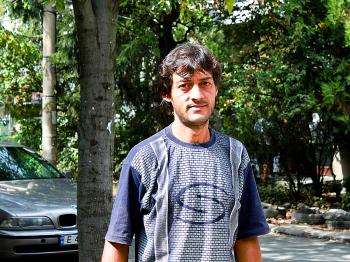
SCARED: Bulgarian Roma Sasho Radoslavov stands under a tree in Sofia, Bulgaria, Sept. 19. Radoslavov says he feels threatened and discriminated against in Sofia, and needs a job to support his family. (Kremena Krumova/The Epoch Times)
Nearly 1,000 Gypsies (also known as Roma) were expelled last month from France and returned to their home countries of Romania and Bulgaria. French President Nicolas Sarkozy has blamed them for the increase in the country's crime rate, and demolished dozens of makeshift camps where Gypsies lived.

And the rest of the 12 million Gypsies in Europe don't have it any easier; For over a thousand years since they came to Europe from India, Gypsies have been subjected to discrimination and violence.

Among them is Sasho Radoslavov, a 31 year-old Bulgarian Gypsy, born in Bulgaria's capital city of Sofia. He has five brothers, three sisters, and several children. He has a primary education and comes across as intelligent and well-mannered. While showing his ID to prove he is a legal citizen of Bulgaria, he shared his recent life experience as a Gypsy.

After working for five years for the cleaning company “Baks 99,” he was fired last month due to personnel cuts. Now he rummages through trash cans across the city, hoping to support his family by selling what he finds. But his heart is gripped with fear; he and the rest of the Gypsies around him constantly face the danger of beatings and even death in the streets of Sofia.

“The other day I saw some iron poles on the street, and I took them from the ground," said Radoslavov. "There was a group of five to six men standing nearby, at my age. One of them yelled: ‘Hey, Gypsy, why are you rummaging through the bin? Get out of here!’”

Radoslavov said that it is already a trivial matter that teenagers spit at him and humiliate him.

"I don’t know how their parents educate them," he said, adding that things have gotten worse with the recent appearance of neo-Nazis.

“When they see a Roma person, they beat him and sometimes even beat him to death. Where are the authorities here?”

He warned that recently Gypsies in Bulgaria have started to gather arms and form groups in order to defend themselves.

“It is possible that in the end a civil war will break out: Roma against Bulgarians," said Radoslavov. "Roma people are very tolerant but one nice day they may burst out and lead a coup d’etat. I myself was almost beaten once while I was rummaging through a trash bin. I managed to run away. But many other Roma who I know are regularly beaten. They are afraid to go outside on the street.”

Radoslavov said discrimination comes from rumors, aimed to incite hatred toward Gypsies, and that they are forced to do the dirty jobs in society.

But Radoslavov adds that the stereotypes harm the law-abiding Gypsy population.

“If one Roma steals $15 from an apartment, and he gets caught, they say that all Roma are like this. But this is not true for all. Not every Roma is like people think he is. The same is true about Bulgarian people: there are some among them who also steal. The difference is that Roma steal because they are hungry. It is true that there are some Roma who really steal.”

Radoslavov, who in spite of the unemployment lives in a typical part of town, says Gypsies do not want to live isolated from society.

What is your attitude towards Gypsies (Roma)?

Virginia Entrena, Spain
Spain
Virginia Entrena, 40, Merchant, Madrid
"The Roma community in my district is big. They don’t have much respect for other people. I don't mind their race or their skin color. But I don’t like their actions, because they destroy everything in our neighborhood. Spanish society doesn’t accept Roma minorities. It is ok to say in Spanish: 'This man works like a black one,' or 'Don’t speak to me in Chinese,' but when you say: 'You look like a Gypsy,' it is very negative. I think this is telling."


Roberto Dalena, Rome, Italy
Italy
Roberto Dalena, 60, Stewarding Supervisor, Rome
"Gypsies are a global problem. Being a nomadic people, they have no respect for rules and regulations and are arrogant. They use public transport without tickets and behave as if everything is for granted [free], and don't bother to consider people around them. Even when committing illegalities, they do not bear any consequences, while Italian citizens are subject to the law."


Eva Piskova, Trebic, Czech Republic
Czech Republic
Eva Piskova, 66, Retired teacher, Trebic
"I don't have anything against them because I don't come into contact with them much. I believe we can't lump them all together. They are talented singers and dancers. They have different temperaments. The majority regard them as people who have a hard time assimilating. There is also a prejudice against them: people fear being robbed by Roma."


Vratko Studenic, Bratislava, Slovakia
Slovakia
Vratko Studenic, 38, Music editor, Bratislava
"Roma people are a part of the environment I live in. This doesn't annoy me a bit! As a former teacher there was always at least one Roma in my class, and I never had communication problems with them. In Slovakia, there is a disapproving opinion toward Roma. It's due to the fact that media report negatively on them and rarely focus on their positive side."


Liviu Neagovici, Bucharest, Romania
Romania
Liviu Neagovici, 30, owner of a publicity company, Arad
"I have a good personal opinion about Roma because I'm not racist. I had a Roma employee and I was also a colleague with one of them. In Romania, there is a good opinion about Gypsies, especially when they are not here."


Dragomir Manzov, Sofia, Bulgaria
Bulgaria
Dragomir Manzov, 39, Musician, Sofia
"There are 5 percent of Roma who want to break away from their ghettos, but most of them continue to drive horse carts, steal electricity, and make the streets dirty. By doing so, they provoke a general repulsion toward them. They want benefits from the government but don’t want to give anything back. Roma dare to attack Bulgarians at night, which might lead to serious problems in the future. Roma have a lobby in the government,so they have become ever more brazen. This affects negatively those Roma who work normally and want to integrate in society."


Mithat Sanaja, Peja (Pec), Kosovo
Kosovo
Mithat Sanaja, 52, Small retail businessman, Peja (Pec)
"I think they are hard working if they have a job. Recently, they have realized education is important and send their children to school. There are now Roma representatives in both the local municipality and central Parliament. There are also many Roma who are begging and stealing—but this is not seen as a big problem."