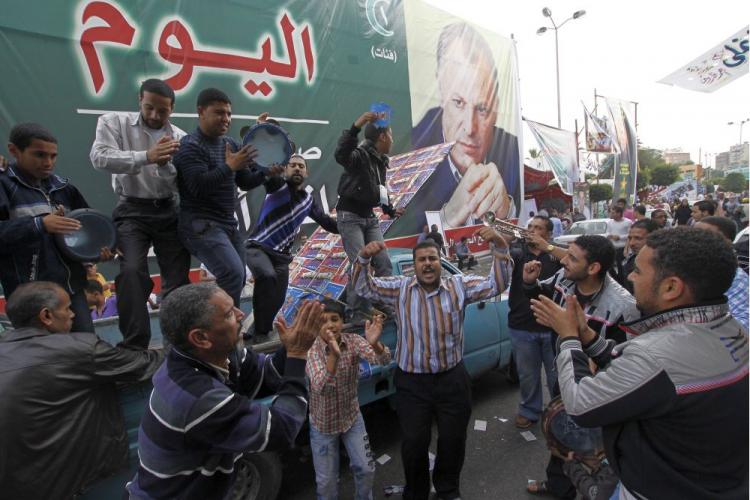
Egyptians voted on Sunday in parliamentary elections, which as anticipated, were rife with allegations of mass fraud and clashes between opposition supporters and security forces.
The ruling National Democratic Party, lead by Egyptian President Hosni Mubarak, is expected to win the elections, with results to be officially announced in the days to come.
The Egyptian Association for Supporting Democratic Development reported many of its observers had been denied access to polling stations as did the Muslim Brotherhood, the most powerful opposition groups to Mubarak’s regime, saying that observers faced arbitrary arrests and physical abuse.
“In Mansoura, witnesses watch thugs on motorcycles armed with chains, pocketknives, and machetes leave from police station toward ballot stations,” read a message posted at 7:05 a.m. local time on the Muslim Brotherhood’s website.
The Muslim Brotherhood is a popular Islamist movement. While not known for violence itself, it is credited with being the parent-movement for extremist Islamist movements in the Middle East such as Hamas.
The Brotherhood also stated on its site that in violence between supporters and the police at least nine people died. They also complained of the exclusion of their candidates’ representatives and vote buying.
According to an Associated Press report, government candidates were noticed handing out cash and food to voters close to polling stations in some locations.
Leading up to the election, the Egyptian regime was heavily criticized by Human Rights Watch among other organizations for escalating suppression of opposition candidates and activists. The Muslim Brotherhood reported that about 1,200 members were arrested.
The regime has also tried blocking liberal opposition ahead of the elections, clamping down on freedom of expression. The Committee to Protect Journalists reported one case of an editor-in-chief of an independent newspaper being shot.
The new Parliament has 518 seats, 10 of which will be appointed by president.
The ruling National Democratic Party, lead by Egyptian President Hosni Mubarak, is expected to win the elections, with results to be officially announced in the days to come.
The Egyptian Association for Supporting Democratic Development reported many of its observers had been denied access to polling stations as did the Muslim Brotherhood, the most powerful opposition groups to Mubarak’s regime, saying that observers faced arbitrary arrests and physical abuse.
“In Mansoura, witnesses watch thugs on motorcycles armed with chains, pocketknives, and machetes leave from police station toward ballot stations,” read a message posted at 7:05 a.m. local time on the Muslim Brotherhood’s website.
The Muslim Brotherhood is a popular Islamist movement. While not known for violence itself, it is credited with being the parent-movement for extremist Islamist movements in the Middle East such as Hamas.
The Brotherhood also stated on its site that in violence between supporters and the police at least nine people died. They also complained of the exclusion of their candidates’ representatives and vote buying.
According to an Associated Press report, government candidates were noticed handing out cash and food to voters close to polling stations in some locations.
Leading up to the election, the Egyptian regime was heavily criticized by Human Rights Watch among other organizations for escalating suppression of opposition candidates and activists. The Muslim Brotherhood reported that about 1,200 members were arrested.
The regime has also tried blocking liberal opposition ahead of the elections, clamping down on freedom of expression. The Committee to Protect Journalists reported one case of an editor-in-chief of an independent newspaper being shot.
The new Parliament has 518 seats, 10 of which will be appointed by president.