DOJ Will Not Appeal Health Care Ruling

September 27, 2011 Updated: October 1, 2015
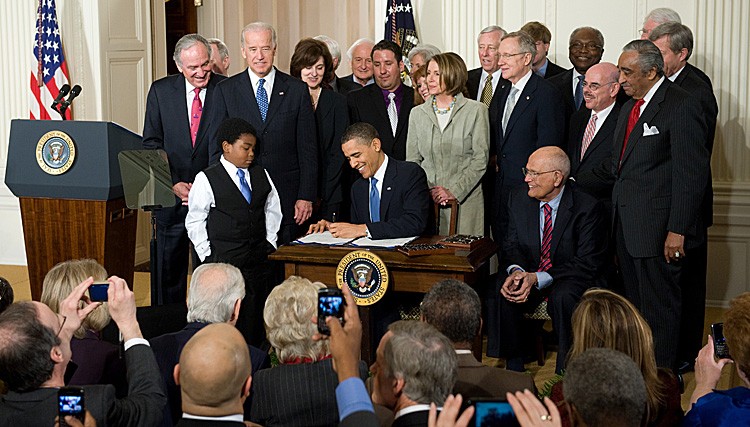
President Barack Obama, surrounded by Democratic lawmakers, signs the health care insurance reform legislation during a ceremony in the East Room of the White House, March 23, 2010. The Department of Justice will not appeal a ruling by Atlanta's 11th Circuit Court that the mandatory insurance requirement is unconstitutional. (SAUL LOEB/AFP/Getty Images)


ATLANTA—The Department of Justice (DOJ) this week declined to appeal last month’s ruling by the 11th Circuit Court in Atlanta that an element of the Affordable Care Act of 2010 (ACA) was unconstitutional.

The court found that the individual mandate requiring everyone to purchase health insurance went too far. Doctor’s groups including the American Medical Association (AMA) have said the mandate is essential for the health care reform plan to work.

According to a newsletter from Kaiser, a large health insurance company filing an appeal “would have delayed the legal process and likely pushed back the timing of a final Supreme Court decision until at least 2013.” Now it is likely the case will go to the Supreme Court in 2012.

Multiple states, 26 in all, sued to overturn the ACA. The individual mandate is the most contentious part of the law. A judge in Florida said the entire law should be voided because the individual mandate was unconstitutional, and could not be severed from the rest of the law.

Another controversial requirement is a rule which says a certain percentage of an insurance company’s revenue must go directly to providing health services to patients, rather than to salaries or administrative costs. This could be disastrous for some small insurance providers.

Massachusetts has a state law very similar to the ACA. It now has nearly universal health insurance coverage for its residents: 98 percent, according to the governor’s office.

Georgia Congressman Hank Johnson sent his constituents a letter marking the first anniversary of the Patient’s Bill of Rights, part of the Affordable Care Act. The law went into effect on Sept. 23, 2010.

According to Johnson and to HealthCare.gov, small businesses now get a tax credit for up to 35 percent of the health insurance premiums they pay for their employees.

He said 4 million businesses are eligible for the credit.

People over 65 now receive certain key preventive tests, such as mammograms and colonoscopies, without any co-payment. Young adults without their own insurance may stay on their parent’s health insurance until they turn 26. Johnson wrote that one million young adults have taken advantage of the provision.

Johnson, a democrat, wrote that the patient’s rights part of the law now covers everyone who has private health insurance, about 165 million people. He said it provides crucial protections, and “Congressional republicans are attempting to repeal all of these protections, but I will vigorously fight to ensure that they are never taken away.”