A giant meteorite is believed to have struck the Earth off the coast of Mexico where a 10-kilometer (6.2-mile) submarine crater is located. Rare minerals deposited in sediments around the world at that time are thought to have originated from this impact.
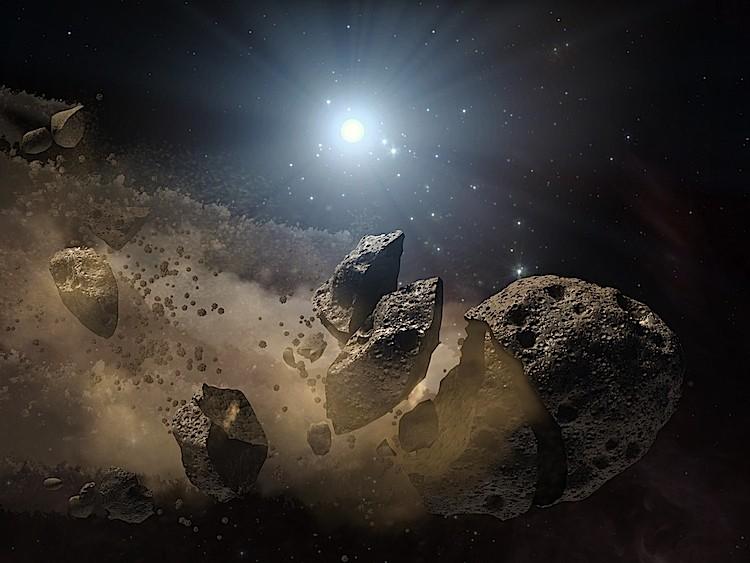
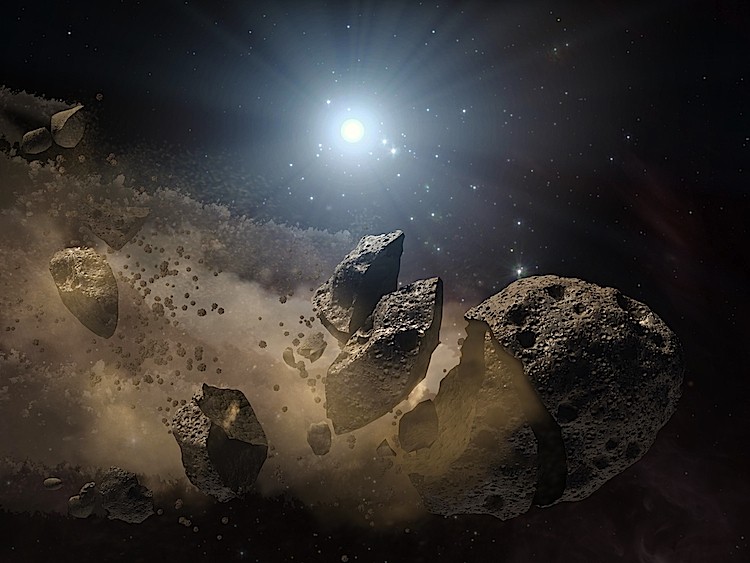
Based on findings from ground-based telescopes in a 2007 study, the Baptistina was thought to have struck another body in the main asteroid belt around 160 million years ago, sending pieces of debris into space, including one which impacted Earth millions of years later and formed the crater in Mexico.
However, WISE’s new infrared data say otherwise.
"As a result of the WISE science team’s investigation, the demise of the dinosaurs remains in the cold case files," Lindley Johnson of NASA’s Near Earth Object (NEO) Observation Program said in a press release.
"The original calculations with visible light estimated the size and reflectivity of the Baptistina family members, leading to estimates of their age, but we now know those estimates were off."
As part of a recent survey called NEOWISE, the explorer measured the reflectivity of around 120,000 asteroids in the main belt of which more than 1,000 belonged to the Baptistina family. Calculations showed that the Baptistina parent asteroid only broke up around 80 million years ago.
These findings indicate that a dinosaur-killing portion of the parent asteroid would have only had 15 million years to reach Earth.
"This doesn’t give the remnants from the collision very much time to move into a resonance spot, and get flung down to Earth 65 million years ago," said study co-author Amy Mainzer at NASA’s Jet Propulsion Laboratory (JPL) in California in the release.
"This process is thought to normally take many tens of millions of years."
Resonances are certain points in the belt where gravitational tides from Saturn and Jupiter drive asteroids out of the belt towards Earth.
"We are working on creating an asteroid family tree of sorts," said study lead author Joseph Masiero in the release.
"We are starting to refine our picture of how the asteroids in the main belt smashed together and mixed up."