Comptroller Wants Vehicle Tax to Ease MTA Budget

November 24, 2008 Updated: October 1, 2015
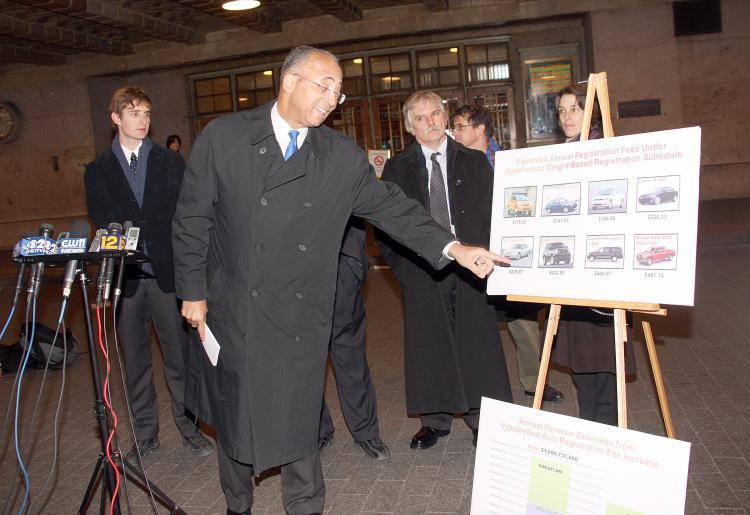
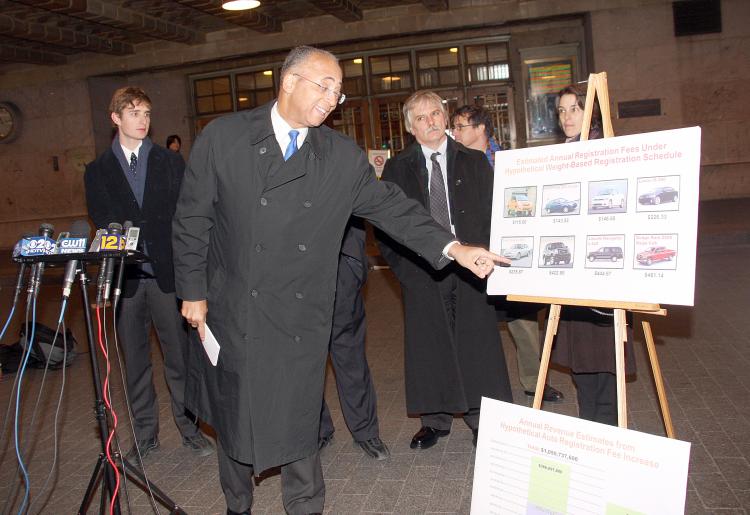
CAR TAX: Drivers of heavier vehicles may be subject to a tax to aid the MTA if City Comptroller William C. Thompson Jr.'s plan, announced Sunday, is well received by the MTA's special financial commission.  (Lixin Shi/Epoch TImes)
CAR TAX: Drivers of heavier vehicles may be subject to a tax to aid the MTA if City Comptroller William C. Thompson Jr.'s plan, announced Sunday, is well received by the MTA's special financial commission. (Lixin Shi/Epoch TImes)

NEW YORK—City Comptroller William C. Thompson Jr. announced his proposal to impose a tax on drivers and institute a commuter tax to cover the MTA's budget gaps on Sunday, Nov. 23, outside Grand Central Station.

Under Thompson's plan, the heavier your car, the more it will cost to register it. Currently, New York City imposes a flat vehicle registration fee of $30 for every two years in addition to the state's weight-based registration fee. Thompson proposes to add another weight-based fee to vehicles owned within the 12 counties where MTA operates: the five boroughs of New York City and Dutchess, Nassau, Orange, Putnam, Rockland, Suffolk, and Westchester counties.

Up to 2,300 pounds, a vehicle would cost an extra $100 to register. Any extra weight would cost $.09 per pound. For example, a 2,293-pound Toyota Yari would cost an extra $115 to register while a 5,963-pound Lincoln Navigator would cost an extra $430 to register.

The second portion of the plan is to reinstate a form of a commuter tax that was eliminated in 1999. Those who work but do not live in the city would bear part of the burden for maintaining the region's public transportation system.

Thompson projects that altogether, his plan can raise $1.8 billion annually for the ailing transportation authority. In the face of budget cuts, the MTA announced plans to eliminate 2,700 jobs and raise fares by 23 percent next year. Non-essential improvements to the system have been trimmed down.

Other benefits of the plan, according to Thompson, are reduced road traffic, car ownership, and air pollution. Additionally, Thompson says the plan could reduce parking shortages in the city if paired with a rule that only vehicles registered in the city can park there overnight.

He said the plan would encourage drivers to switch to lighter models or take public transportation. To give potential auto buyers a chance to choose lighter makes, Thompson proposes that his plan be phased in gradually, applying only to new registrations after a certain date.

On Monday, Thompson will present his proposal to Richard Ravitch, a former MTA head who now chairs the commission for MTA finances. Ravitch and his team are expected to announce their proposal on Dec. 5.

If some version of Thompson's plan is adopted, New York would not be the first U.S. city to apply such measures. In 2003, Seattle used revenue from a license plate tab tax to pay for a monorail project. When the project ended in 2006, so did the tax. The state of Wisconsin allows local governments to impose “wheel taxes” in addition to state registration fees as long as resulting revenues go toward transportation.