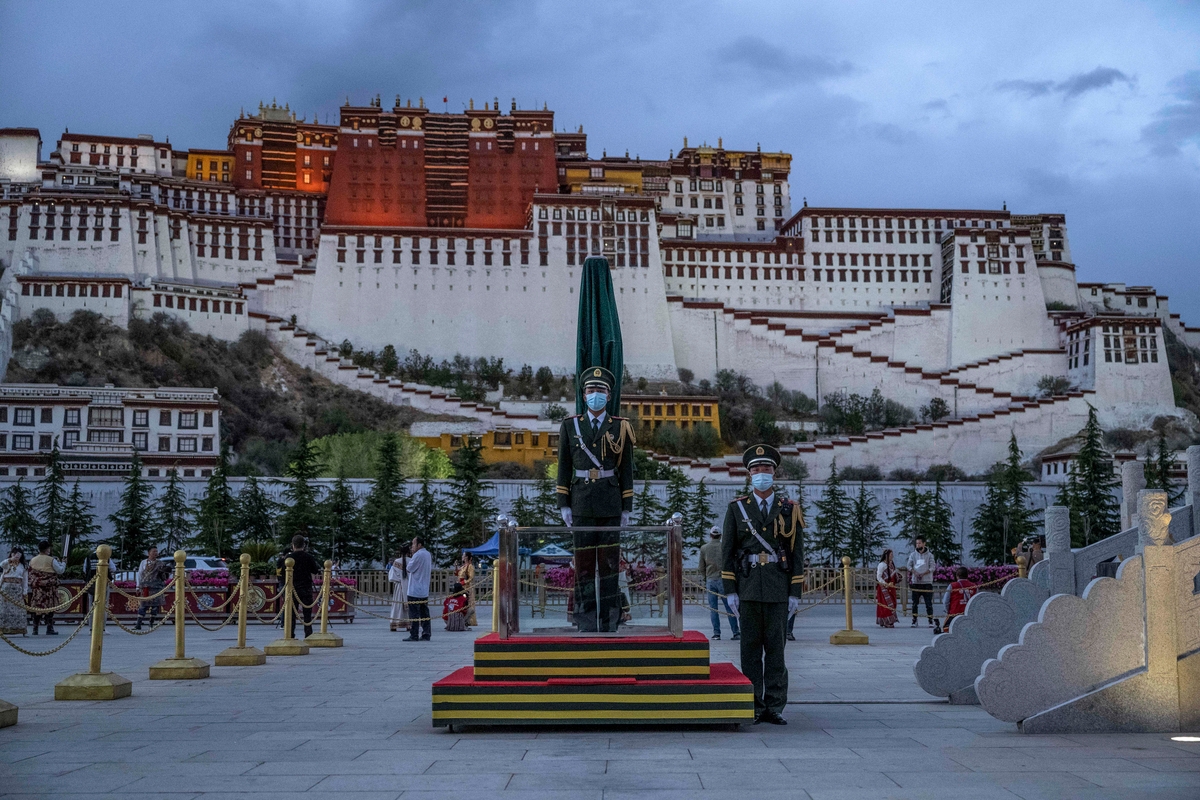
The Chinese regime’s fourth-ranking official, Wang Huning, called on Tibet to safeguard social stability, enforce the regime’s controversial new ethnic law, and bring Tibetan Buddhism into closer alignment with socialism under the Chinese Communist Party (CCP) during his visit to the region this week.
Wang is CCP leader Xi Jinping’s top adviser, a member of the Standing Committee of the Political Bureau of the CCP’s Central Committee, and chairman of the National Committee of the Chinese People’s Political Consultative Conference (CPPCC). He conducted an inspection tour of Tibet over four days from July 19 to July 22, including a rare visit to the Ngari (Ali) region, located along the disputed border between China and India.
Analysts told The Epoch Times that Wang’s trip is linked to the newly enacted ethnic law and its impact, as well as tightening control of the Tibetan population in border areas.
Tibet is one of the few ethnic minority autonomous regions under the CCP’s rule in mainland China, such as Xinjiang and Inner Mongolia. The Chinese regime established the Tibet Autonomous Region in 1965, claiming to grant Tibetans and other local ethnic minorities greater autonomy over policy matters, including freedom of religious belief. However, international human rights organizations and Tibetans in exile frequently accuse the CCP of imposing oppressive and totalitarian rule in Tibet.
During his visit, Wang called on local CCP authorities to “consolidate a political and social situation of unity and stability,” fully implement the “law on ethnic unity,” and advance “Sinicization of religion,” while asserting the need to “continuously guide Tibetan Buddhism to align with socialist society.”
Wang has been the top adviser and Party theoretician for three CCP leaders over the decades. He also currently oversees the CPPCC system, including ethnic and religious affairs.
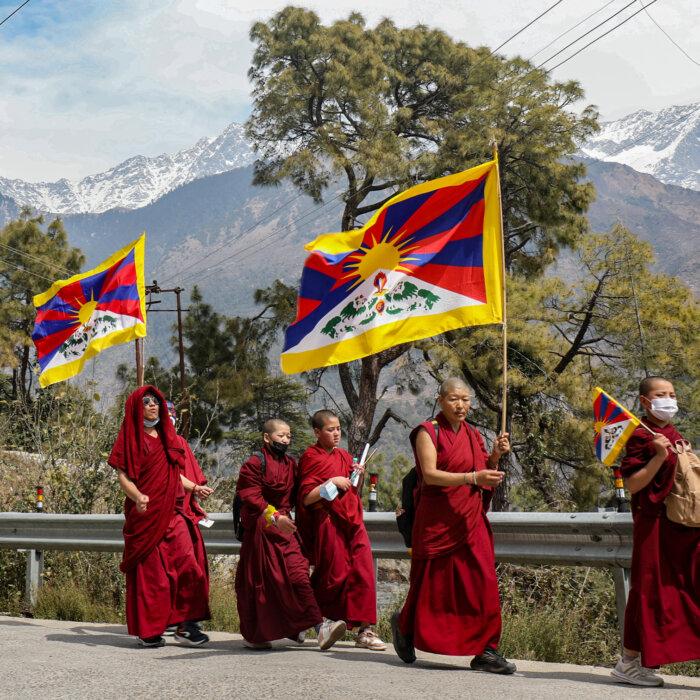
Its extraterritorial application clauses, especially in Article 63, empower the Chinese regime to hold individuals and organizations outside its borders legally accountable for “undermining ethnic unity.” Therefore, it’s been condemned as a malicious law and sparked international outcry.
Wang’s most critical task is likely to quell the various forms of backlash that have emerged after the ethnic law took effect, Shen Ming-shih, research fellow at Taiwan’s Institute for National Defense and Security Research, told The Epoch Times.
“Wang’s visit to Tibet is clearly intended to soothe such sentiments and to mask or obscure the law’s true underlying objectives,” Shen said.
It shows that the CCP’s aim is to pursue stability of its rule in Tibet, Shen said, and within that context, “to emphasize the Sinicization of Tibetan Buddhism and ensure it aligns with the CCP-led socialist society.”
As to why Wang chose to visit Tibet instead of Xinjiang first after the ethnic law took effect, CCP authorities believed the backlash this law triggered in Tibet might be more intense than in Xinjiang, Tang Jingyuan, a U.S.-based China analyst and current affairs commentator, told The Epoch Times.
“The goal was to ensure the enforcement of this controversial law would not face significant resistance and to prevent incidents like self-immolation or even more extreme forms of protest from occurring in Tibet,” Tang said.
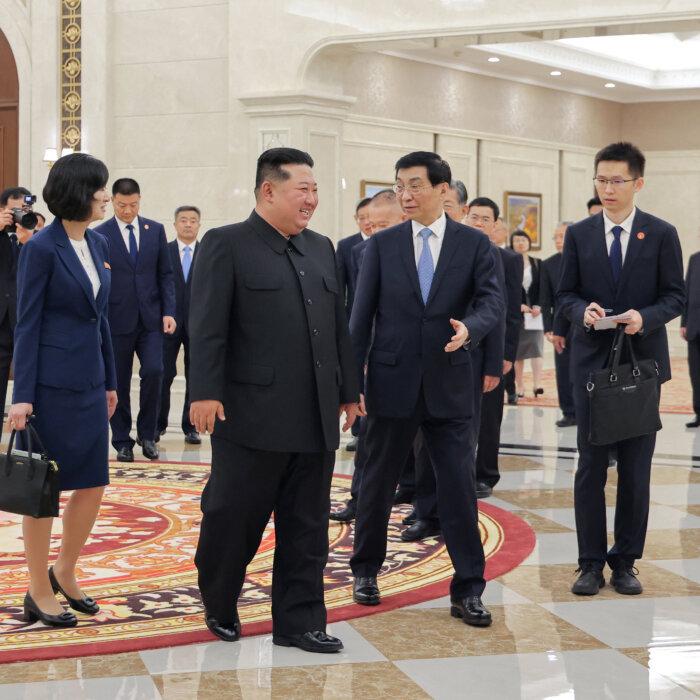
After returning from North Korea, Wang began to attach great importance to the issue of Tibet, Shen said.
“If acts of resistance or protest occur in such a place, whether it’s Tibet, Xinjiang, or other regions, the Chinese regime will employ authoritarian and high-handed tactics,” he said.
Wang’s Sino-Indian Border Visit
In the Ngari (Ali) region, Wang visited a village situated just 600 meters (0.37 miles) from Indian military bunkers, according to Chinese media.
The situation for Tibetans living in border areas, as well as for the many Tibetan exiles in disputed territories and areas under Indian control—including the practice and spread of Tibetan Buddhism in those Indian-administered regions—is actually far better than it is on the side controlled by the CCP, Tang noted.
The new ethnic law also contains provisions and content regarding sovereignty, territorial integrity, and opposition to separatism, which strengthens control over Tibetans, particularly those in border regions, Tang said.
“This is also a form of maintaining stability of the CCP’s rule,” he said.
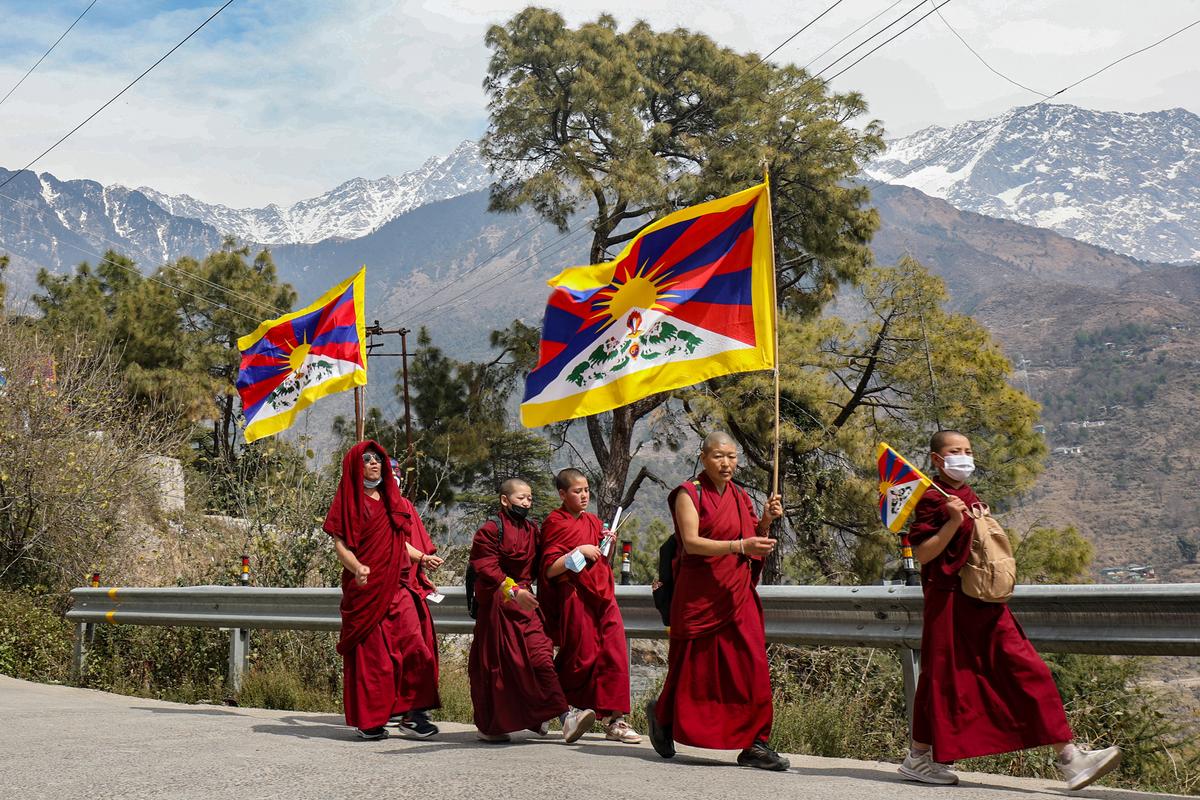
Wang’s inspection tour of these disputed territories is certainly a way to assert sovereignty, Shen said.
“On the other, the CCP also intended to assess the current status of the dispute along the eastern section of the China–India border,” he said.
Once the CCP deals with issues regarding the Taiwan Strait or the South China Sea, it will immediately turn to addressing the Sino-Indian border dispute, Shen said.
“Aksai Chin, in the western sector, is currently under Chinese control; it is possible that the CCP will seek ways to reclaim Tawang in the eastern sector,” he said.
Tawang, near the borders of Tibet and Bhutan, holds historical significance for Tibetan Buddhism. Tsangyang Gyatso, the sixth Dalai Lama, was born here in 1683. Tawang Monastery is also an important monastery of the Gelug school of Tibetan Buddhism.
The CCP is now preparing to select a new Dalai Lama, and can use the control of this location to legitimize its selection and interference of the religious affair, according to Shen.
China is likely at the stage where, just as this ethnic law came into effect, it will identify certain emblematic incidents or individuals and subject them to strict penalties to accelerate the implementation or enforcement of the law, Shen warned.
At present, the support from the international community and the United States for the Tibetan people is not particularly robust, Shen said, calling for more substantive and concrete assistance for them.
The international community—led by the United States—will continue exerting pressure on the CCP authorities through sanctions on their persecution of ethnic minorities, Tang said.
Regarding the CCP’s new ethnic law, democratic nations can also employ legislation to specifically sever the CCP’s reach in carrying out transnational repression, he suggested.