As China faces economic challenges, it is falling into the “middle-income” trap due to Chinese leader Xi Jinping’s repressive policies, according to Japanese finance experts.
Sputtering Economy
China’s GDP in April-June grew by 0.8 percent compared to 2.2 percent in January-March, and it’s not due to a slow post-COVID pandemic recovery, but rather it is an accelerated collapse of a real estate bubble that was formed over the past two decades, wrote Tsuchiya Hideo, a Japanese feature writer and economist at Nikkei, a Japanese financial newspaper, on Aug. 3.Real estate accounts for about 30 percent of China’s GDP. Latest official data reveal that new home sales by China’s 100 biggest developers dropped by 33 percent in July from a year ago, despite Beijing’s various real estate incentives. However, while this decline is significant, it is important to note that China was under lockdown due to the Chinese Communist Party’s (CCP) zero-COVID policy.
China’s real estate giant Evergrande lost $81 billion in the past two years during the country’s real estate crisis.
Country Garden, the largest privately owned developer in China—once hailed as a role model for property developers—is now in danger of default after missing $22.5 million interest payments on dollar-denominated bonds due on Aug. 7.
According to IMF economic data of countries around the world, the ratio of “total investment” to China’s GDP, which includes both the public and private sectors, has exceeded 40 percent since 2004—except for 2006 when it was 39.8 percent, Mr. Hideo wrote, adding that no other country in that dataset has that number.
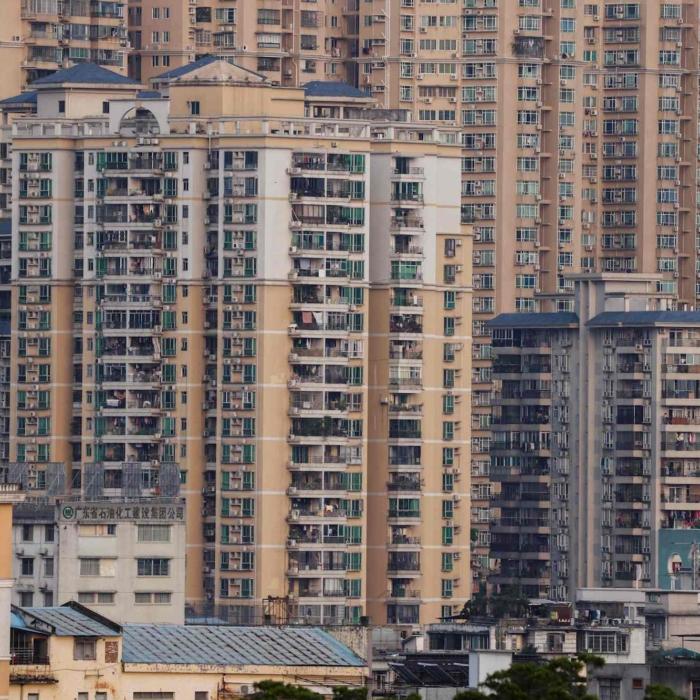
China’s current economic situation is quite challenging, Mr. Hideo wrote, with falling property prices, sluggish consumption, and declining exports. Global companies are relocating their manufacturing plants out of China.
Moreover, unemployment is at an all-time high in China, and the problem is compounded by new graduates—over 11 million—this year.
The statistics bureau reported that unemployment among workers aged 16 to 24 hit a record 21.3 percent in June. But Zhang Dandan, a researcher at Peking University, said that if the 16 million-plus people who choose not to work and live with their parents are all counted as unemployed, the real youth unemployment rate in March was as high as 46.5 percent.
The Middle-Income Trap
Long Ke, a senior fellow at the Tokyo Foundation for Policy Research in Japan, wrote that if China seeks to become a developed economy, it needs to overcome many structural challenges.Cheap labor is becoming “a thing of the past” for China, which means that the old mass production model of cheap goods for export is no longer viable, he stated.
In other words, China needs to enter the higher end of industrial production, he continued, otherwise, it will not be able to become a developed country. Furthermore, with the shrinking labor force, China would need to shift from its reliance on a labor-intensive manufacturing model to a capital-intensive industry.
However, this would mean that the CCP would have to prioritize technological innovation to engage in research and development, and China would have to protect intellectual property rights, which it does so poorly, Mr. Ke said.
If Beijing “is unable to boost the technical abilities of its local industries, China will never successfully industrialize. ... A closer look reveals that China is in fact falling into what is known as the ’middle income trap,' making it unable to change its development model or strategy to move on to the next phase of more advanced economic growth,” he wrote.
China’s exports have been experiencing a persistent downturn in recent months. Official customs data showed that, following a significant 12.4 percent drop in June, exports in July fell by 14.5 percent year-on-year.
CCP Ignored World Bank’s Advice
In February 2012, the World Bank and China’s Development Research Center of the State Council published “China 2030” to explore how China could avoid falling into the middle-income trap.The World Bank report stressed that China should prioritize completing its transition to a market economy and allow private companies to participate freely in sectors monopolized by state-owned enterprises. In addition, it advised Beijing to work on eliminating corruption and maintaining a transparent system with the rule of law.
Mr. Hideo called “Xinomics” the policy of strengthening government control over the economy, reversing the trend toward reform and opening up.
Unfortunately, Beijing did not heed the advice of the World Bank, he wrote.