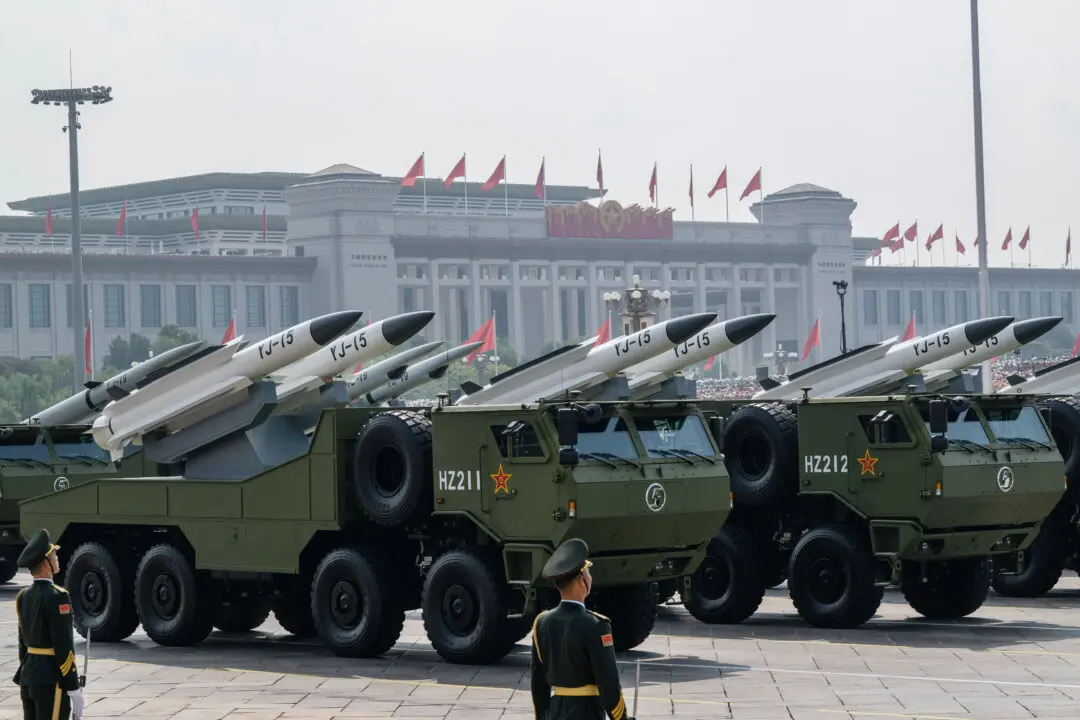
Chinese leader Xi Jinping’s visit to Pyongyang did little to rein in North Korea’s nuclear ambitions, a diplomatic shortfall that experts warn threatens to destabilize Northeast Asia.
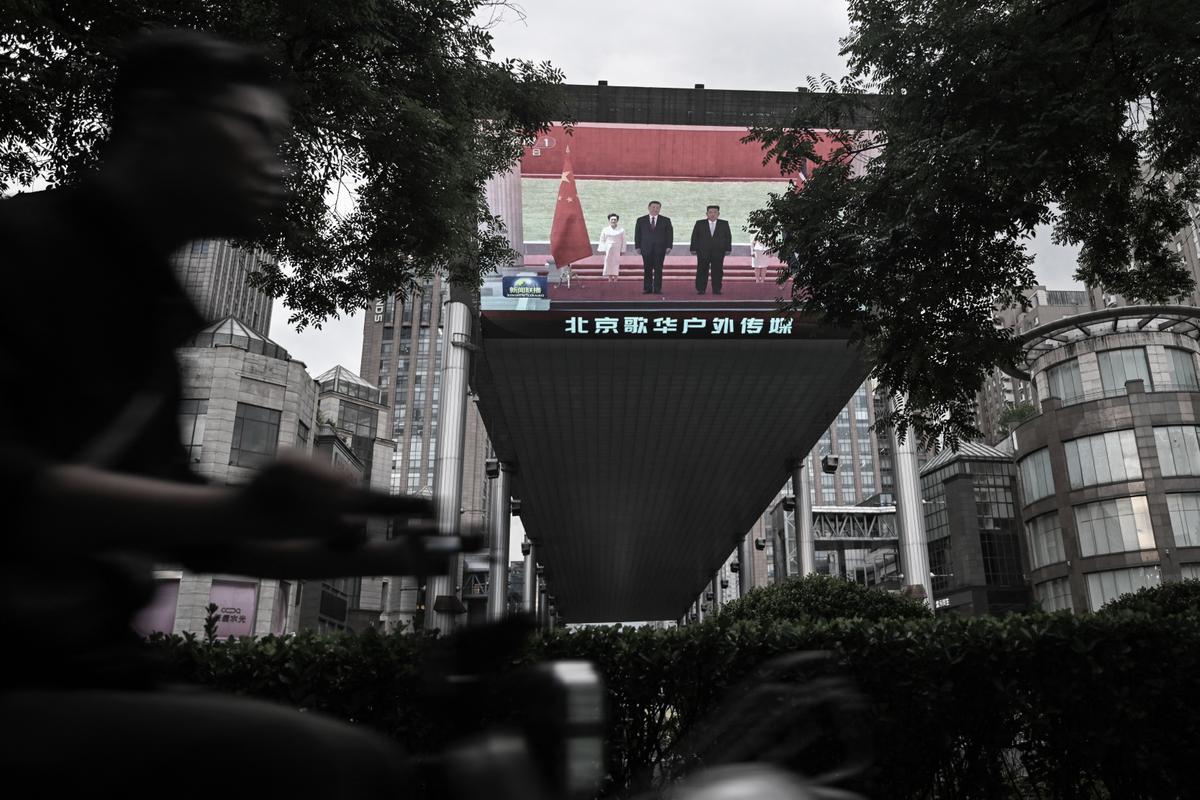
Xi said on June 9 that he reached an “important consensus” with North Korean leader Kim Jong Un on developing bilateral relations as he wrapped up a two-day visit to Pyongyang, according to Chinese state-run media Xinhua.
Xi called for enhanced exchanges between the two countries in diplomacy, law enforcement, and military affairs during his talks with Kim on June 8.
The agenda also covered making full use of reopened borders and the resumption of civil aviation to boost civilian ties.
For his part, Kim pledged to uphold the “one China principle”—which claims the self-governed democracy of Taiwan as the Chinese regime’s territory—and to firmly back Beijing in safeguarding its core interests.
Neither of the two communist regimes’ state media made any mention of North Korea’s denuclearization.


Limited Results
Lin Chih-hao, an assistant research fellow at Taiwan’s Institute for National Defense and Security Research, said the visit was primarily aimed at stabilizing and elevating ties between Beijing and Pyongyang.“The Chinese regime is framing its Korean Peninsula strategy around ‘global governance’—a push to reshape international institutions and norms—as it competes with the United States,” Lin told The Epoch Times.
“Beijing wants to prevent North Korea from tilting too far toward Russia and away from it.”
Kim said on June 12, Russia’s National Day, that ties between Pyongyang and Moscow had risen to an “alliance,” vowing to “always be with” Russia.
Lin said North Korea’s active endorsement of Xi’s “one China principle” suggests the country is giving Beijing a public show of diplomatic support.
“The two sides will likely sign more concrete agreements across the diplomatic, security, military, economic, and cultural sectors before the end of 2026,” he said.
But Cheng Chin-mo, an associate professor of diplomacy and international relations at Taiwan’s Tamkang University, said Xi’s state visit yielded limited results.
“Xi is facing an economic slowdown and intense political pressure at home, leaving him in desperate need of a diplomatic stage to shore up his grip on power,” Cheng told The Epoch Times.
“But with North Korea relentlessly expanding its support for Russia in the Ukraine war, Beijing’s influence over Pyongyang is likely waning.”
Waning Influence
Lin said the presence of senior economic officials in the Chinese delegation, including National Development and Reform Commission head Zheng Shanjie and Commerce Minister Wang Wentao, reflects Beijing’s push to deepen its economic hold over Pyongyang.“A North Korean economic collapse would directly threaten Chinese security,” he said.
“Without sustained economic support for North Korea, northeastern China would plunge into instability.”
China accounts for 95 percent of North Korea’s total trade and roughly 85 percent of its exports, according to the Washington-based think tank the National Committee on North Korea.
Even in 2017, when Beijing’s public calls for Pyongyang to halt nuclear testing strained bilateral ties, cross-border trade and freight never ceased, with only the volume changing, Lin said.
However, even as both sides signal interest in deeper economic ties, Pyongyang is still keeping Beijing at arm’s length, according to Lin.
“Public records show the border between China and North Korea has gradually opened, but it remains a long way from a genuine, full reopening,” he said.
“Beijing’s overtures are ultimately about strengthening its hand against Washington, but Pyongyang appears reluctant to play along.”
Cheng concurred. “Of course, Pyongyang welcomes Chinese economic ties, but Beijing cannot translate that dependence into political control,” Cheng said.
Escalation Risk
Two days before Xi’s arrival, Kim Yo Jong, the sister of Kim Jong Un, said North Korea’s status as a nuclear weapons state is “the line of no retreat,” according to a statement issued by the Rodong Sinmun, the regime’s mouthpiece.Cheng said the hardline stance, combined with both sides’ public silence on denuclearization, suggests that even Beijing has no say over Pyongyang’s nuclear program.
“On the surface, North Korea’s nuclear weapons target South Korea and the United States,” Cheng said.
“But in reality, they also serve as a balancing act to guard against potential threats from China.”
Cheng said the Chinese Communist Party (CCP) may be losing its ability to use Pyongyang’s nuclear arsenal as leverage against Washington.
“Pyongyang recently signed a strategic partnership treaty with Moscow, securing Russian technology for nuclear-powered submarines and missiles, which leaves it increasingly less dependent on China,” Cheng said.
“Kim is warning Xi that any move to pressure Pyongyang into denuclearization, even in step with Washington, will be met with retaliation.”
Beijing once led the Six-Party Talks—a multilateral forum involving China, North Korea, the United States, South Korea, Japan, and Russia aimed at curbing Pyongyang’s nuclear ambitions—but the process has been stalled since the North withdrew in 2009.
Lin said this could accelerate a “domino effect” across Northeast Asia, pushing neighboring countries to expand their defense capabilities short of developing nuclear weapons.
“For example, South Korea could develop its first nuclear-powered submarine, or Japan could advance its Type‑12 anti-ship missile,” he said.
“North Korea’s unchecked nuclear program is forcing its neighbors to arm themselves, inevitably driving up regional tensions.”