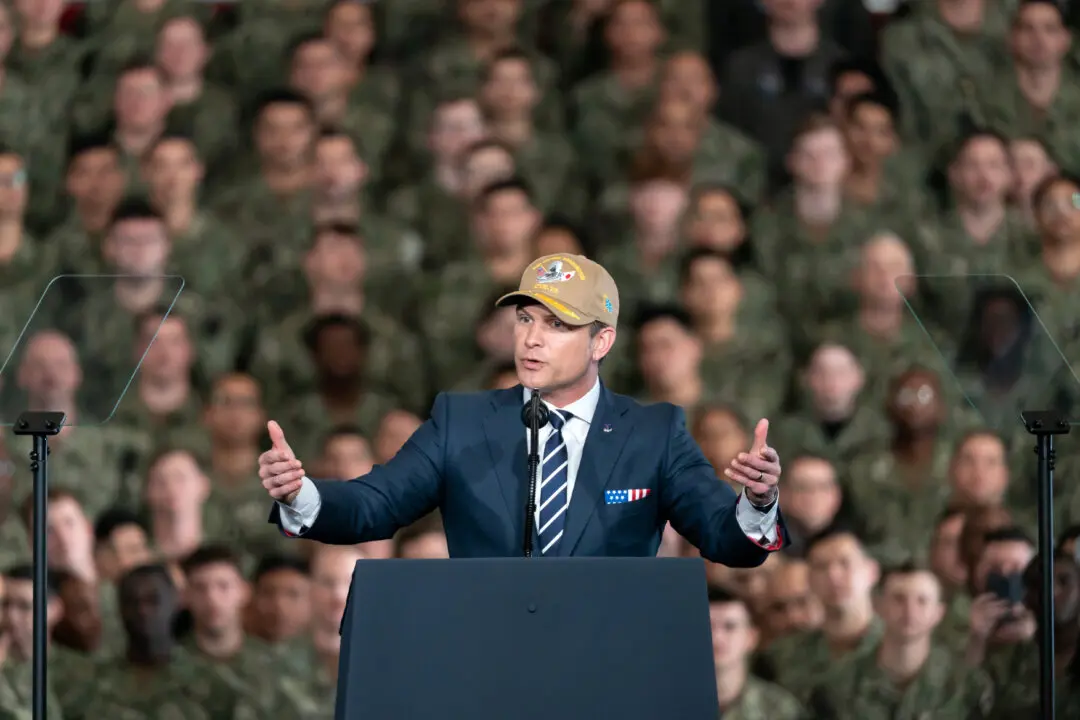
Both countries will “collaborate further through a shipbuilding working group” and “increase the number of U.S. commercial ships and combat-ready U.S. military vessels as quickly as possible, including the potential construction of U.S. vessels in the ROK,” according to the White House fact sheet.
“The United States has given approval for the ROK to build nuclear-powered attack submarines. The United States will work closely with the ROK to advance requirements for this shipbuilding project, including avenues to source fuel,” it stated.
When South Korean President Lee Jae-myung met with U.S. President Donald Trump at their second summit in Gyeongju, South Korea, on Oct. 29, he asked U.S. permission for South Korea to build nuclear-powered submarines.
Lee said the submarines will help South Korea “track Chinese and North Korean submarines” and help the United States in the region.
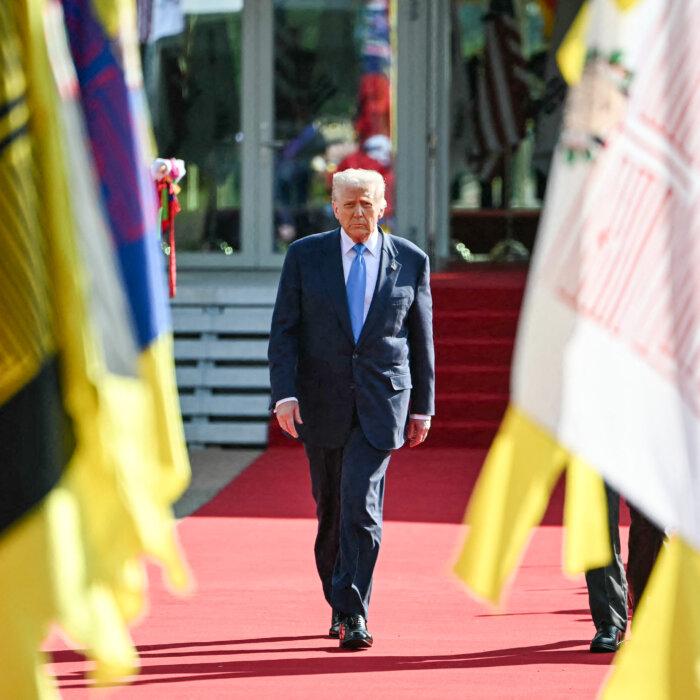
A day after the summit, Trump announced via Truth Social that he has approved Seoul’s request to construct nuclear-powered submarines at Philadelphia shipyards.
According to the fact sheet, Trump and Lee reaffirmed a pledge that South Korea made in July to invest $150 billion in U.S. shipbuilding as part of an initiative that South Korea termed “Make American Shipbuilding Great Again,” or MASGA.
Bruce Klingner, senior fellow at The Mansfield Foundation, told The Epoch Times that South Korea’s nuclear-powered submarines would monitor China rather than North Korea.
“South Korea does not need nuclear-powered submarines against North Korea’s naval or submarine force,” Klingner said.
“The benefit of nuclear-powered submarines is for long-range missions far from the Korean Peninsula. As such, they are of great utility for regional contingencies, including monitoring Chinese submarines.
“Trump’s decision was surprising since it reversed years of U.S. reluctance to agree to South Korea nuclear-powered submarines and renegotiating the civilian nuclear agreement. His decision may simply have been that having seemingly established a positive rapport with Lee during two summit meetings, Trump acquiesced to Lee’s nuclear request.”
The joint fact sheet stated, “Consistent with the bilateral 123 agreement and subject to U.S. legal requirements, the United States supports the process that will lead to the ROK’s civil uranium enrichment and spent fuel reprocessing for peaceful uses.”
Nuclear-powered submarines use enriched uranium as fuel, allowing them to operate for up to 30 years without refueling.

Gordon Chang, senior fellow at the Gatestone Institute, told The Epoch Times that the United States should take caution in sharing the highly guarded technology with the Lee administration.
“Lee Jae-myung is pro-China, pro-North Korea, and anti-U.S,” Chang said, adding that the United States “should share nothing sensitive with him. We have to assume anything he has will soon be shared with our enemies.”
“Xiexie” means “thank you” in Mandarin Chinese.
At a news conference held at the Chinese Embassy in Seoul on Nov. 13, Chinese Ambassador to South Korea Dai Bing expressed concern over the U.S.–South Korea plan.
“We hope South Korea will handle this matter cautiously, taking into account the concerns of various countries,” Dai said. “The cooperation between South Korea and the United States on nuclear-powered submarines goes beyond commercial dimensions and is directly linked to the international nonproliferation regime and regional peace and stability.”
The U.S.–South Korea discussions come amid rising concerns over China’s massive naval buildup.
China has been critical of U.S. cooperation with South Korea.
China’s state-run Global Times ran an article in July saying the partnership with the United States could lead to “a precarious situation” making South Korea “increasingly dependent on or even subordinate to U.S. interests.” In August, the publication ran another article saying investing in the U.S. shipbuilding industry “may not be a profitable venture” for South Korea.
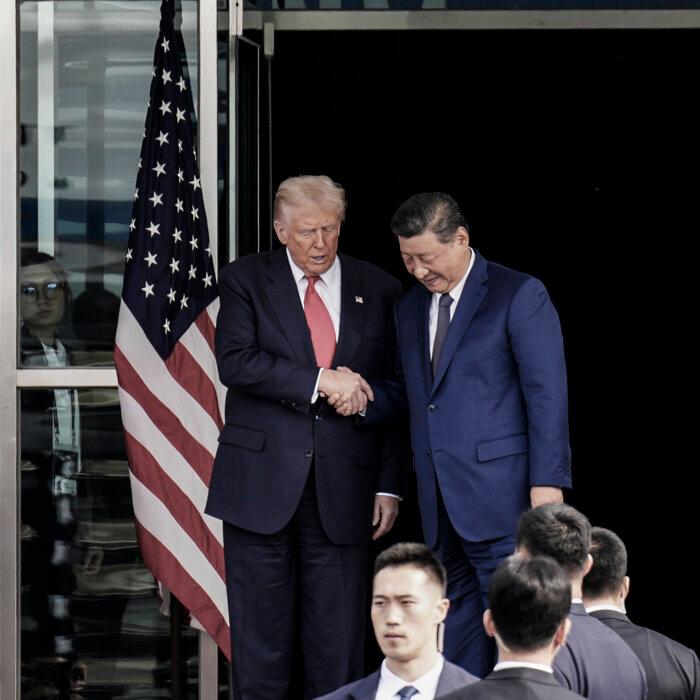
The announcement came after Trump and Chinese President Xi Jinping met on Oct. 30 in the South Korean port city of Busan, agreeing to walk back their punitive trade measures for a year.
According to the fact sheet, Trump and Lee also reaffirmed their “efforts to uphold freedom of navigation and overflight and other lawful uses of the sea” in the Indo-Pacific region.
“They emphasized the importance of preserving peace and stability across the Taiwan Strait” and “encouraged the peaceful resolution of cross-strait issues and opposed unilateral changes to the status quo,” it stated.
Dai said at the news conference that China hopes “the South Korea–U.S. alliance will not ignite a fire over the Taiwan issue.”