
A bipartisan group of senators has introduced legislation that would require the Pentagon to expand the scope of its annual report to Congress on China’s military and extend the reporting requirement by three more years.
Sens. Catherine Cortez Masto (D-Nev.) and Ted Budd (R-N.C.) introduced the China Military Power Transparency Act (S.2884) on Sept. 18, which would amend Section 1202 of the National Defense Authorization Act for fiscal year 2000. If enacted, the Pentagon would be mandated by Congress to provide the annual report through 2030, extending it beyond the current end year of 2027.
“By expanding this report to include the [Chinese Communist Party’s] potential expansion into new and emerging technologies like cyber and biotech, we are making sure that we are ready for whatever comes next.”
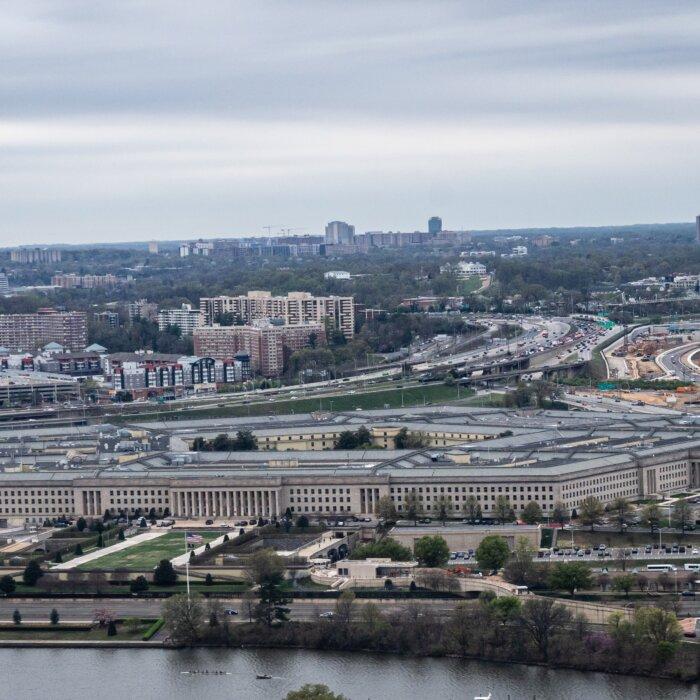
The Pentagon’s annual assessment of China’s military is officially titled “Military and Security Developments Involving the People’s Republic of China,” commonly referred to as the China Military Power Report. It provides a detailed analysis and forecast of China’s military capabilities, strategy, and developments over the past year.

Another topic in the report would focus on Taiwan. According to the language of the bill, the Pentagon would need to provide “the likely strategic intent of the People’s Liberation Army in a conflict over Taiwan, and how the People’s Republic of China will conduct a cyber enabled economic warfare campaign, a cross strait invasion campaign, or a blockade campaign.”
Report
In its 2024 annual report, the Pentagon stated that China had more than 600 operational nuclear warheads as of mid-2024, an increase of 100 since the 2023 annual report.The Pentagon estimated that China is projected to have more than 1,000 operational nuclear warheads by 2030, with the total expected to “continue growing” through at least 2035, according to its 2024 report.
China’s air force and navy “constitute the largest aviation forces in the region and the third largest in the world, with over 3,150 total aircraft,” the 2024 report stated, noting that Beijing has about 2,400 combat aircraft, including fighters, strategic bombers, tactical bombers, and attack planes.
As for Taiwan, the 2024 report stated, “[The Chinese military] has a range of options to coerce Taipei based on its increasing capabilities in multiple domains.”
Regarding China’s amphibious fleet, which would be essential for any potential amphibious invasion of Taiwan, the Pentagon noted that there is “no indication” that Beijing is “significantly expanding its number of tank landing ships and medium-sized landing craft at this time.” Nonetheless, the Pentagon said the Chinese military may believe that it either already has “sufficient amphibious capability” or that it can rely on its “massive” shipbuilding industry to “produce the necessary ship-to-shore connectors relatively quickly.”
China’s military modernization progress could have been “disrupted” by “a new wave” of corruption-related investigations among its senior leaders in 2023, the Pentagon stated in its 2024 report.
“Several leaders investigated or removed for corruption oversaw equipment development projects related to modernizing China’s ground-based nuclear and conventional missiles,” the 2024 report stated.