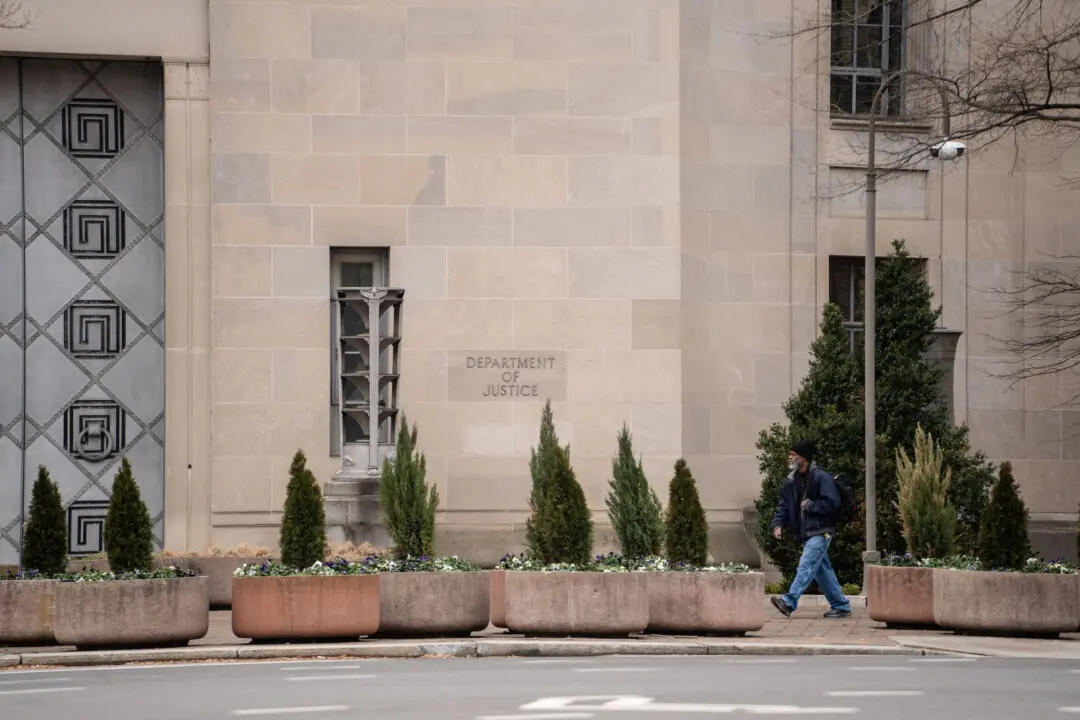
Sen. Josh Hawley (R-Mo.) is urging the Department of Justice to open a formal investigation into an autonomous trucking company that was funded by money from a prominent Chinese businessman, alleging that it had passed on sensitive information to communist China.
In his letter, Hawley cited reports that TuSimple “systematically shared proprietary data, source code, and autonomous driving technologies with Chinese state-linked entities.” He called the company’s decision “a blatant disregard” of its agreement with the Committee on Foreign Investment in the United States (CFIUS) in 2022.
“These reports also revealed communications from TuSimple personnel inside China requesting the shipment of sensitive Nvidia AI chips and detailed records showing ‘deep and longstanding ties’ with Chinese military-affiliated manufacturers,” Hawley wrote.
“To date, TuSimple has not faced serious consequences for sharing American intellectual property with China.”

Hawley noted that if the reports about TuSimple were accurate, it would mean that the U.S.-based autonomous trucking company funded by money from China had violated U.S. export law, committed a breach of national trust, and possibly hurt U.S. technological leadership.
“The American people deserve to know how and why a supposedly U.S.-based company was allowed to serve as a conduit for the transfer of sensitive innovations to the Chinese Communist Party,” Hawley wrote.
TuSimple co-founder Mo Chen, who is a Canadian citizen residing mostly in China, launched a company called Hydron in 2022 that was incorporated in China, Hong Kong, and Delaware but headquartered in Southern California to develop and manufacture hydrogen-powered trucks equipped with autonomous driving technology.
“Did TuSimple provide protected information to Hydron ... or any other affiliated Chinese entity?” Hawley wrote, referring to one of the issues that Bondi should consider in an investigation.
Another autonomous trucking company, Houston-based Bot Auto, was founded by another TuSimple co-founder, Xiaodi Hou, who is a U.S. citizen. He obtained his Bachelor’s in Engineering from Shanghai Jiao Tong University before completing a doctoral degree at the California Institute of Technology.
Hawley asked Bondi whether the Department of Justice has taken steps to make sure that Bot Auto “does not engage in similar behavior,” considering that the Houston-based company is “staffed with former TuSumple employees and backed by Chinese capital.”
The Epoch Times contacted CreateAI for comment but didn’t receive a response by publication time.