NATO Secretary-General Mark Rutte has expressed concerns that Russia would keep Europe “busy” in a bid to support communist China’s war against Taiwan.
Speaking at a press conference on June 23 ahead of a NATO summit in the Hague, Netherlands, Rutte said NATO has close ties with several Indo-Pacific partners, namely Australia, Japan, New Zealand, and South Korea, and they all share the concern about the Chinese regime’s “massive military build-up.”
Rutte noted that a few years ago, there weren’t any Chinese enterprises among the world’s top 10 defense companies, but now, there are three to five.
“Of course, they don’t do this only because they want to have nice parades in Beijing,” Rutte said. “And we are all very worried, of course, about the situation in Taiwan.”
When asked about a scenario in which the United States comes to Taiwan’s aid after the island is attacked by China, Rutte said that there would be “no doubt” that Chinese regime leader Xi Jinping would call on his “junior partner,” Russian President Vladimir Putin, for assistance.
Putin “will keep us busy here [in Europe],” Rutte said, without elaborating.
In such a scenario, Rutte said, NATO would not “opt out” as an alliance.
“That is why NATO does not have, as an alliance, opt-out, side deals, etc., because we all have to chip in.”
The Chinese Communist Party views Taiwan as one of its provinces and aims to seize the island, despite never having governed it. Taiwan is a de facto independent nation with its own democratically elected government, military, constitution, and currency.
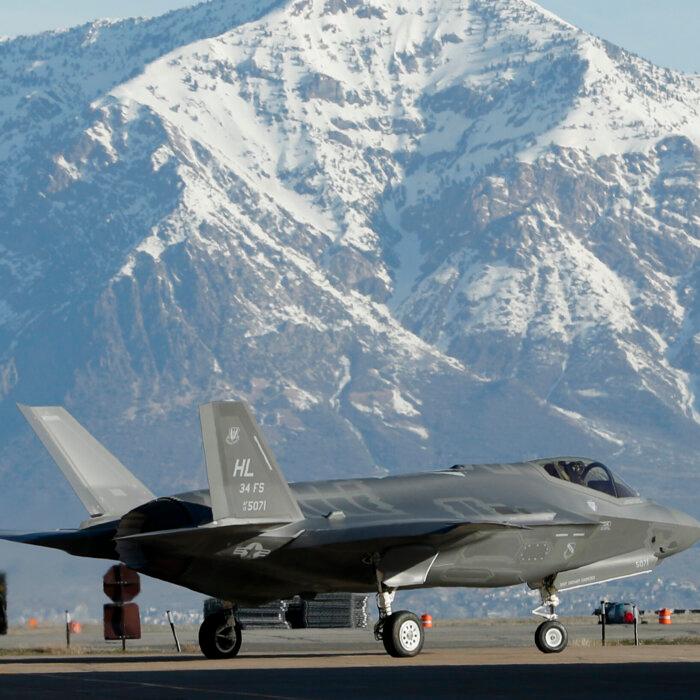
The United States is Taiwan’s biggest arms supplier, even though the two sides do not have formal diplomatic ties.
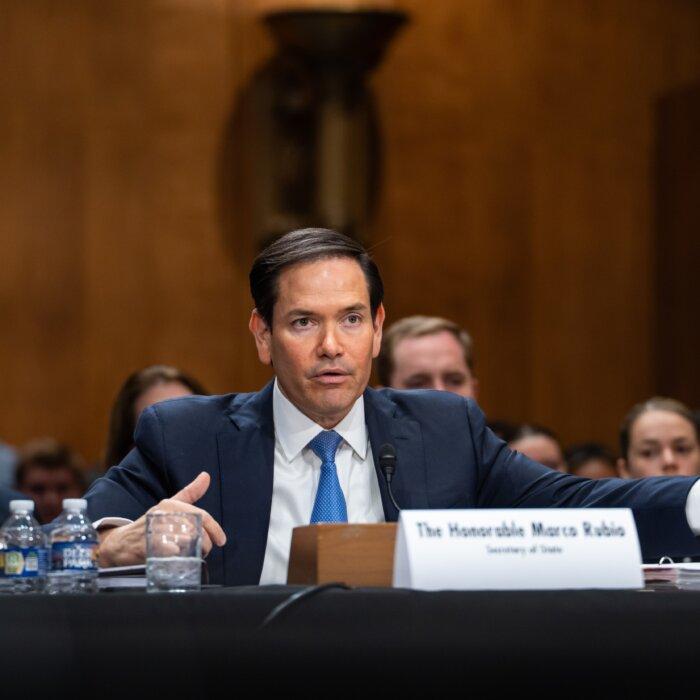
“It’s public that Xi has ordered his military to be capable of invading Taiwan by 2027,” Hegeseth said at the time. “Any attempt by Communist China to conquer Taiwan by force would result in devastating consequences for the Indo-Pacific and the world.”
Taiwan “will continue to work with such like-minded partners as the G7 and NATO in order to jointly safeguard peace, stability, and prosperity across the Taiwan Strait and the wider region,” the ministry added.