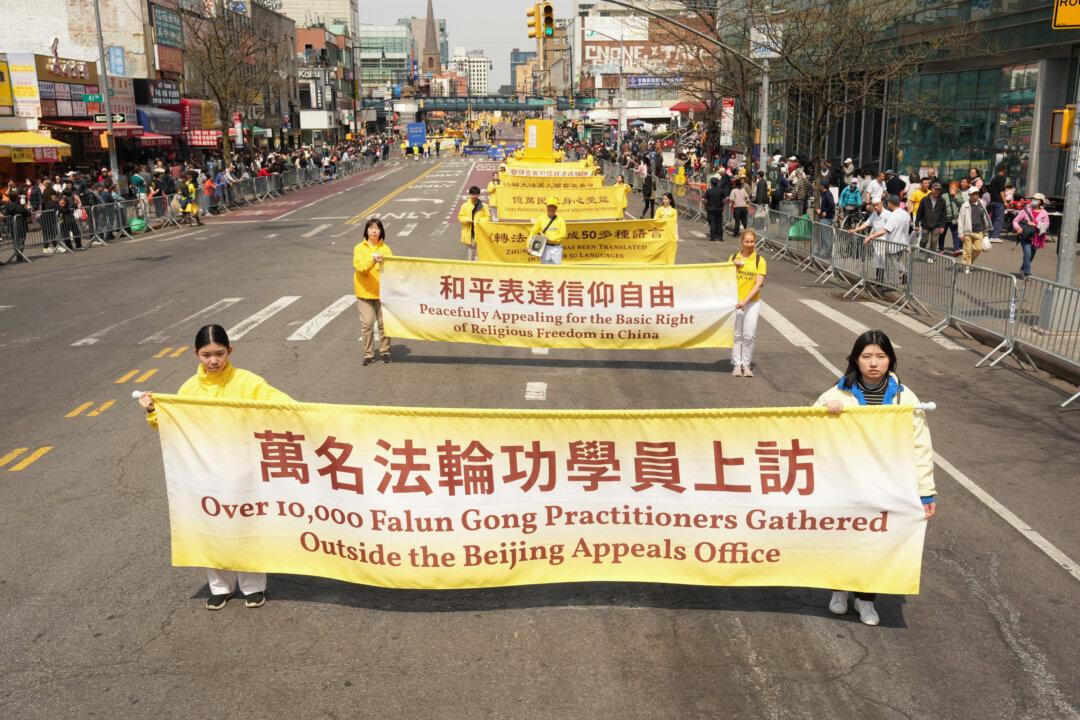
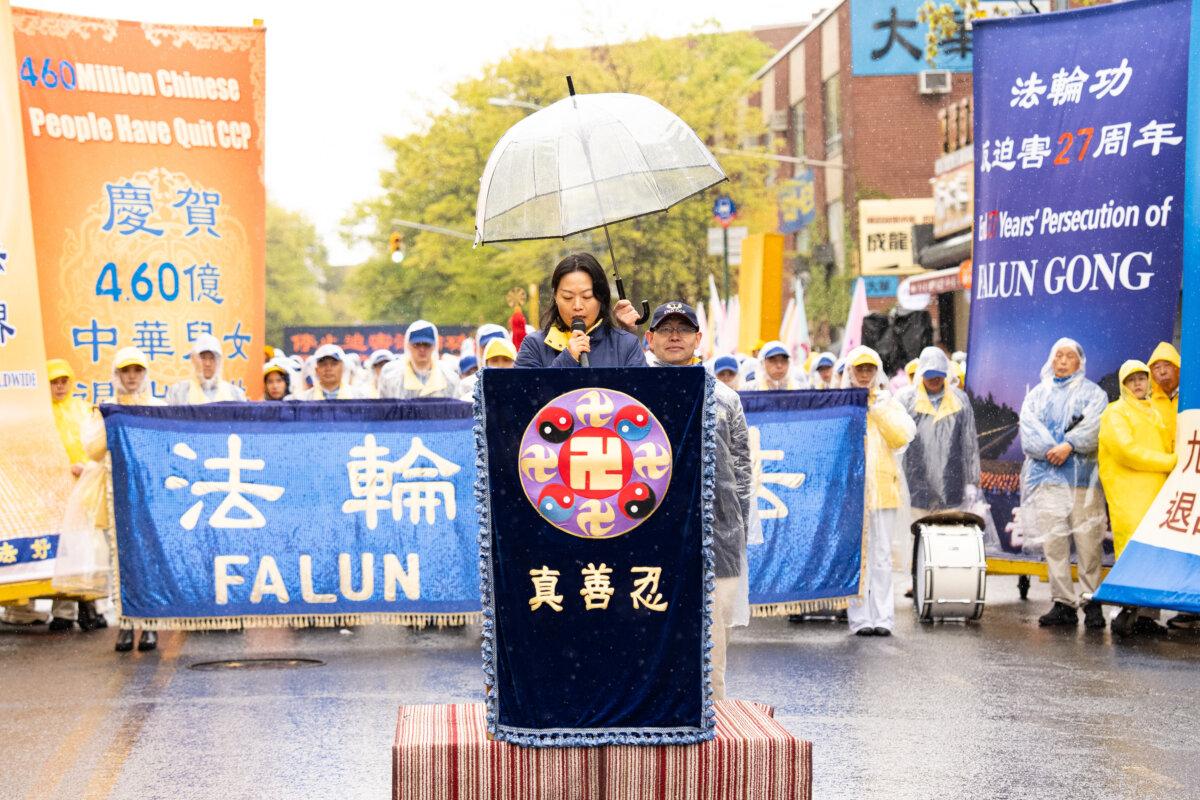
More than 1,000 Falun Gong practitioners gathered in the Flushing neighborhood of Queens, New York, on April 25 to mark the 27th anniversary of a peaceful protest in China—an event whose impact continues to be felt today.
He Ai-shan was among the more than 10,000 practitioners who went to Beijing on April 25, 1999, and attended Saturday’s parade and rally in Flushing. Speaking at the rally, she recalled joining the protest as a 19-year-old college student, alongside two classmates.
Studying in Beijing at the time, He said she and her classmates bicycled to a street next to Zhongnanhai, the Chinese Communist Party’s (CCP’s) leadership compound. They arrived at around 8 a.m. local time, by which point a large group of practitioners had already gathered, she added.
“It was very quiet—there were no slogans or chants. Everyone simply stood silently along the wall, without blocking traffic or pedestrian pathways,” He said, according to a translation.
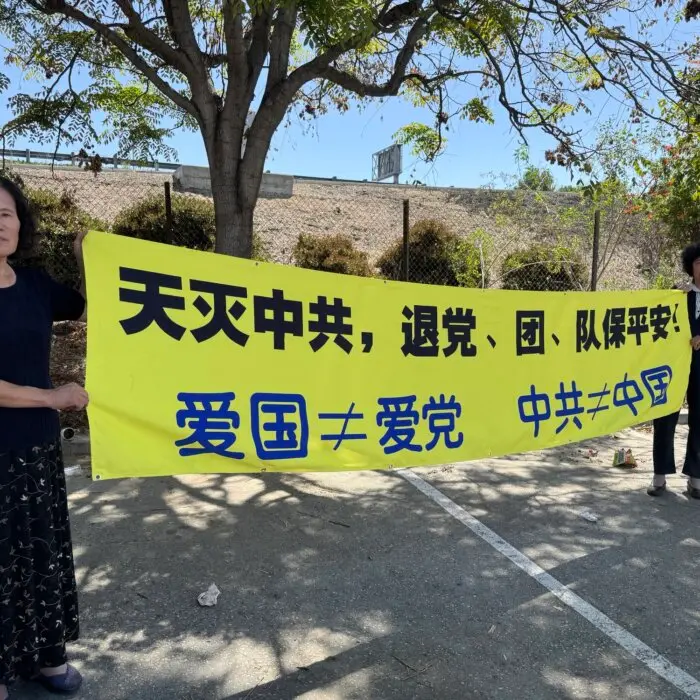
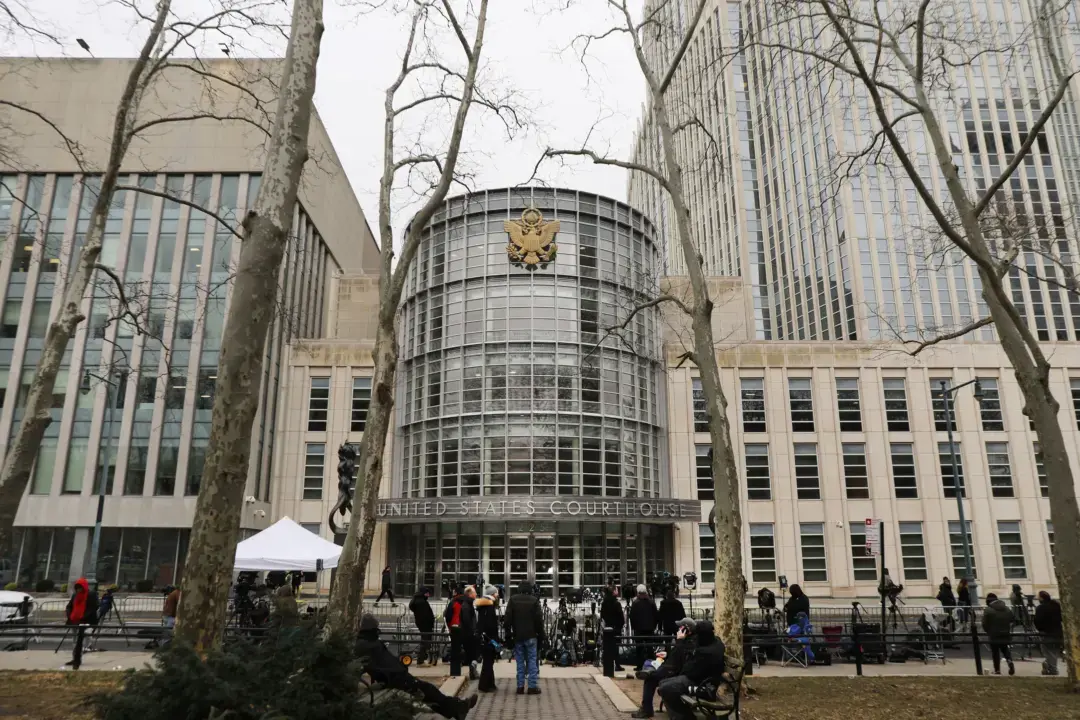
On April 25, 1999, practitioners from across the country arrived at the Central Appeals Office in Beijing, a government agency that hears public complaints. Several representatives of Falun Gong met with then-Chinese Premier Zhu Rongji at the State Council.
At around 9 p.m. that day, He said that news had come in that the meeting had ended, and that their requests had been met, including the release of the arrested practitioners in Tianjin.
“Everyone left quickly, quietly, and in an orderly manner. There was no disturbance at all, and the ground was left spotless. This is how I remember April 25—calm and nothing out of the ordinary,” He said.
Zhu’s conciliatory stance toward Falun Gong that day was overruled by then-CCP leader Jiang Zemin. According to the Falun Dafa Information Center, Jiang decided to characterize the peaceful appeal as a criminal threat and launched a brutal persecution against the group on July 20, 1999. Since then, CCP propaganda has portrayed the April 25 appeal as a “siege” against the regime.
“We approached the Chinese government with complete trust and goodwill,” He said, but the CCP “trampled that trust” and turned ordinary Chinese people against the practice.
Charlie Yu, another participant in Saturday’s activities in Flushing, told The Epoch Times that he and his wife took part in the 1999 appeal. He said that at the time he was an associate professor in the northern Chinese city of Shenyang.
Parade and Rally
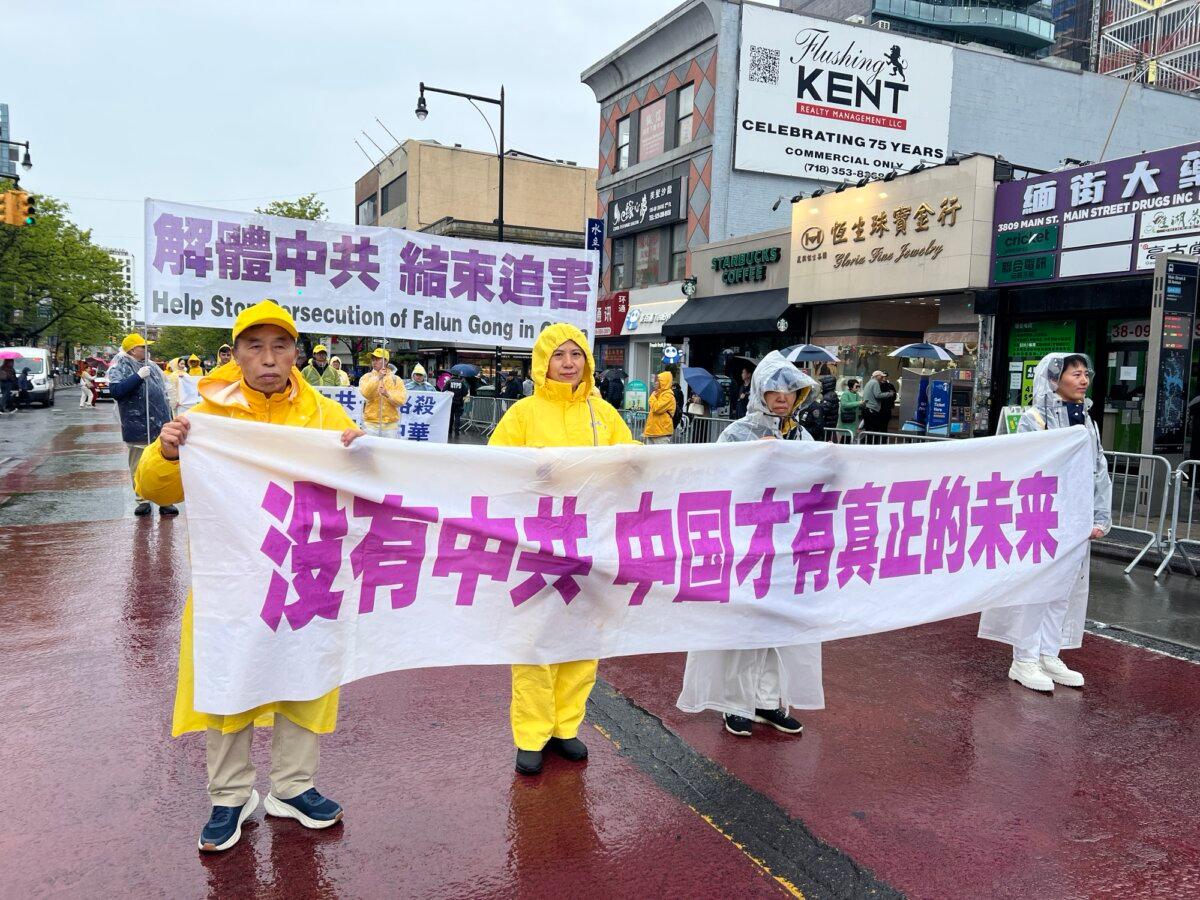
During the parade, some participants held up banners with phrases such as “Stop Persecution of Falun Gong,” “The CCP’s Transnational Repression Undermines Global Security,” and “Falun Dafa Spreads Worldwide.”The parade also included a marching band and a waist-drum team.
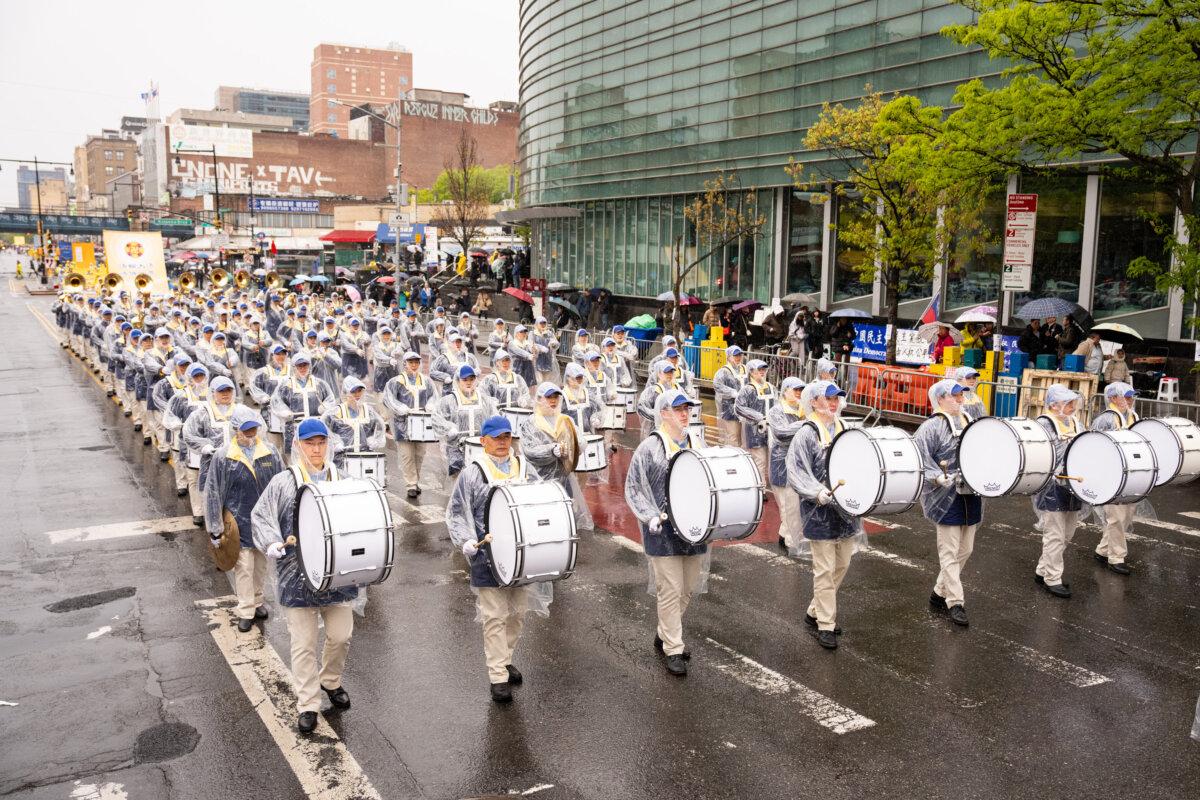
In addition to commemorating the 1999 appeal, the parade was held to recognize that more than 460 million Chinese people have renounced their ties with the CCP and its affiliated organizations.
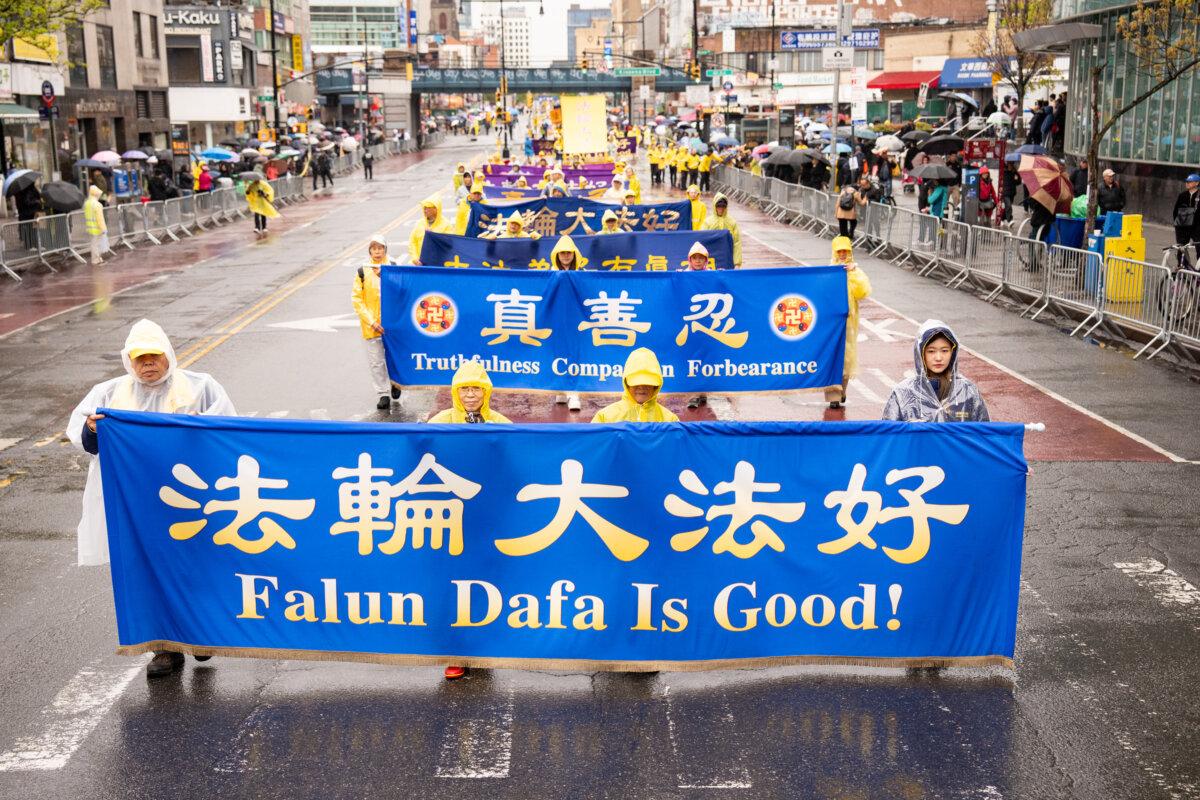
Several Chinese pro-democracy groups attended in support of the Flushing activities, including the Federation for a Democratic China, the Liberty Democracy Party of China, and the New Era People’s Party of China.
Yin Huimin, a member of the Liberty Democracy Party of China from Hebei Province in northern China, told The Epoch Times that she was very excited to come.
“If everyone believes in ‘Truthfulness, Compassion, Forbearance,’ the world would be a peaceful and beautiful place,” Yin said, according to a translation. “I call on all Chinese people to wake up! Don’t believe the Chinese Communist Party’s claims—it is covering up the truth!
“I hope all Chinese people will stand up and speak out in support of Falun Gong.”
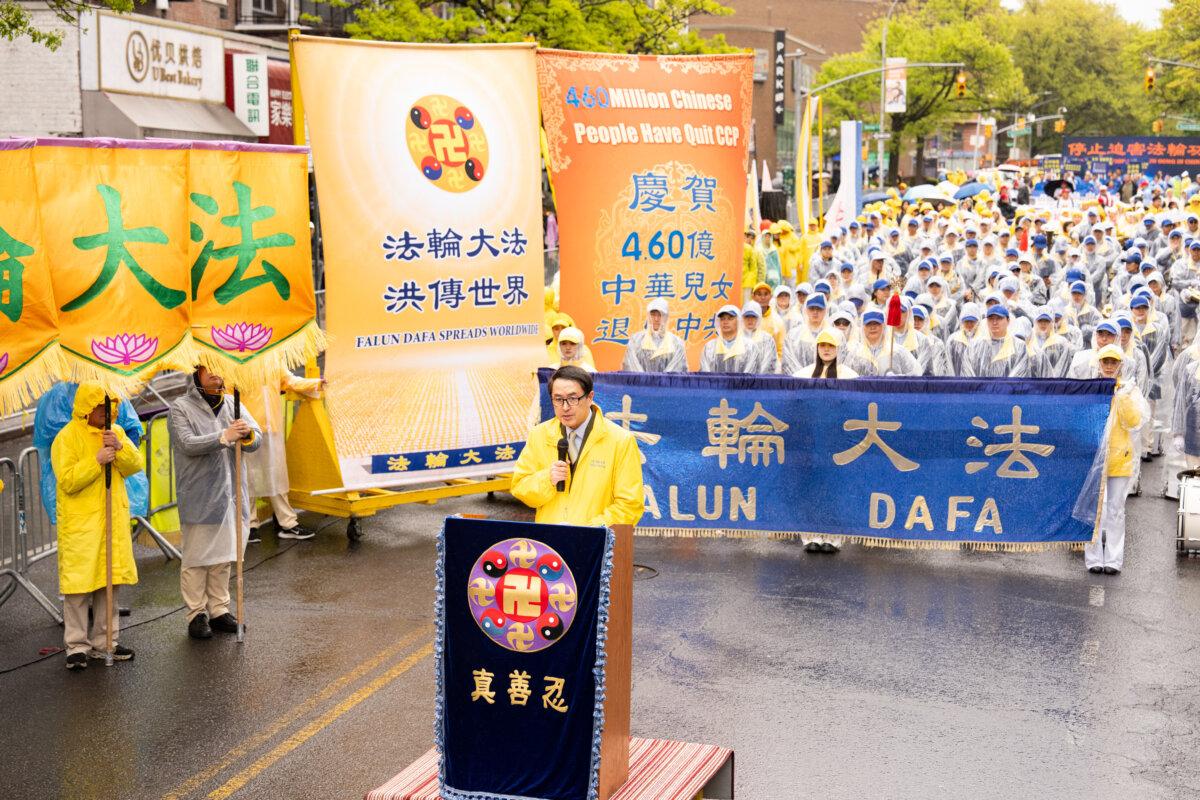
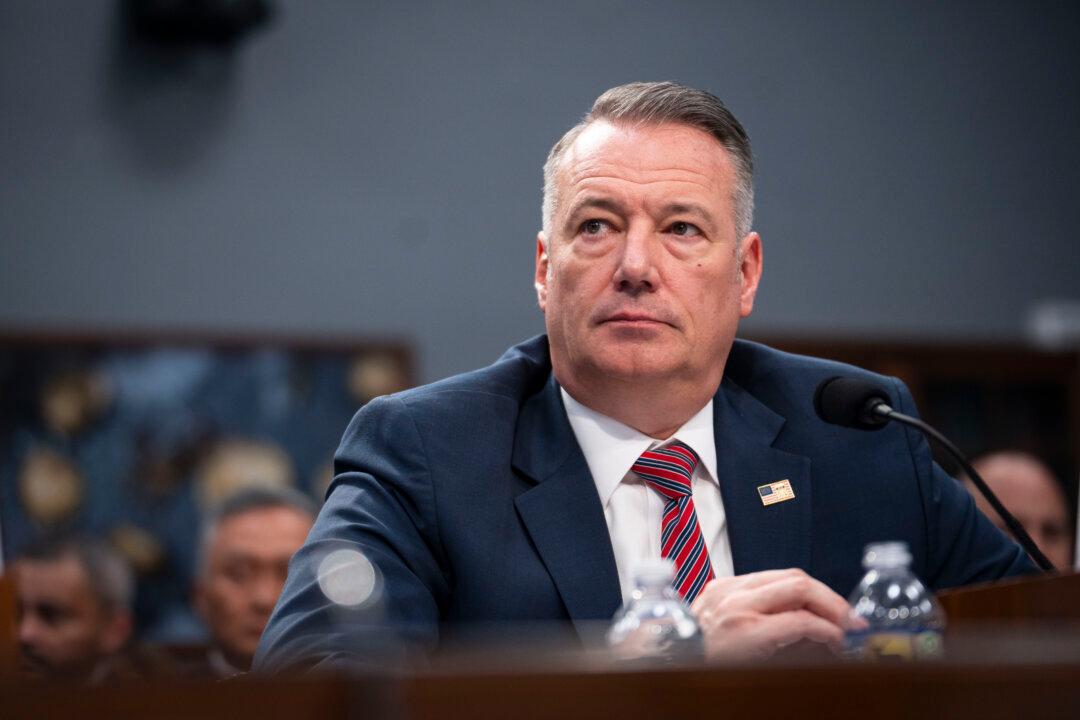
Several individuals spoke at the rally, including Zhang Erping, spokesperson of the Falun Dafa Information Center; Martha Flores-Vazquez, Democratic leader for the 40th District of the New York State Assembly; and Pat Patterson, a New York-based actress and producer.
“The quiet courage shown on April 25 did not end that day. It lives on in those who continue to speak, to practice, and to stand by their values despite immense adversity,” Zhang said.
“It reminds us that freedom of conscience is not guaranteed. It must be protected, and it calls on us to stand in our own way, for dignity, for compassion, and for the fundamental rights that belong to every human being.”
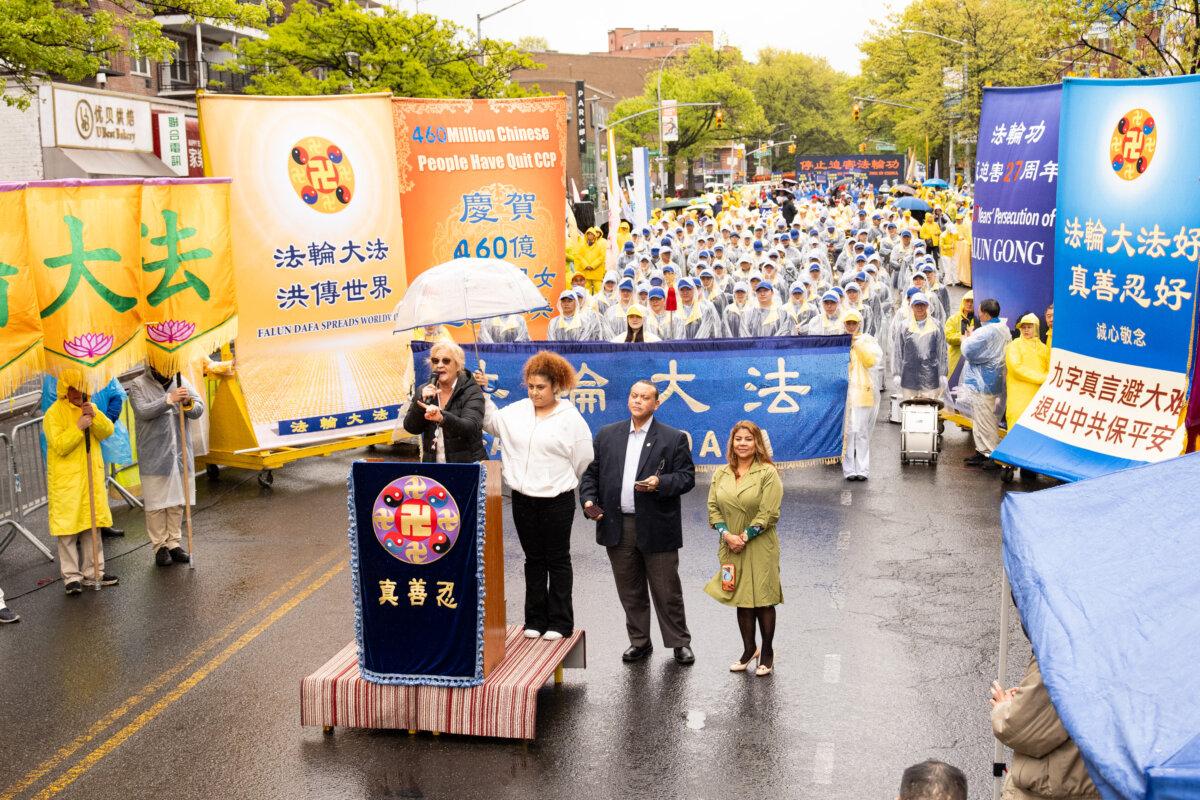
Vazquez applauded the Falun Gong practitioners for their courage.
“Thank you to the drummer that’s sending a strong message,” she said, referring to a drum played in the background.
“When you hear that drum, and you hear the vibration, you know that you’re safe, because that powerful drum is our strong message that no one—no one—will ever stand in the way, and prosecute you or hurt you, or make you feel intimidation in the United States of America,” Vazquez said.
Patterson said the April 25 appeal is a story of courage that reminds people of what it means to be a human being.
“As a storyteller, I recognize this moment for what it was, a powerful and moving act of peaceful courage in modern history, a moment that should be celebrated, a moment to be protected,” Patterson said.
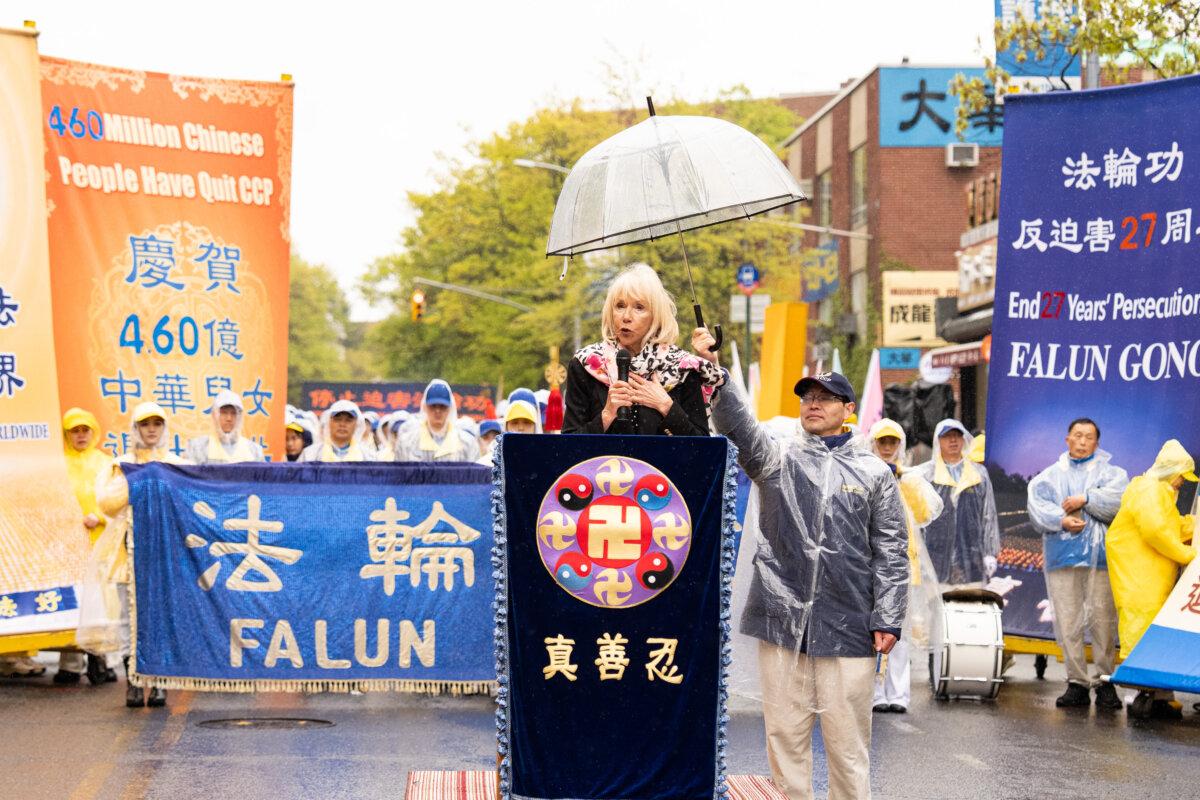
“I believe in freedom. I believe in the dignity of every human life. I believe, as artists, we have a responsibility to bear witness—to stand up and say: We see you, we hear you, and we will not be silent,” Patterson said.
“So today, I add my voice to yours. I stand with the survivors. I stand with the families who are waiting for answers. I stand with those who continue to hold on to their beliefs in the face of unimaginable pressure. Your courage inspires me, and I am truly honored to stand beside you today.”