Several of those experts and advocates based in China spoke to The Epoch Times on condition of anonymity out of fear of reprisal.
Warnings of Extraterritorial Reach
A Chinese scholar told The Epoch Times that the law represents an attempt to export the CCP’s model of authoritarian governance overseas.“Ethnic unity should be based on equality among different ethnic groups,” he said. “It should not be defined by a political party that dictates what language people must speak, what version of history they must accept, or what national identity they must embrace.”
According to the scholar, by codifying “ethnic unity” into law, the CCP has effectively repackaged political loyalty, ideological conformity, and national security controls as ethnic policy while further restricting the cultural, linguistic, and religious rights of minority groups.
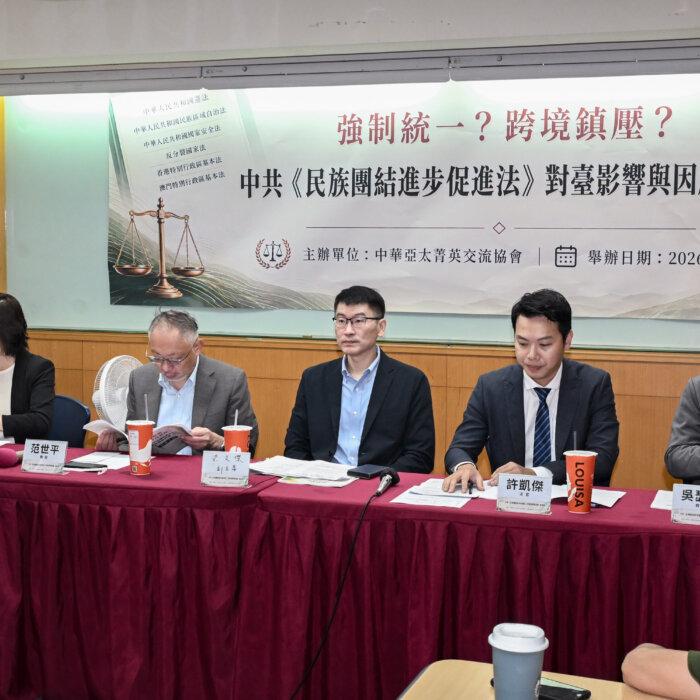
China’s state-run Xinhua News Agency said on June 30 that promoting ethnic unity requires adherence to the CCP’s overall leadership and strengthening what Beijing calls a “shared sense of the Chinese nation.”
The law requires the nationwide promotion of Mandarin Chinese as the country’s common language under Article 15.
More controversially, Article 63 states that organizations and individuals outside China who engage in activities deemed to undermine ethnic unity or promote ethnic separatism against China may be held legally liable.
A Chinese human rights lawyer said such language demonstrates that the law is fundamentally designed as an instrument of political control rather than ethnic equality.
The lawyer told The Epoch Times that the provision is a classic example of Beijing’s expanding long-arm jurisdiction.
He said the provision could intimidate Tibetans, Uyghurs, Mongolians, Hong Kongers, Taiwanese, and others living overseas who publicly criticize the CCP’s ethnic policies.
“If people overseas criticize the CCP’s ethnic policies, they could face arrest if they later travel to mainland China,” he said. “Even someone merely transiting through a Chinese airport could potentially be detained.”
The lawyer argued that because terms such as “undermining ethnic unity” and “creating ethnic division” are undefined, the CCP retains broad discretion over how the law is enforced.
“The regime decides what constitutes separatism,” he said. “That uncertainty alone is enough to discourage overseas critics from speaking out.”
Vague Language Expands CCP Control
A legal scholar based in China’s Yunnan Province told The Epoch Times that the CCP has a long history of drafting laws with deliberately ambiguous language that leaves broad room for interpretation.“The CCP’s laws have never been designed to restrain the government,” he said. “They are designed to control the people.”
He compared Article 63 to China’s widely criticized offense of “picking quarrels and provoking trouble,” a broadly defined criminal charge frequently used against dissidents because of its vague wording.
“What counts as undermining ethnic unity or creating ethnic division is ultimately decided by the Party,” the legal scholar said.
He said the law marks a significant step in transforming policies previously enforced through administrative measures in regions such as Xinjiang, Tibet, and Inner Mongolia into formal legislation.
“The CCP plants these legal ‘nails’ in advance,” he said. “They may leave them unused for years, but when they decide to target a particular individual, organization, or viewpoint, the legal basis is already there.”
According to the legal scholar, the new law places minority languages, religious practices, cultural expression, and criticism from overseas under the broad framework of maintaining “ethnic unity” and combating separatism.
He said the legislation signals to the international community that Beijing is increasingly embedding its control over ethnic minorities—and extending aspects of its authoritarian governance beyond China’s borders—through legal mechanisms.