In China, Henan Province’s Chinese New Year gala live broadcast was abruptly cut off by Chinese authorities on the night of Feb. 16. The rare incident has caused a stir both domestically and internationally, sparking speculation about the possible reasons for the decision.
The Henan Spring Festival Gala—coproduced by Henan TV and Chinese tech conglomerate Tencent to celebrate the Lunar New Year, which fell on Feb. 17—was broadcast live simultaneously on television and on the official accounts of Henan TV on various online platforms.
Unlike previous shows, Henan TV’s gala this year had no host and no dance stage, instead relying heavily on artificial intelligence-generated content.
The gala focused on traditional Chinese cultural themes and featured numerous elements such as ancient deities, celestial maidens, traditional Han Dynasty apparel, and cultural symbols such as the peony.
Lu Hongli, the gala’s chief director, told Chinese media outlet Cover News that the show was rooted in traditional Chinese culture and aimed to promote it, reflecting the core values of Henan TV, which is run by the provincial government.
For instance, one dance called “Eternal Joy” showcased various gods and goddesses from Chinese history.


Another dance, “The Long Night Ends,” showed ancient Chinese armored soldiers protecting the land. A line from the lyrics that accompany the dance—“The long night ends, the moon shines bright over the mountains and rivers”—has become a popular phrase online.
The live broadcast of the gala was cut short, and its replays were subsequently removed from platforms such as Douyin and Bilibili.
Some viewers and overseas analysts have said that the inclusion of traditional spiritual elements conflicted with the atheistic principles of the Chinese Communist Party (CCP), and that this led to the show’s interruption and removal.
China commentator Gu Feng, also a contributor to The Epoch Times, wrote in a Feb. 16 article that the show was abruptly canceled mainly because it “heavily promoted divine culture—elements such as flying heavenly maidens scattering flowers, the awakening of horned gods, gods descending to the Earth, and the reproduction of Yongle Palace murals,” noting that “these elements are in fundamental conflict with the Chinese Communist Party’s atheism and historical materialism.”
Alluding to the Present
Du Wen, a former CCP official in Inner Mongolia who currently resides in Brussels, said on his YouTube talk show that he learned from his contacts in Henan Province and Beijing about the reason the gala live feed was cut off.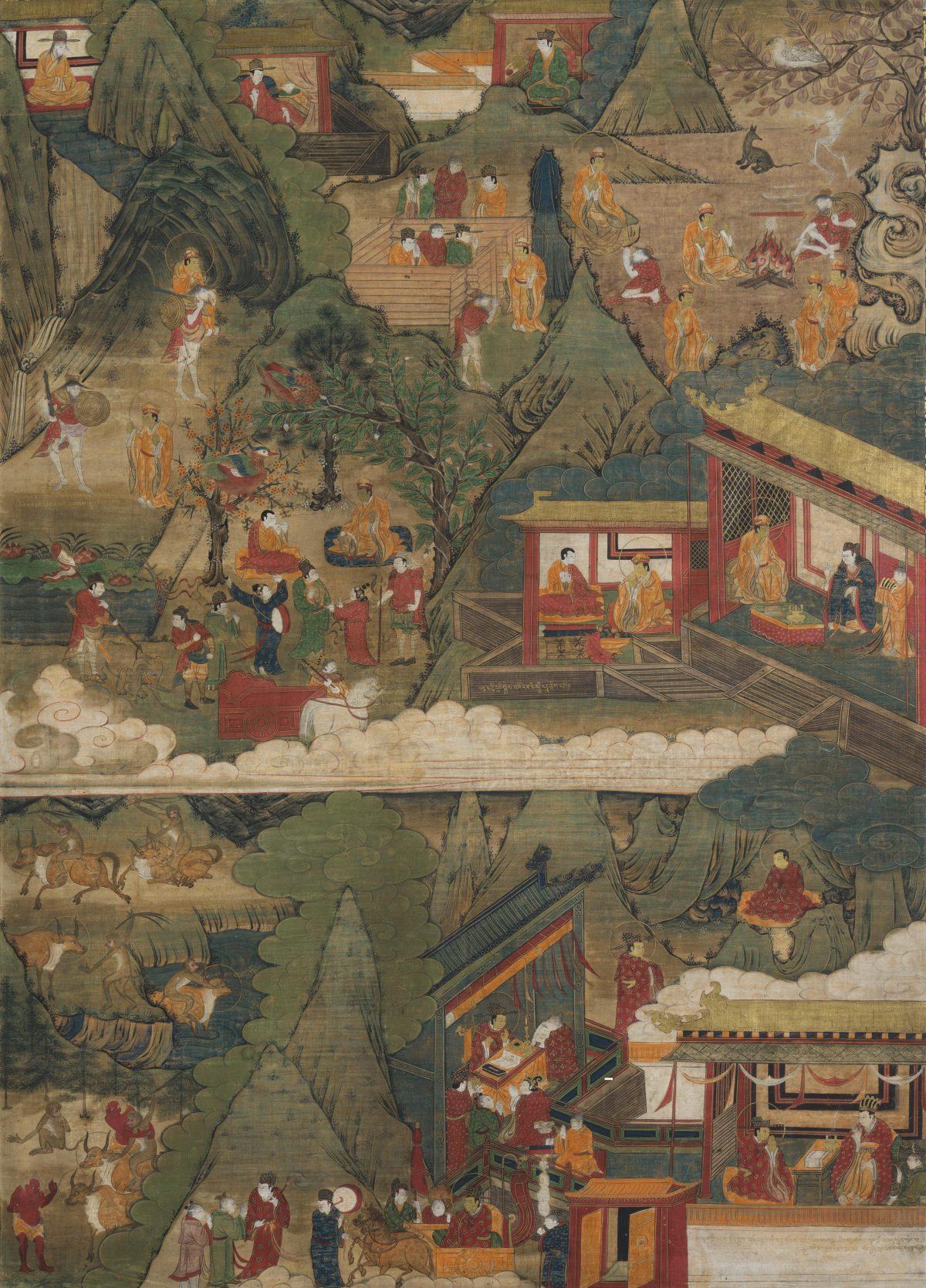
Shortly after the Henan Spring Festival Gala aired, a large number of complaints were sent to officials, alleging that the gala “spread feudal superstitions,” Du said, including the dance “Eternal Joy,” which depicted the return of the gods.
According to Du, the lyrics of the song that accompanies the dance “The Long Night Ends” allude to the idea that “the long night, the dark night will eventually pass, and the motherland’s mountains and rivers will eventually usher in the light.”
“Now is the dark night [under the CCP’s rule],” Du said.
Viewers of Du’s YouTube show posted comments, including one that referenced traditional Chinese idioms, suggesting that the authorities are fearful and afraid of shadows. Another mentioned one of the dances featured in the gala, saying that “dawn is coming after the dark night” and implying that the CCP’s rule could soon end.
In China, the annual spring festival galas, hosted by provincial television stations, are more than just entertainment; they serve as tools for political propaganda and fulfill the CCP’s messaging objectives, according to Du. Before broadcasting, the programs undergo thorough review by multiple levels and departments of the regime.
Du said that interrupting a major annual live broadcast by a provincial-level television station is not something that a company such as Douyin can decide on its own.
“The decision must come from the Cyberspace Administration of China or higher-level authorities, such as the Ministry of Public Security, the Ministry of State Security, the Publicity Department of the CCP Central Committee, or the General Office of the CCP Central Committee,” he said.
“The notification to cut off the broadcast is issued through the [Cyberspace Administration of China], which has control over the entire internet in China and can bypass the platform to directly interrupt a program’s broadcast. It can even temporarily take over the platform’s management.”
Du said the CCP authorities’ actions suggest that they are very fearful.
“Why do they overreact to some lyrics?“ he asked. ”What are they really afraid of?”