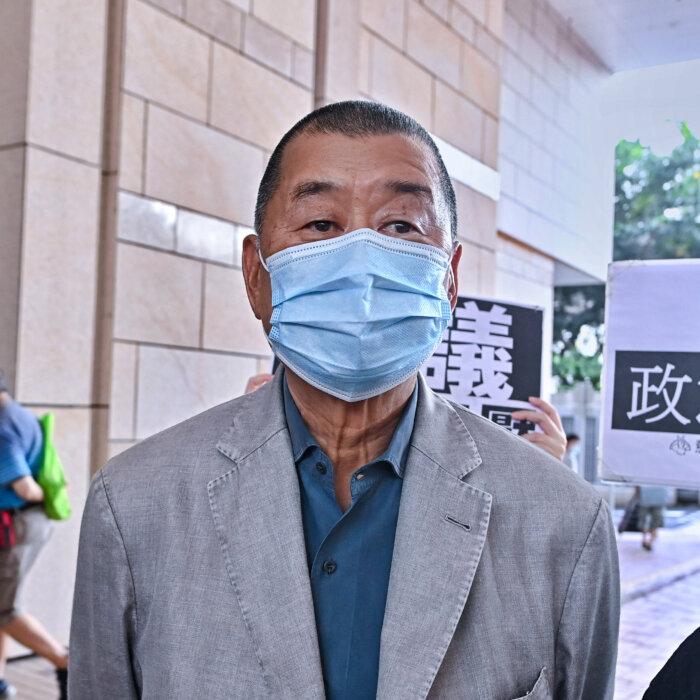
Hong Kong media mogul Jimmy Lai’s 20-year prison term marks the end of the city’s “one country, two systems” framework and could embolden Beijing to pursue even more severe prosecutions in the future, experts say.
The court also convicted him of one count of “sedition” under British colonial-era statutes, although he had pleaded not guilty to all three charges.
Lai, a UK citizen, now faces the harshest penalty handed down to any pro-democracy figure or political dissident since the national security law took effect in 2020.
Rights groups and observers have condemned the 20-year prison term as tantamount to a death sentence, given the 78-year-old’s advanced age.
The UK, the European Union, and the United Nations have also criticized the ruling and demanded Lai’s release.
Beijing Unlikely to Change
Despite the global outcry, Shen Jung-chin, a political analyst and professor at Taiwan’s Fu Jen Catholic University, said these international appeals are unlikely to sway the outcome.“The court convicted Lai of ‘conspiracy to collude with foreign forces,’ so bowing to foreign demands for his release would only force the judges to contradict their own verdict,” Shen recently told The Epoch Times.
“In addition, Chinese leader Xi Jinping needs this case to demonstrate his authority to China, Taiwan, and Hong Kong, rendering even pleas from foreign leaders ineffective.”
Sky Fung, secretary-general of the Taiwan-based exile group Hong Kong Outlanders, concurred, noting that Beijing’s assertive diplomatic posture means that any shift on such a sensitive verdict remains improbable.
“Although Lai holds British citizenship, Beijing treats him as a Chinese national and insists that once its courts have ruled, the world must respect that jurisdiction regardless of international opinion,” Fung told The Epoch Times.
Still, Fung emphasized that international responses remain crucial.
‘Complete Death’ of ‘One Country, Two Systems’
Fung said that following the 2020 national security law and the enactment of the Safeguarding National Security Ordinance—commonly known as Article 23—in 2024, the city’s civil society has been dismantled by Beijing, demonstrating how the Chinese Communist Party (CCP) weaponizes these laws to crush dissent.“Hong Kong’s chief executive described Lai’s crimes as ‘heinous,’ a rare move given that the government historically refrained from commenting on individual legal cases,” Fung said.
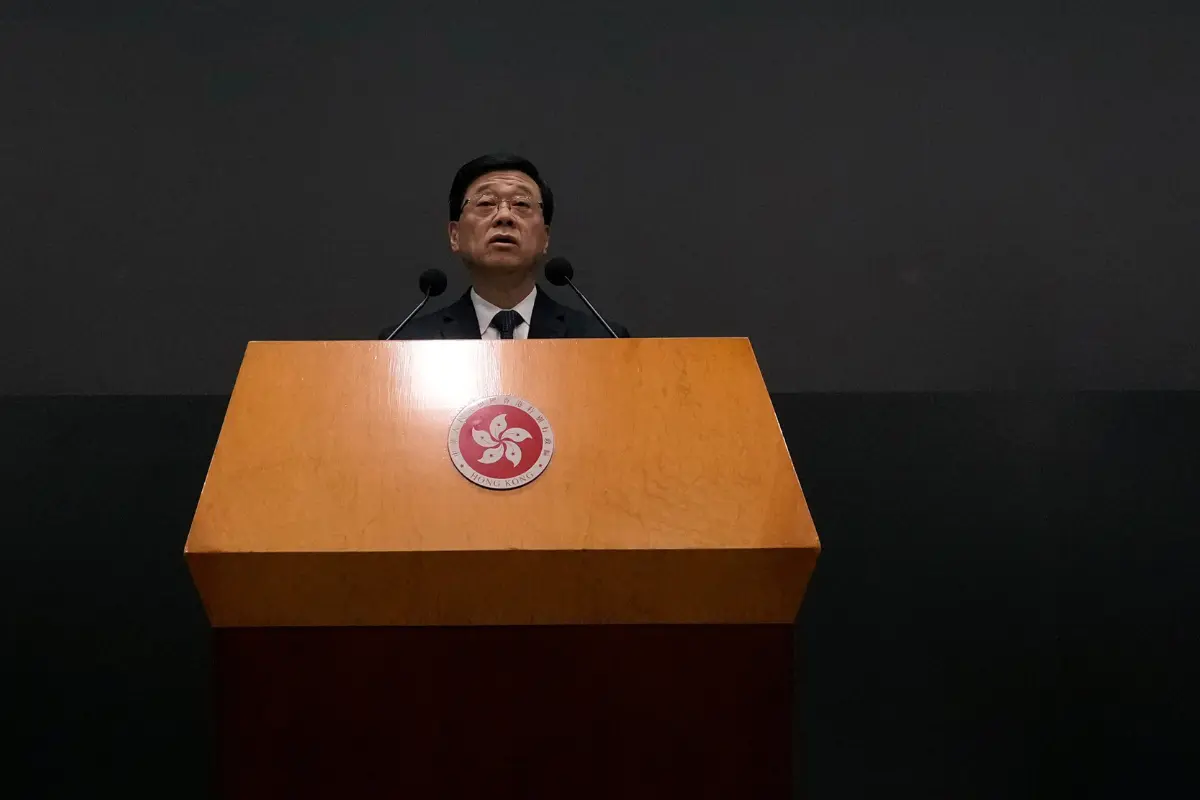
“This shows that the administration now prioritizes national security above all else, while the promises of judicial independence and ‘Hong Kong people ruling Hong Kong’ are evaporating.”
Fung said international news organizations have withdrawn and domestic outlets have shuttered under pressure, making Lai’s sentence the final blow to press freedom in the city.
“The free press in the city has been completely extinguished, with authorities even denying entry to specific foreign reporters to ensure only the official narrative prevails among the public,” Fung said.
The organization noted that the city has endured “an unprecedented series of setbacks” since the national security law took effect.
Shen said Lai’s case will create an overwhelming chilling effect on free expression throughout the city.
“Every journalist will now harbor an internal censor, filtering their work to avoid prosecution under the national security law,” Shen said.
Censoring Taiwan Ties
The case has also drawn sharp attention in Taiwan, where President Lai Ching-te posted on the social media platform X on Feb. 10 to demand Lai’s immediate release and condemn the verdict as “a tool of political persecution.”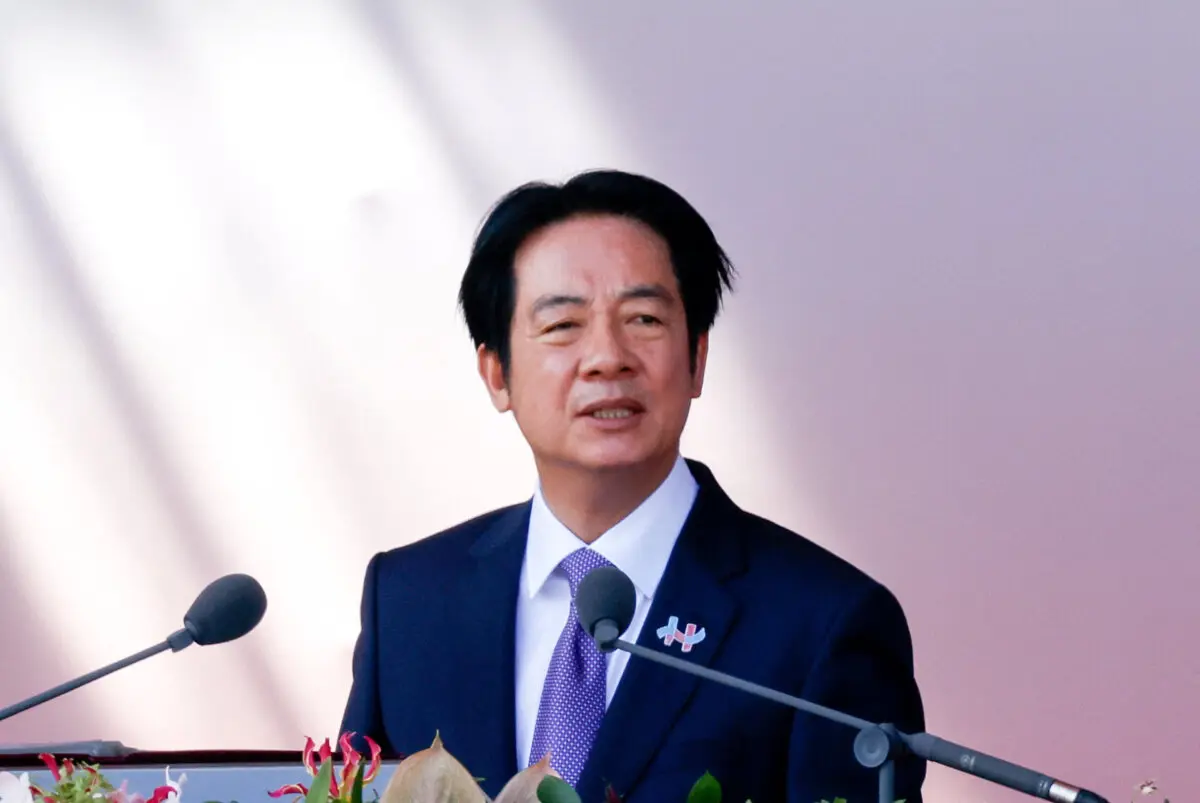
Fung said that although the charges appear unrelated to Taiwan, prosecutors repeatedly inserted the island into the proceedings to portray Lai as a political proxy, framing the self-governed democracy—which the CCP has never ruled but vows to annex by force—as a hostile entity.
“The court sought to frame Lai’s interactions with Taiwan, the United States, and other nations as national security threats,” Fung said.
Fung noted that Beijing designates Taiwan as “external forces” to stigmatize the island, creating legal peril for anyone interacting with it.
Beijing’s White Paper
A day after Lai received his jail term, Beijing released a white paper on Hong Kong’s national security safeguards, asserting its “fundamental responsibility” for the city’s security.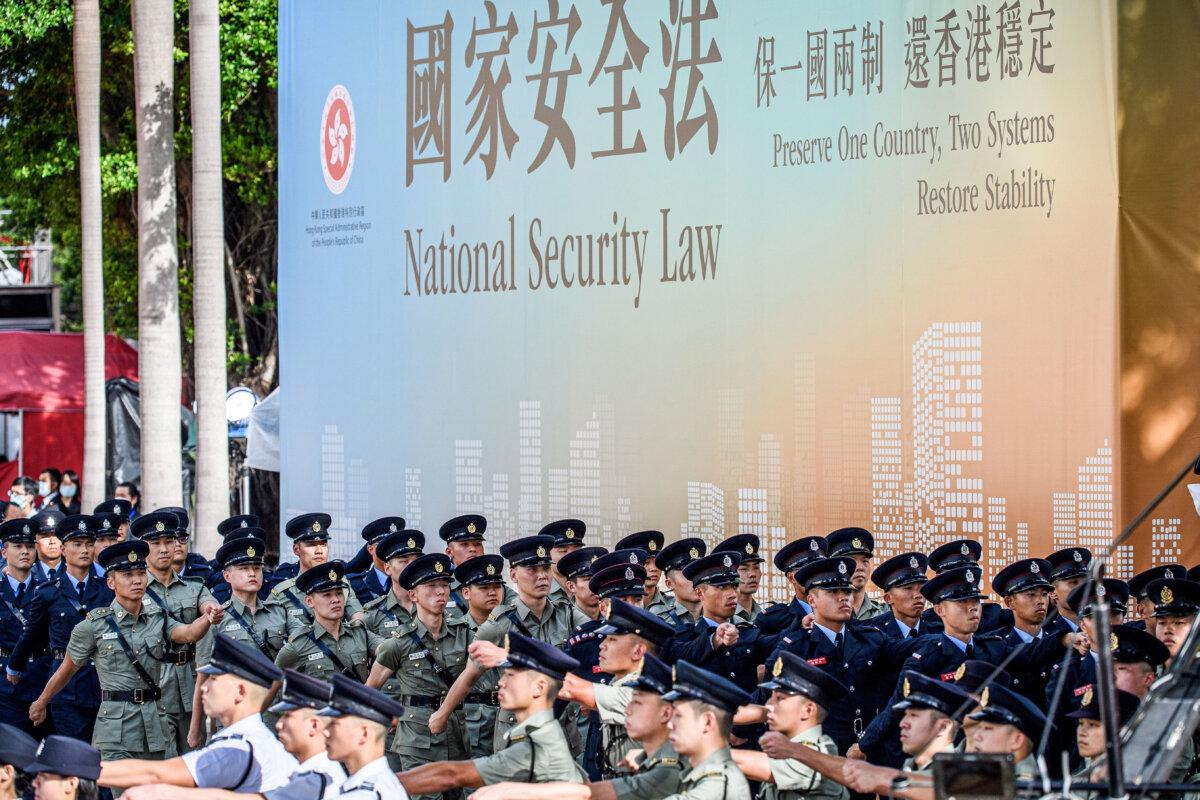
Shen said authorities clearly timed the document’s release to follow the court ruling as a warning to dissidents, but the content reveals the CCP’s total disregard for the city’s independent legal traditions.
“The verdict against Lai cited alleged collusion evidence from before the 2020 law even existed, demonstrating how retroactive prosecution has gutted Hong Kong’s common law principles,” Shen said.
“While the ruling didn’t formally invoke the white paper, both share identical legal logic—Beijing is overriding the city’s established legal order by imposing its own political definitions of crime, disregarding the jurisdictional boundaries enshrined in the Basic Law,” Shen said.
Fung said the white paper codifies a structure in which security operations fall under direct CCP control, signaling an expanding definition of what threatens state power.
“The promise of ‘50 years unchanged’ [for ‘One Country, Two Systems’] is meaningless as Hong Kong’s institutions increasingly align with China—now even ’patriotic' candidates face barriers to participating in the Legislative Council, let alone voices of opposition,” Fung said.
Fung said the white paper’s most damaging consequence extends beyond the erosion of the rule of law and media freedom, fundamentally altering residents’ daily lives and destroying international confidence in the city’s future.