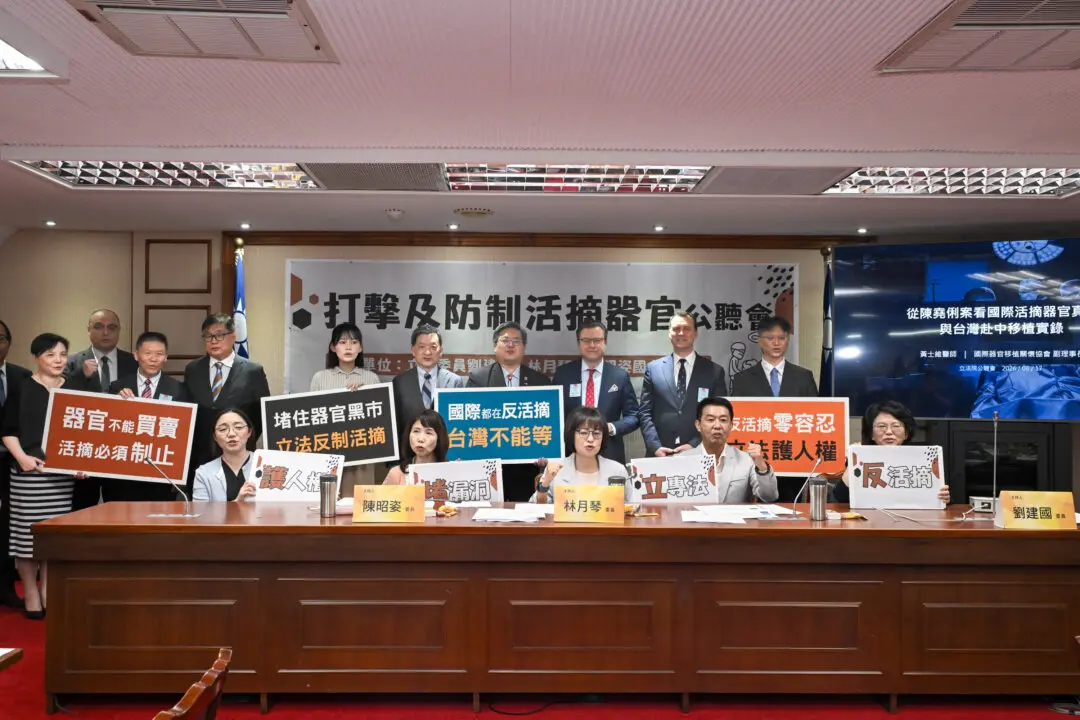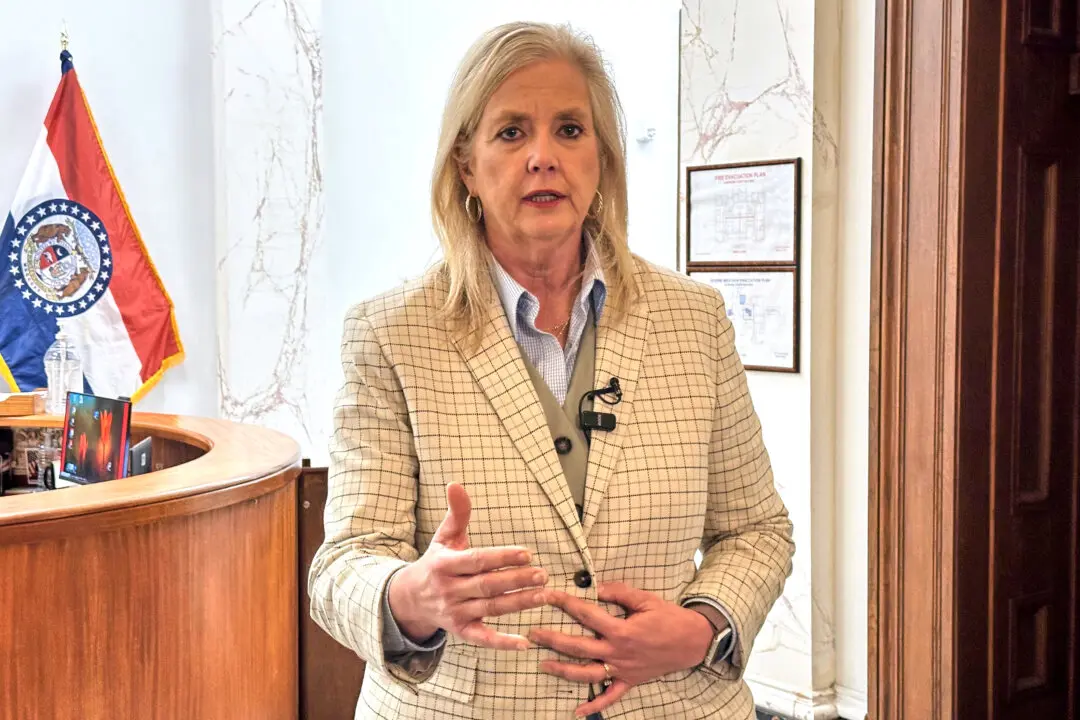
Experts on China’s practice of harvesting organs from prisoners of conscience recently spoke at a summit in Brussels, addressing lawmakers from 28 countries on the urgency of the issue while offering recommendations on what governments can do to tackle the gruesome abuse.
The Inter-Parliamentary Alliance on China (IPAC), a global group of hundreds of lawmakers who coordinate their efforts to confront challenges posed by Beijing, held its fifth annual summit in Brussels in November. One of the topics discussed during the summit was how to prevent forced organ harvesting and organ trafficking.
Wayne Jordash, president of Global Rights Compliance, an international law foundation, told the lawmakers at the summit that states have the “legal responsibility” under international human rights law, international criminal law, and public international law to use their executive, legislative, and judiciary powers to “prevent, mitigate, and remedy” forced organ harvesting through national measures and international cooperation.
“Forced organ harvesting is not just a crime—it is a grotesque violation of humanity,” Jordash said, according to a transcript from The International Coalition to End Transplant Abuse in China (ETAC).
“States and business should demonstrate their [resolve] through vigilance, hard law and enforcement. Transparency must be mandatory. Prosecution must be non-negotiable. Collaboration must be unyielding.”
With a direct appeal to the lawmakers, Jordash said the issue “is a test of [their] collective moral spine.”
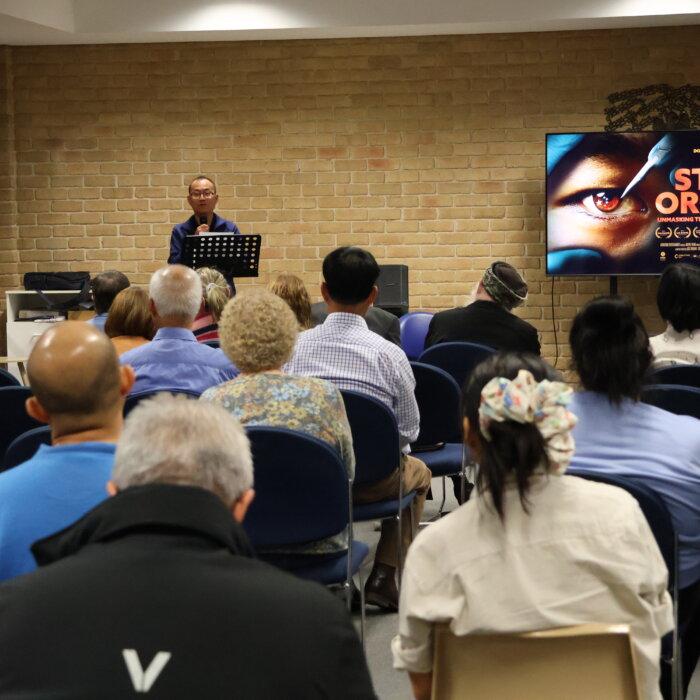
“Will you allow this atrocity to persist in the shadows, or will you shine the light that will burn away impunity?” Jordash said. “The answer must be action. The time to act is now.”
China Tribunal
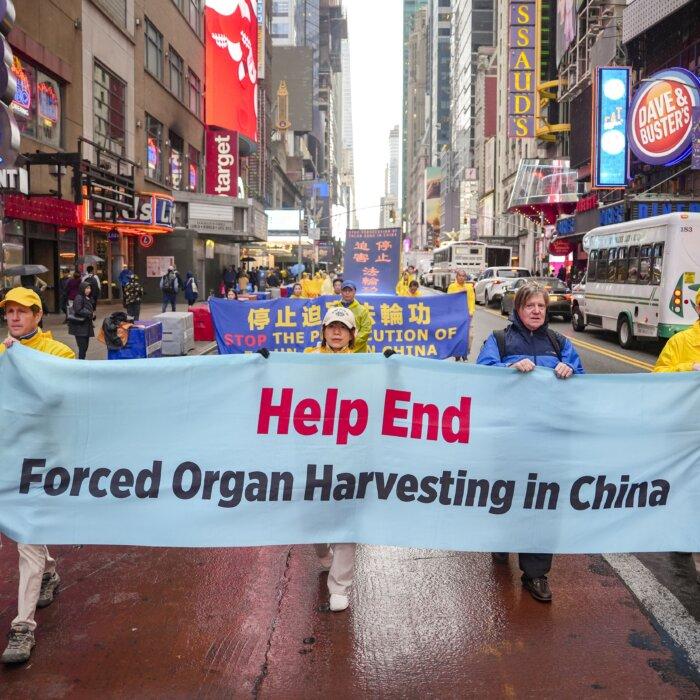
In 2020, the China Tribunal—an independent, London-based people’s tribunal—concluded that the Chinese regime had for years been forcibly harvesting organs from prisoners of conscience, identifying Falun Gong practitioners as the primary victims.At the IPAC summit, Nice told lawmakers that the tribunal’s evidence included undercover phone calls to Chinese hospitals and their medical staff, who “offered organs for sale within days or a week or so,” according to a transcript from the ETAC.
“Those organs were from people who had [been] alive at the time of the calls for the offers by hospitals to be made of organs available to the callers at short notice,” Nice said.
The tribunal also concluded that the Chinese regime’s sustained acts of forced organ harvesting constituted crimes against humanity, he said.

Falun Gong, or Falun Dafa, is a spiritual discipline based on the principles of truthfulness, compassion, and tolerance. First introduced to the public in China in 1992, it spread quickly by word of mouth, reaching about 70 million to 100 million people, by official estimates, before the Chinese Communist Party launched a brutal campaign to eradicate the group in 1999.
The persecution continues today, with many practitioners having been held in prisons, labor camps, and brainwashing centers, where forced labor, torture, and deaths have been reported.
The tribunal found that China selectively conducted medical tests such as ultrasounds and blood tests on certain prisoners—particularly Falun Gong practitioners—apparently to assess their organ function.
These medical examinations were still taking place this year in China, Matthew Robertson, a China studies research fellow at the Victims of Communism Memorial Foundation, told lawmakers at the IPAC summit, citing cases reported by Minghui.org, a U.S.-based nonprofit that tracks Falun Gong persecution in China.
“These examinations lack medical justification, are performed on individuals in custody for their beliefs and without consent, and are consistent with medical tests necessary for determining organ health for transplantation,” Robertson said, according to a transcript from the ETAC.

Advancing Legislation
At the conclusion of the IPAC meeting, the lawmakers agreed on several actions, including advancing legislation to “prevent complicity by individuals, institutions, and governments” in what they called the “abhorrent practice” of forced organ harvesting.“We deplore any such acts and affirm our solidarity with the victims and survivors,” the lawmakers stated.
To that end, the lawmakers agreed that the legislation would ban transplant tourism, impose sanctions on those involved in forced organ harvesting, require mandatory reporting of suspected cases by medical professionals, establish transplant registries to ensure transparency, restrict public funding for institutions partnered with entities linked to forced organ harvesting, and require due diligence for medical cooperation in the transplant sector.
The lawmakers’ announcement was welcomed by two New York state-based advocacy groups, the Consilium Institute and the Falun Dafa Information Center.
“We call upon all responsible governments to urgently adopt and implement these policy measures,” Sean Lin, executive director of the Consilium Institute, said in a statement on Nov. 12.
“Protecting human dignity and stopping forced organ harvesting must be a global priority for the medical and legal communities.”

In a recent interview with The Epoch Times, Lin said the IPAC’s announcement on forced organ harvesting was “significant,” as the alliance effectively endorsed the tribunal’s findings.
“The China Tribunal’s conclusions have now been formally recognized by lawmakers from so many different countries,” Lin said.
“How the lawmakers choose to advance this issue will, of course, vary from country to country. But what the Inter-Parliamentary Alliance on China has done is essentially provide a legislative framework.
“As long as lawmakers are willing to introduce [legislative bills], the process will send reverberations through the entire transplant and medical community. At the same time, it will also serve as a deterrent to the Chinese Communist Party.”
Lin further said that the legislation on forced organ harvesting is more than just exposing a human rights atrocity, but also about protecting every country’s ethical integrity in medical transplantation and preventing their citizens from “unknowingly becoming complicit in the organ harvesting crimes.”