The European Union and China have agreed to set an October deadline to deliver results in resolving their trade frictions, Brussels’ trade chief Maros Sefcovic said Monday.
After a day of discussions with Chinese Commerce Minister Wang Wentao, Sefcovic told reporters the timeline aligned with EU leaders’ and member states’ expectations for “expedient action.”
“What is very important for us is engagement, is dialogue,” Sefcovic said in Brussels, “but it has to bring tangible results. And we believe that we can achieve them by October.”
“Of course, not everything will be solved, not everything will be fixed. But we think that between now and October, our teams have sufficient time to deliver the tangible results.”
To achieve that, Sefcovic said the EU and China have agreed to set up a dedicated platform focusing on four priorities: balancing trade and investment, export controls, intellectual property rights, and World Trade Organization reforms.
Under the platform, a joint mechanism will be created immediately to monitor trade flows, Sefcovic said, calling it a vital tool for data sharing. If there is a “sudden surge” in imports into the EU—especially if it reaches levels “detrimental to the European economy”—the two sides could immediately engage at the political level to address it, he said.

The teams are set to present their roadmap in “coming days,” he said.
Sefcovic, who continues the negotiations on Monday evening, described the earlier talks as “intensive, focused and constructive,” noting that Monday’s statement is the first joint statement since 2019.
The meeting marked Brussels’ latest efforts to address concerns through dialogue with Beijing. European leaders are increasingly frustrated with the Chinese regime’s trade policies, particularly the export controls on rare earths and a widening trade imbalance.
Last year, the EU posted its largest-ever trade deficit with China of 360 billion euros (roughly $421 billion). This amounts to a deficit of 1 billion euros ($1.1 billion) per day. For the first time, all 27 member states recorded a trade deficit with Beijing.
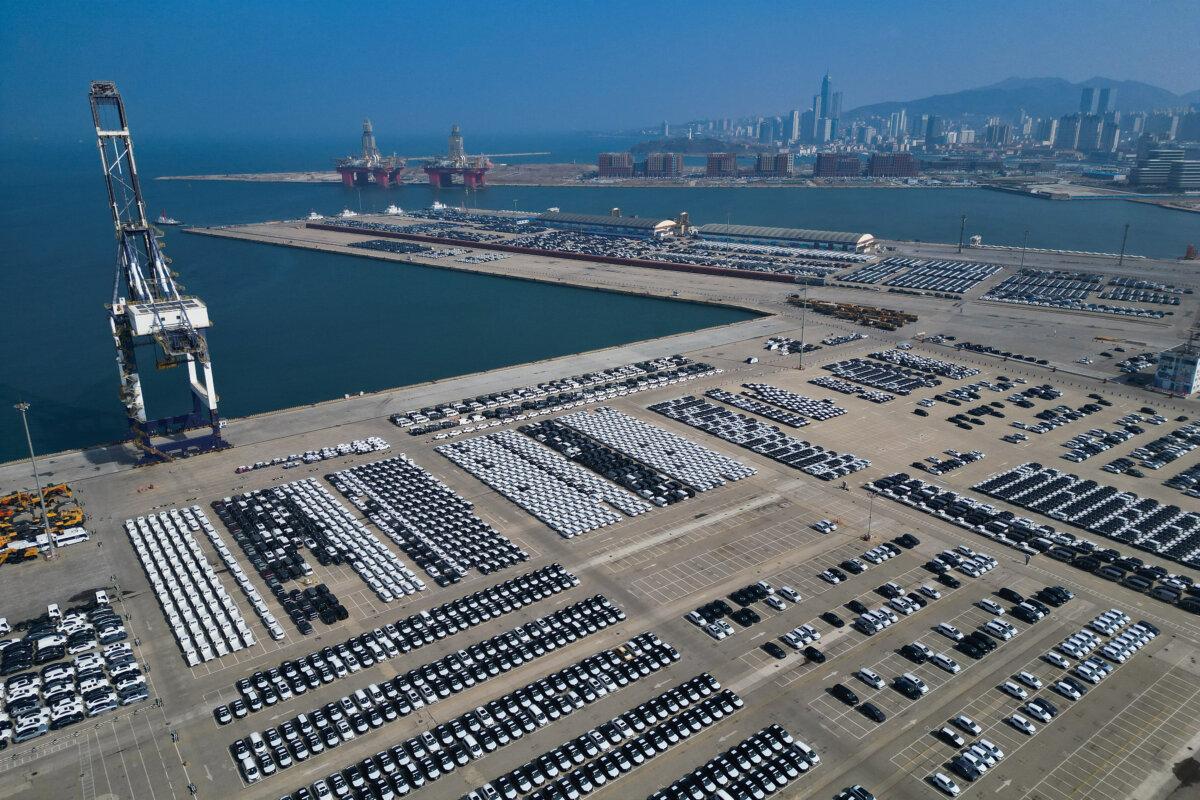
The European Commission, the bloc’s executive branch, is reviewing its toolbox to curb the flood of cheap Chinese products, which threaten local businesses and countless jobs.
In the automotive industry, for instance, Europe’s biggest carmakers are losing ground to Chinese rivals, who are backed by massive state subsidies from Beijing. According to the latest data from the European Automobile Manufacturers Association, from January to May, roughly one in 10 new cars sold in Europe was from a Chinese-owned brand.
In May alone, Chinese state-owned carmakers Leapmotor and Cherry saw their sales surge by 465.1 percent and 244.1 percent, respectively. In contrast, legacy European brands, such as Renault and Volkswagen, fell between 1 percent and 3 percent.
Amid fierce competition, Volkswagen has confirmed to local media that it is working on a plan for restructuring, though it declined to comment on reported details. German magazine Manager Magazin, citing anonymous sources, reported on June 26 that Volkswagen planned to cut 100,000 jobs and shut four plants in Germany—a move that met resistance from its powerful General Works Council and the country’s largest labor union IG Metall.
Monday’s meeting between the EU and Chinese trade chiefs came less than two weeks after European leaders gathered in Brussels, where they asked the Commission to prepare new measures to protect the EU’s industrial base.
“One billion trade deficit per day is simply unsustainable, and we cannot continue to raise this issue without any concrete results,” European Council President Antonio Costa told a June 19 briefing after two days of closed-door meetings.
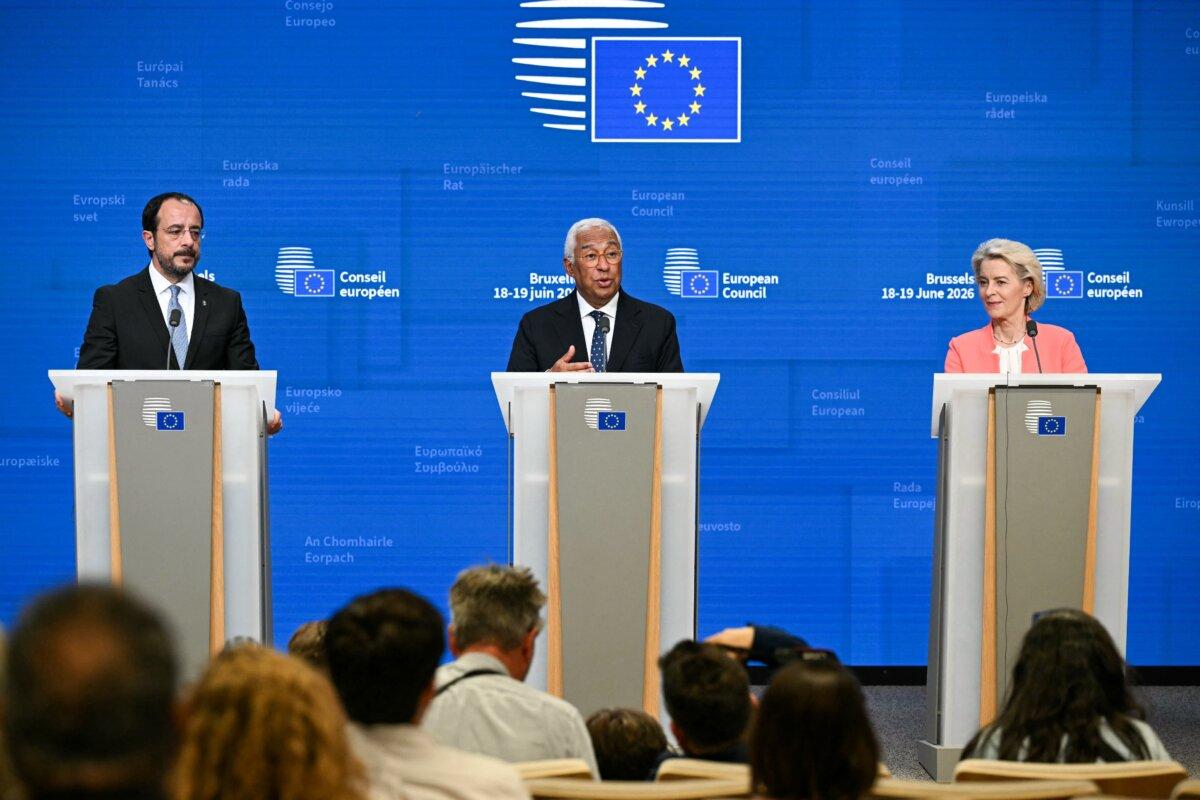
“And until now, unfortunately, China didn’t deliver,” he said. “The leaders asked the commission to look at our toolbox and to see what we can do immediately and what we need to do to develop our toolbox.”
Commission President Ursula von der Leyen, speaking alongside Costa at the press conference, confirmed they will craft new instruments, including a diversification tool to help European companies “de-risk faster.”
“If the pressure is high, the instrument, of course, will be used because there’s a need for improvement,” Von der Leyen said. “We’ve seen the figures. They speak for themselves, and we have to rebalance our relationship.”