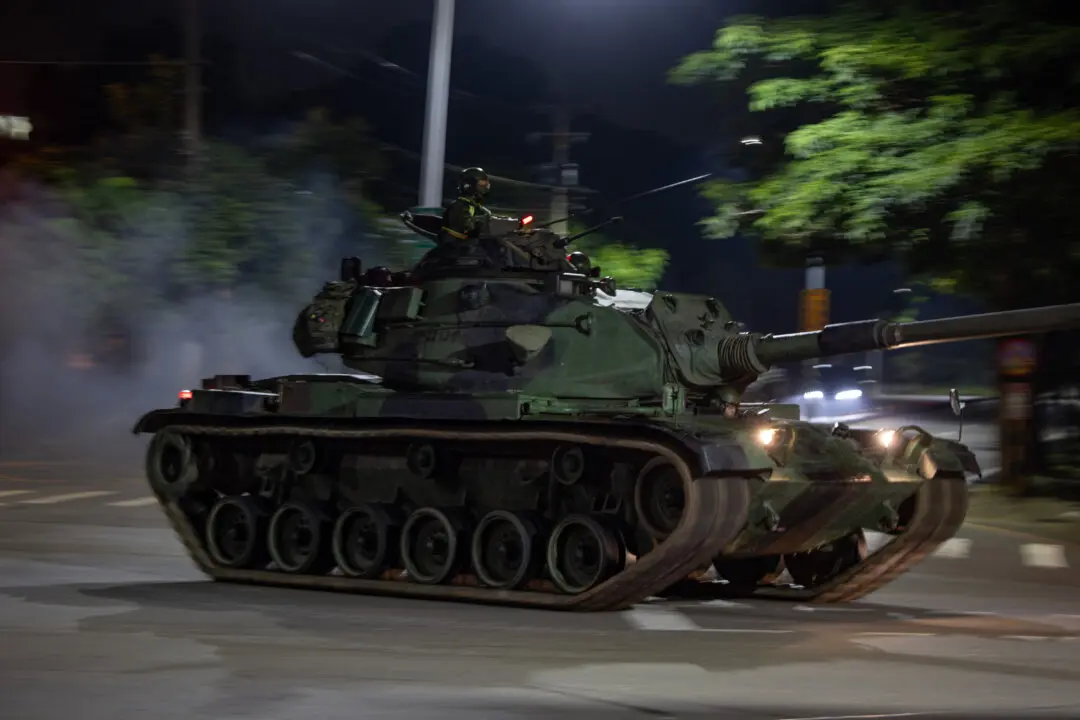
Ever since American-born freestyle skier Eileen Gu stepped onto the podium at the 2022 Beijing Winter Olympics, draped in China’s red flag, she became one of the most recognizable faces of the Games. This year at the Milan Cortina Winter Olympics, she once again represented China.
Naturalization for Sports
In the years leading up to the 2026 Winter Olympics, Chinese leader Xi Jinping publicly acknowledged efforts to strengthen China’s winter sports by fostering “stronger global ties” with athletes from other countries.Chinese media outlets do not shy away from reporting on the naturalization of foreign athletes to represent China in the Olympics.
The most visible cluster of naturalized athletes appears in China’s men’s ice hockey team. Several players born and trained in Canada, the United States, and Russia competed for China’s team at the 2022 Beijing Olympics after obtaining Chinese citizenship, according to Olympic rosters.
At the time, the Chinese Olympic Committee did not publish detailed explanations of how citizenship issues were resolved. China does not recognize dual citizenship under its Nationality Law, and any person applying for naturalization must not retain foreign nationality.

Diverging Paths
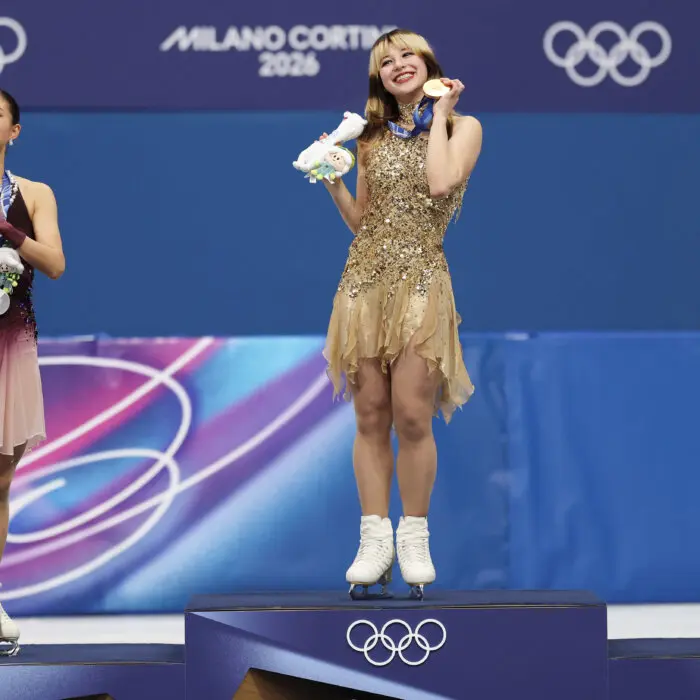
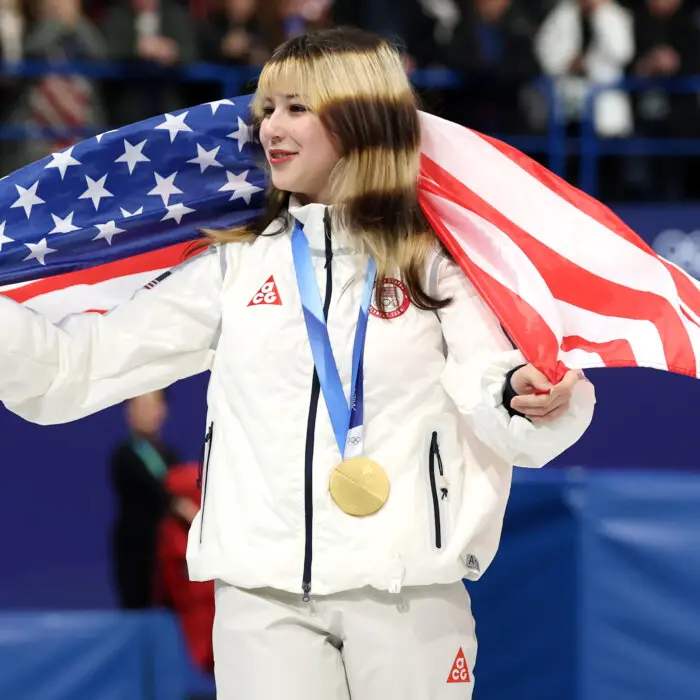
The contrast between Gu and American figure skater Alysa Liu, who represented the United States at the same Olympics, underscores the political symbolism of national identity in sport.While Liu competed under the American flag, Gu’s decision to compete for China drew scrutiny in the United States.
Enes Kanter Freedom, a former NBA player known for his human rights activism, wrote in a post on X on Feb. 10 that Gu is a “traitor.”
“She was born in America, raised in America, lives in America, and chose to compete against her own country for the worst human rights abuser on the planet, China,” he wrote.
“She built her fame in a free country, then chose to represent an authoritarian regime while cashing in on endorsements linked by watchdog groups to mass detention and forced labor camps.”
Gu’s commercial appeal in China is apparent. In December 2025, Forbes ranked her fourth among the world’s highest-paid female athletes, earning a total of $23.1 million behind tennis stars Coco Gauff, Aryna Sabalenka, and Iga Swiatek.
Yet some other naturalized athletes received less fanfare. Chinese media outlets reported that three naturalized athletes are expected to leave the Chinese Olympic Team after this year’s tournament because they either did not win any medals or failed to qualify. Very few of those naturalized athletes enjoy the celebrity status that Gu does.
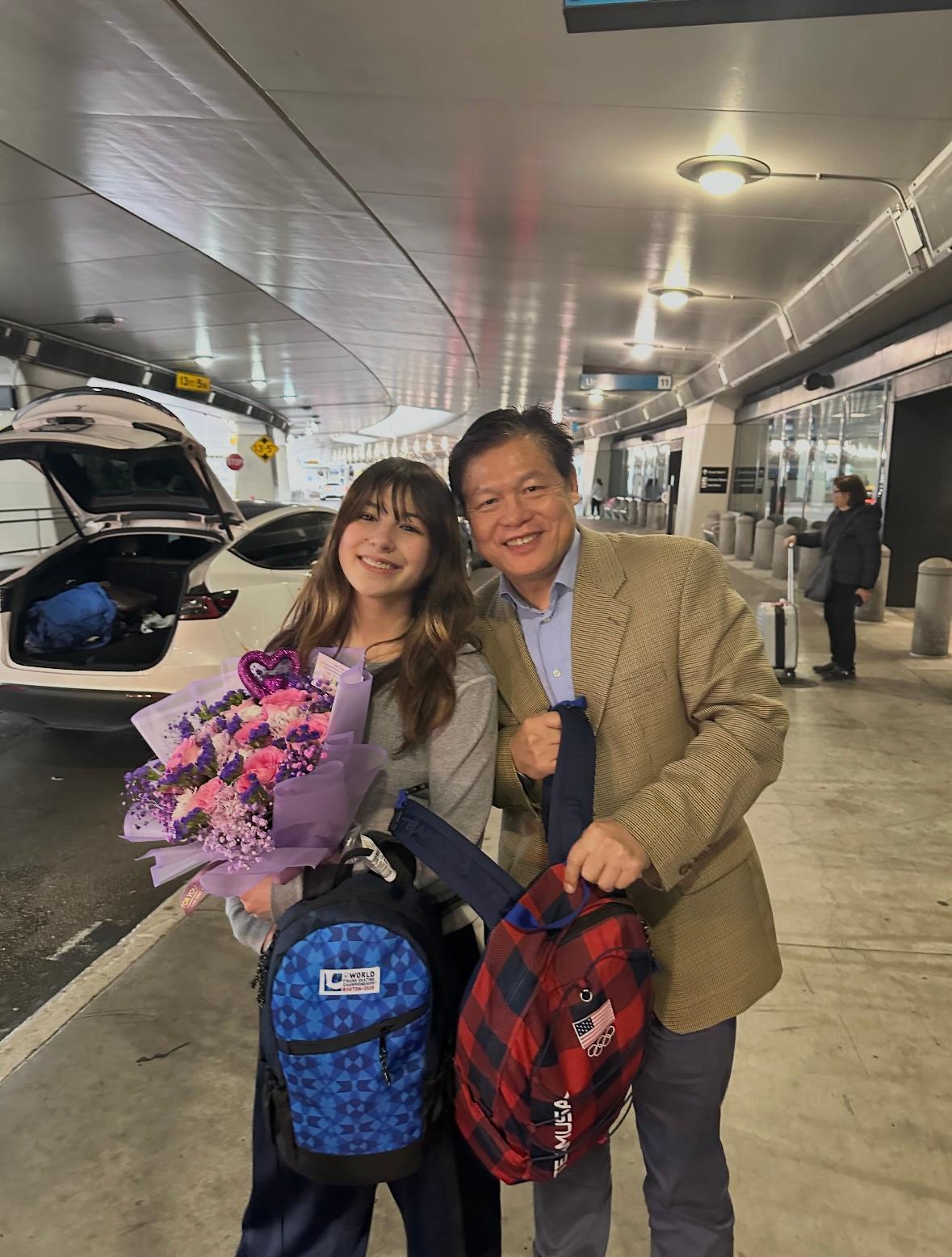
In Liu’s case, she and her father, Arthur Liu, who fled China in the 1990s because of his involvement in the 1989 Tiananmen Square pro-democracy protests, rejected China’s recruitment attempts.
Now living in California’s Bay Area, Arthur Liu has continued to raise concerns about human rights violations in China. He said the FBI had reached out to him, warning that Beijing was spying on him and advising him to remain vigilant and exercise caution.
Underperforming Athletes
Currently, multiple naturalized athletes in China are receiving harsh criticism on social media for their poor performance. Notably, Chinese state media outlets are openly covering the widespread online criticism.Beverly Zhu, a figure skater born in Los Angeles, changed her name to Zhu Yi and switched to representing China in 2018. Chinese media outlets reported that she faced a wave of online attacks after underperforming at the 2022 Beijing Winter Olympics. Many Chinese netizens questioned the motivation for her naturalization and accused her of expressing “fake patriotism” toward China to achieve celebrity status as a patriotic athlete who abandoned the United States for China.
This year, in short-track speed skating, South Korean-born Lin Xiaojun and Hungarian-born Liu Shaoang both failed to win any medals for China.
A Chinese sports analyst criticized the strategy of using naturalized athletes in state-controlled media outlet NetEase.
Another Chinese state-controlled media outlet, iFeng, said on Feb. 22 that the Chinese short-track speed skating team’s performance at the Games was its worst showing in 31 years. However, the report has since been deleted from its webpage.
Currently, Gu remains one of China’s most recognizable naturalized athletes. However, the mixed results of others, along with unresolved questions about citizenship and loyalty, suggest that Beijing’s bid to fast-track athletic prestige through imported talent may carry political and reputational risks beyond the medal count.