When Czechia’s second-highest official flew to Taiwan in June, he traveled on a commercial ticket. His own government had refused to lend him a state plane.
On July 20, the speaker of the country’s lower house of parliament landed in Beijing on a government aircraft, leading a delegation of Czech executives on a five-day visit.
The two trips reflected Prague’s changed approach to communist China under Prime Minister Andrej Babis, who took office in December. His government has set aside the Taiwan-friendly, values-based foreign policy of its predecessor for what Babis calls a more pragmatic course, one built around trade rather than values.
Speaker Tomio Okamura arrived at the invitation of the head of China’s National People’s Congress, the country’s rubber-stamp legislature, and said he hoped to secure more direct flights, a rise in Chinese tourism, and visa-free travel for Czech citizens. Representatives from about 40 Czech companies traveled with him, along with Renata Vesecka, who chairs the lower house’s constitutional and legal affairs committee.
Okamura leads the Freedom and Direct Democracy (SPD), a nationalist, Eurosceptic party that is one of three members of Babis’s governing coalition. He was elected speaker in November, the highest post an SPD politician has held in Czech politics.
A Pragmatic Turn
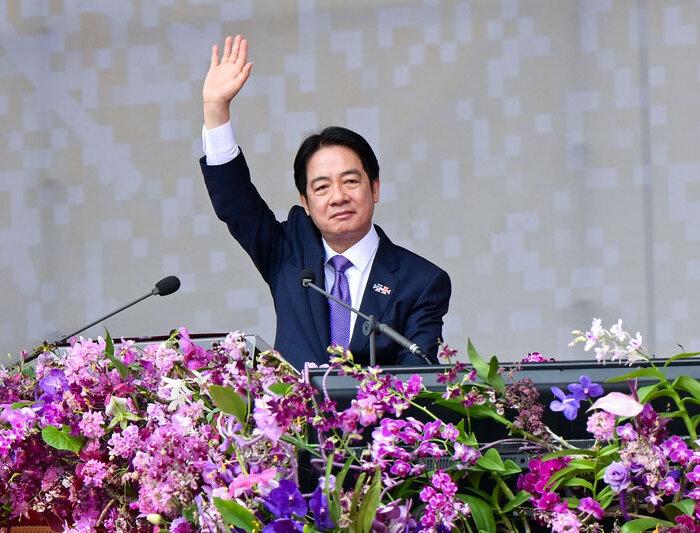
The trip fit a pattern Babis set within weeks of taking power. In April, he refused a government aircraft for a Taiwan visit by Senate President Milos Vystrcil, the country’s second-ranking official, saying a values-based foreign policy had “only damaged our companies.”
Vystrcil went anyway in June, flying commercial with a delegation of about 40 business and academic figures.
The economic logic points in one direction. China is the Czech Republic’s second-largest trading partner, but the relationship is lopsided. Two-way goods trade reached about $23 billion in 2024, according to Chinese customs data, with China running a surplus of roughly $12 billion—selling far more to the Czechs, chiefly electronics, machinery, and vehicles, than it bought in return.
The outreach carried risks of its own.
In late June, Chinese security forces detained a Czech businessman on arrival at an airport on suspicion of endangering national security—a move Czech officials suspected was retaliation for Prague’s arrest in January of a Chinese journalist accused of spying for Beijing.
Okamura went ahead with the visit. A Czech deputy foreign minister joined the delegation and could raise the businessman’s case with Beijing.
Unwinding Taiwan Ties
The warming reversed years of Czech outreach to Taiwan, which Beijing claims as its own territory despite the communist regime never having governed it.
The previous government, led by Petr Fiala, treated the self-ruled island as a “democratic partner” and a key economic and technological partner in East Asia.
Prague’s two chambers pulled in opposite directions.
Okamura pursued trade in Beijing, while Vystrcil, who still leads the Senate, kept up his own outreach to Taipei. The Taipei office and semiconductor partnerships built under the previous government are still in place.
More outreach to China has already been planned: Deputy Prime Minister Karel Havlicek is expected to lead a government delegation to China next year.