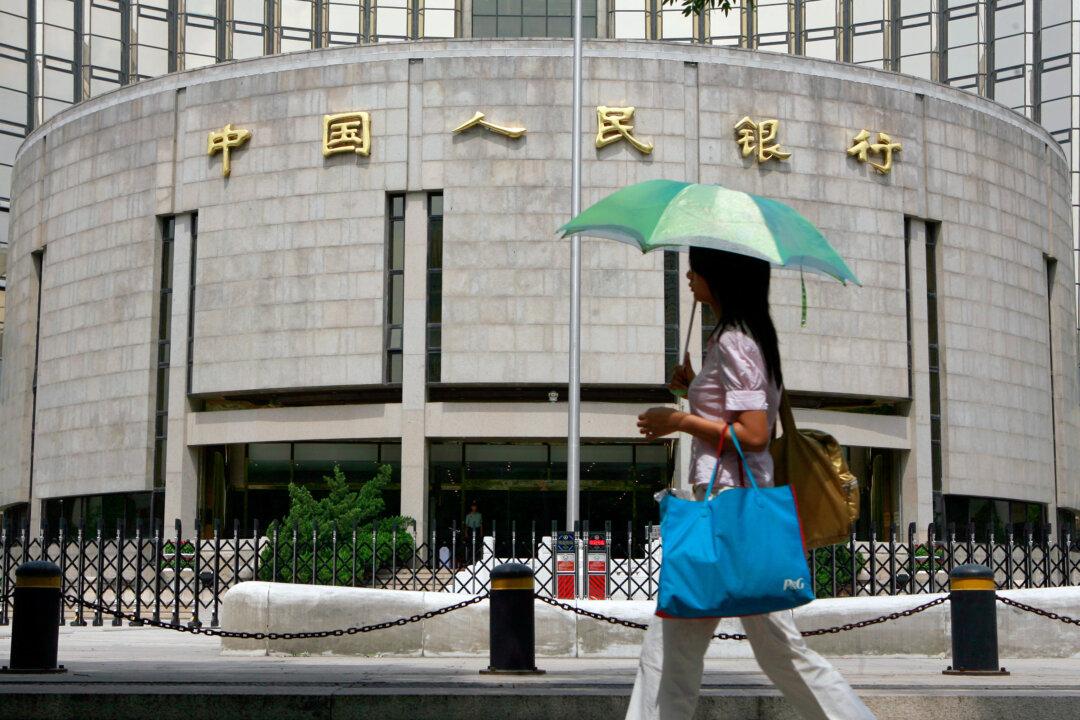
For 25 years, Wang Xiuying of China’s Fujian Province believed that seeking justice through legal channels was a basic right.
This winter, she finally arrived in Beijing, where she experienced firsthand the regime’s surveillance system that persecutes petitioners, causing them, like her, to live on the fringes of the law.
Systemic Oppression
Wang had spent decades attempting to voice her grievances to the regime’s central authorities. Like many others in China’s vast petitioning system, she had long been blocked from even reaching the capital.In past attempts, she was stopped before leaving home or intercepted en route, she said on her Chinese social media account.
But this year was different.

Wang’s social media account, which recently circulated among activist networks, offers a rare glimpse into the informal mechanisms used to monitor and control petitioners.
Wang said she had once openly booked train and plane tickets, believing she was acting within her legal rights. Over time, she realized those methods made her easy to track.
“Open [activism] didn’t work,” she wrote. “We had to go underground.”
On Feb. 23, she set out with another experienced petitioner. They traveled by private car, switched vehicles multiple times, and wrapped their mobile phones in signal-blocking material to avoid GPS tracking.
The precautions reflected a widespread belief among petitioners that the Chinese regime monitors their movements digitally and physically, especially during politically sensitive periods.
By the time they reached Gu’an, a county just outside Beijing, Wang’s journey took a darker turn.
After hailing a taxi, she said, the driver began what petitioners call “selling petitioners”—alerting state security authorities in exchange for money.
According to Wang, the driver claimed to have contacts at city checkpoints and sent them digital payments to ensure cooperation. He asked for their identification cards under the pretense of inspection, then photographed the documents and contacted the authorities.
Realizing what was happening, Wang said she and her companion quickly paid the fare and got out of the vehicle.
Among petitioners, she said, personal information can fetch as much as 10,000 yuan (about $1,450) per person when passed to local authorities eager to intercept them.
They later found another driver willing to take them into the city.
“We were victims,” Wang wrote. “We suffered injustice at the provincial level and couldn’t get answers. Yet when we try to report it to higher authorities, we have to sneak around [like fugitives].”
The driver dropped them near a subway station on Beijing’s outskirts in the early hours of Feb. 25, according to Wang.
With temperatures near freezing, Wang spent the night in a fast-food restaurant until dawn.
Believing she would be safer in the capital, she separated from her companion, turned her phone back on, and headed alone to the National Public Complaints and Proposals Administration, the central office responsible for handling petitions.
But on the way there, Wang said, she was followed by other people who were engaged in “selling petitioners.”
Petitioners’ Dire Situations
That night, Wang wandered the area around the office.What she saw, she said, left her shaken.
Elderly petitioners huddled under bridges wearing only thin clothing. Others crouched against walls or fences, wrapped in old blankets, bracing against the cold. Many had traveled from across China, enduring freezing temperatures in hopes of being heard the next day.
“[They] shivered through the night just to ask the government for help the next day,” Wang wrote.
Over the next two days, she joined thousands of people lining up outside the office. The crowds included not only petitioners, she said, but also teams of security officials tasked with persuading or forcing them to return home.
Wang noted that people waited in line all day without food or water, afraid to leave and risk losing their spot. There were no seats, even inside the reception area.
“Where are their rights?” Wang wrote, describing the situation as a contradiction between official rhetoric and reality. “Petitioners are humans, too.
“Most of their grievances stemmed from state authorities. They are told to love the [Chinese Communist] Party and the state, but does the Party treat them as human beings?”
On the second day, while waiting in line and hungry, Wang received a call from local officials in her home province.
Soon after, she was intercepted and escorted back home by security officials.
She said that her long-awaited journey to Beijing had ended the same way as before, cut short by the very system she had hoped would hear her case.