The Chinese communist regime has published the latest urban unemployment data, showing that the jobless rate rose to 5.3 percent in February—reaching a six-month high and exceeding the market forecast of 5.1 percent—but analysts have said the actual rate is much higher.
The February figure was up by 0.1 percentage point from the previous month, data released on March 16 by China’s National Bureau of Statistics showed.
According to the data, the surveyed unemployment rate for the local urban workforce was 5.4 percent; for the migrant workforce, it was 5 percent—specifically, the rate for migrant workers with rural household registration was 5.2 percent. The surveyed urban unemployment rate in 31 major cities was 5.1 percent.
Since official data from the ruling Chinese Communist Party frequently conceal unfavorable circumstances, the actual figures may be much higher amid China’s sluggish economy.
China affairs commentator and Epoch Times contributor Xiao Yi told The Epoch Times that “the surveyed urban unemployment rate” primarily covers samples from the permanent urban population, those who have resided in urban areas for six months or longer.
Hidden Unemployment
Xiao said there are three major groups that are not fully reflected in the data.

The first group is college graduates.
“Graduates preparing for postgraduate entrance exams, civil service examinations, or studying abroad—even if currently unemployed—are not classified as ‘unemployed,’ as they have not actively sought work during the preceding three months,” Xiao said. “Furthermore, graduates who have temporarily returned to their hometowns, reside in university dormitories, or are in a state of moving about are excluded from the statistical sample.”
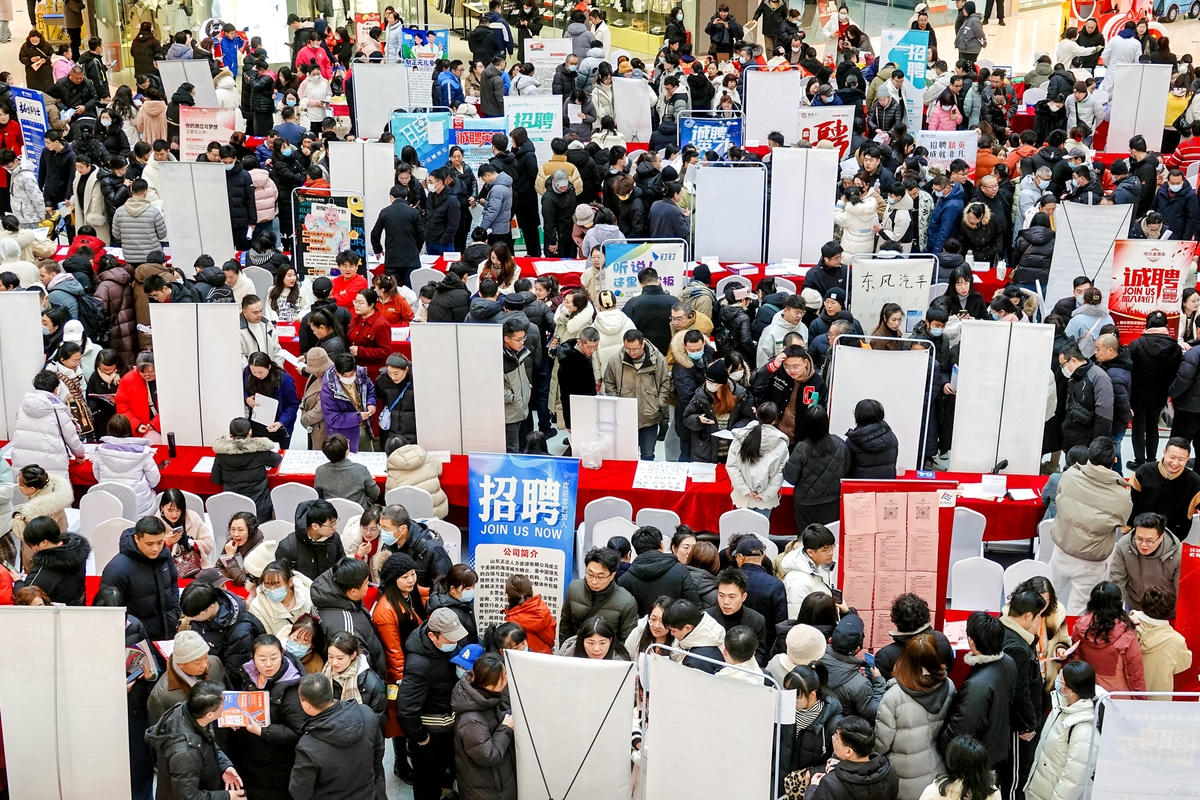
China has been experiencing high unemployment, especially among youth. The unemployment rate among those aged 16 to 24 was 16.9 percent in November 2025, according to the latest official data published on Dec. 16, 2025, not counting students who are about to graduate.
In recent years, college students in China have faced unemployment upon graduation.
Since December 2023, the National Bureau of Statistics has adjusted its statistical method, officially releasing youth unemployment data that exclude students currently enrolled.

Wang Xiaoping, China’s minister of human resources and social security, said at a news conference during the National People’s Congress on March 7 that the number of college graduates this year is expected to reach 12.7 million—an increase of 480,000 from 2025.
Another group is China’s migrant worker population—numbering nearly 300 million—which is systematically overlooked, Xiao said.
“The vast majority of these migrant workers, who have moved to cities for employment, hold rural household registration and are classified as a floating population; when unemployed, they often return to their rural hometowns,” he said.
“Consequently, they do not meet official criteria for unemployment and are therefore excluded from statistical counts.”
As of February, the total number of migrant workers nationwide stood at about 301.15 million.
China also has a large number of people doing odd jobs without stable employment. The hidden unemployment issues within this group are not fully represented in the official data, Xiao said.
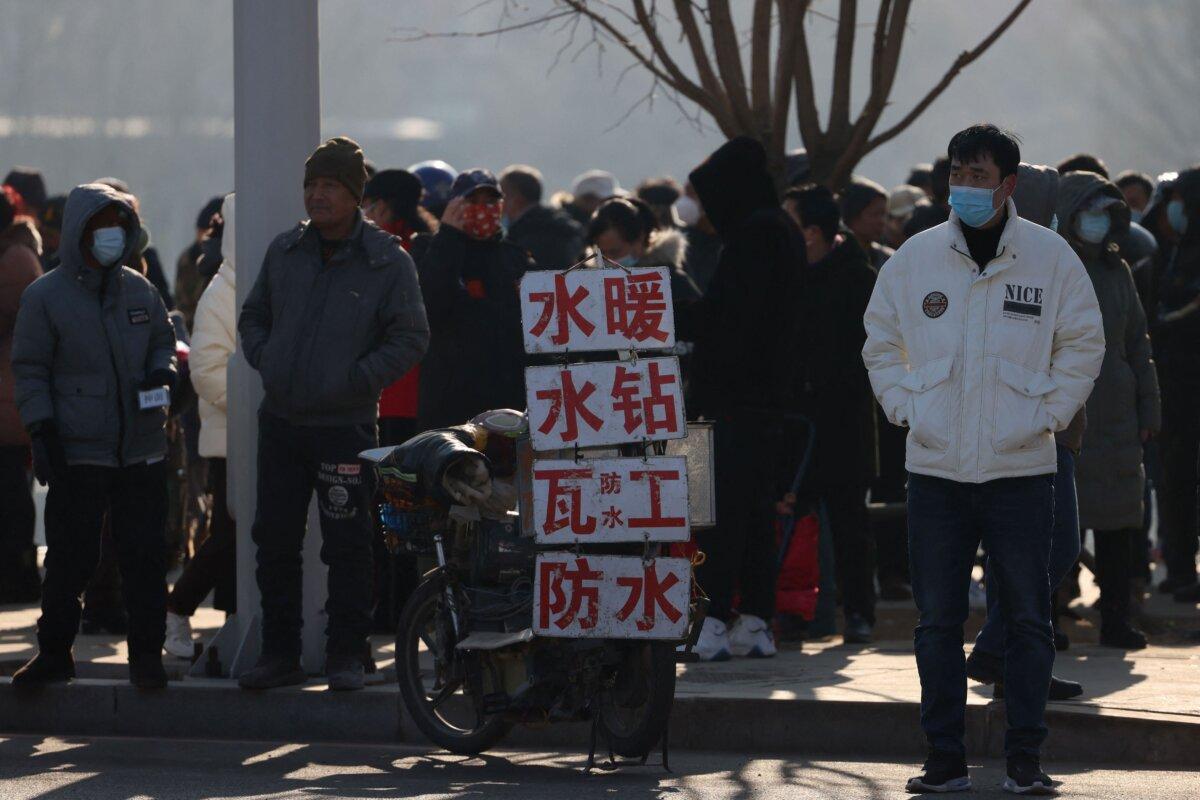
According to the Chinese regime’s statistical method, any individual surveyed who has engaged in paid work for at least one hour during the reference week is classified as employed. Temporary workers, gig workers, and those with unstable employment are also typically categorized within the employed population.
According to statistics from Gelonghui, an investment research firm based in Shenzhen, China, the total number of people doing odd jobs—short-term flexible tasks—reached 280 million by the end of 2025.
Xu Zhen, a senior professional in China’s capital markets, told The Epoch Times that many other Chinese citizens are not included in the official unemployment rate.
“This includes large numbers of people who have ‘lain flat’—giving up on the job search—as well as those in ‘hidden unemployment’ who are supported by their families, and ‘flexibly employed’ individuals with zero income,” Xu said.